Tag: Pinterest

  • Google+ Offers A New Design In A Relaunch


    It’s no secret that Google+ has been struggling as it tries to connect with users. It has been a difficult few years as Google tried to compete with other social media platforms like Facebook and Reddit. With its recent redesign and the addition of a few new features, Google hopes to boost the platform’s user base in several different ways. Here are some changes you might see the next time you log into your Google+ account.

    Communities

    Many users had asked Google to add a “Communities” feature, to allows users to connect with others based on their interests and hobbies. Whatever your interests may be, the new design makes it much easier to meet people who share those interests. Over 1.2 million users have started using the new Communities feature every day since its introduction—a major change from the somewhat isolating feel of Google+’s “Circles.” The overall Google+ community has always been its strongest point, and this new feature allows a greater sense of connection.

    Collections

    Also geared toward users’ interests and ways to connect with others, the Collections feature of Google+’s new design allows users to find content based on topics that they might be interested in. This is a great feature that social platforms like Facebook and Twitter do not offer—users are solely reliant on what their friends and connections post rather than what they might be inclined to read. The Collections feature is supposed to resemble Pinterest in the way that groups of users can post on a specific topic and share it with the public or with just friends. It’s an easy way to group content and to make it easier to find while providing a social experience.

    Google hopes to create a different kind of social platform unlike what users might currently be using. While over 2.2 billion people have a Google+ account, fewer than ten percent of users have ever posted anything on the site. Many Android phone users (or those with YouTube accounts) were required to sign up to continue using the services, though the platform was rarely used for what it was actually built for. A new homepage design now allows you to not only see what your friends have posted, but also some posts that you might be interested in.

    With a new design, Google executives hope to start over with a clean slate. Wrobleski writes, “While this is an exciting new beginning for us, we’re definitely not done yet.”

    By not trying to do the same things as Facebook and Twitter, but rather by adding community-oriented features similar to Pinterest and Reddit, users are more likely to appreciate the benefits of Google+’s design and what it has to offer. This makes the Google+ relaunch one that may offer more of what users are looking for, in a different kind of social platform.

  • Thinking Beyond Facebook And Twitter


    Who would have thought that Facebook and Twitter could become old dithering platforms bloated with every imaginable brand page? But that’s what your brand is up against. So how do you get seen, become visible, despite all the clutter? The easy way into the light is to move your focus from Facebook and Twitter to newer, ever evolving mainstream platforms. There’s an advantage to this strategy because what’s dominant today may be old news tomorrow. Staying fluid and flexible is a good strategy. Right now is a good time to consider the added perks a brand gets from platforms such as Instagram, Pinterest, Snapchat, Periscope, Tumblr, etc.

    instagramCheck it out

    Instagram may be one of the fastest growing platforms, but it’s currently underutilized by marketers. Its thriving mobile application connects marketer with target audience at a very personal level. Because Instagram is so simple to use, brands have been able to move away from traditional designs and adapt more natural content. The retail and fashion industry use Instagram to share teaser images of products and “behind the scene” images that push trending. The recent update of Instagram Ads is well worth any marketer’s attention.

    pinterest

    Pinterest’s user base has grown by a little more than 50% over last year, and 80% of that audience is female.  Fashion, food and home décor are major points of interest. Creating individual (branded) boards where fan’s pin their contributions is a terrific source of engagement with a target. Curating and sharing user-generated content is every bit as valuable – if not more so – than a brand pinning its own content.  And now with the addition of “buyable pins” retailers have an unprecedented opportunity to use the platform to generate direct sales.

    snapchat

    Snapchat, the messenger application that combines the speed of texting with visuals of whatever is around, is a rising favorite among marketers. It’s also the third most popular app among the 18 – 34 year olds. The limited life span of content on Snapchat means brands are only as good as their last snap. You can feature many clips in a row, getting as creative and quirky as you want. Consider a Snapchatting campaign with a celebrity endorsing your brand. That would add a glamour quotient to your snaps.

    periscopeOver 80% of the Twitter audience uses mobile devices, so Periscope –Twitter’s live streaming application — paves the way for brands to interact with consumers in real time. They can build a more personal relationship with the audience, lending real-time access to special moments like product launches, events and customer care support. Celebrity take overs can be adapted to good effect along with answering questions live and behind the scene activities.
    But wait, there’s more

    A marketer might want to consider Fyuse. Create a 360 degree view and apply 3D tagging to the images. Watch out Instagram. Or Tinder. Yes, this popular dating app has been used by brands for everything from supporting a social cause to generating a viral social media storm. Imagination is a marketer’s best friend. Conventionality is like a sinking stone.

    Social media platforms have been evolving at such a rapid pace that marketers must either keep up or fall by the way. It doesn’t matter what the focus of the platform might be, brands need  to optimize their presence on Social by  being candid, making the personal/emotional connection, and working the real-time for all it worth.

  • Changing US smartphone dynamics: A by-the-numbers opportunity

    A quick look at comScore’s Q4 data spells out a digital marketing fact of life: It’s no longer a “mobile too” world out there. It’s all about “mobile first”.

    • United States smartphone penetration jumped to 76%
    • 3% of total US population now owns a smartphone
    • 84% of all US social media users access the platform via a mobile app or browser

    This does not presage the end of the desktop or the laptop. But it does underline, with data, that users want access to the Internet anytime, anywhere, with any device – but primarily with a smartphone.

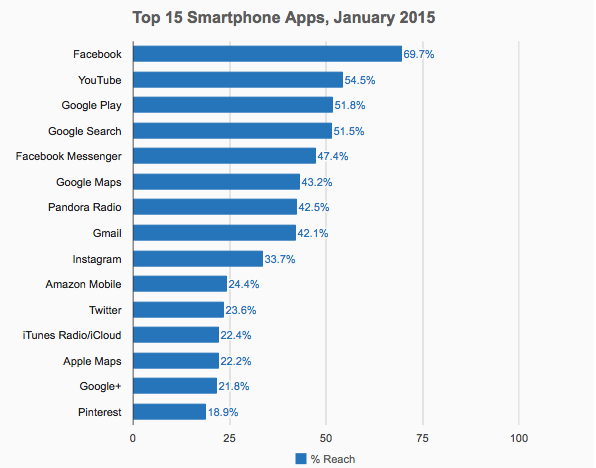
    And of that Internet usage? A lot of Facebook time, followed by You Tube. And making a first time appearance to the Top 15 Smartphone Apps list: Pinterest.

    What are people doing on their smartphones?

    mobile-usage-stats-applications

    Image Source

    Social networking, watching videos, searching for information, messaging, accessing email are all top activities on the smartphone. This spells opportunity for digital marketers, and the platforms know it. Facebook has made advertising easier to its massive, lucrative audience thanks to the mobile app it recently released to manage your ads. Twitter, with a 23.6% share, has improved ad campaign tracking tools, giving you a new and better way to manage your Twitter ads.

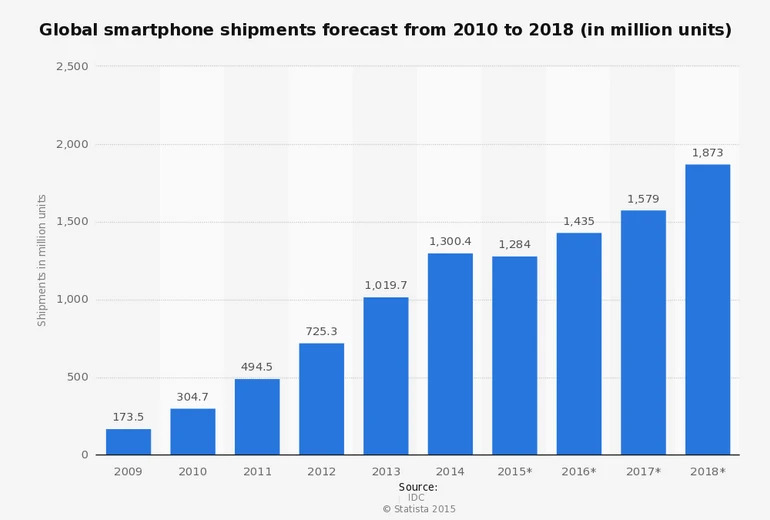
    Smartphone sales are going one way – Up

    global-smartphone-shipments-forecast-2010-2018

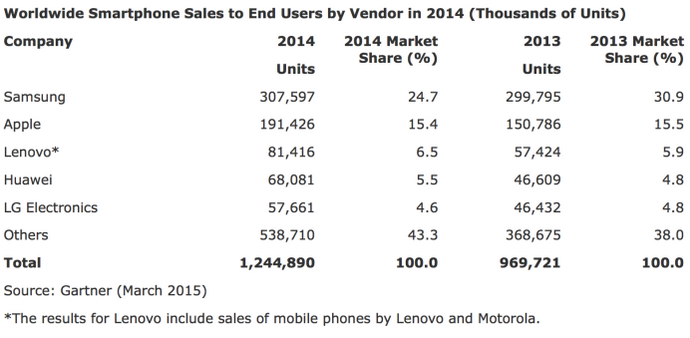
    Of the 1 billion+ smartphones sold worldwide in 2014, Samsung lead the pack. Apple, on the other hand, cornered nearly 90% of the global smartphone profits.

    Here is a breakdown by brand of worldwide smartphone sales in 2014:

    smartphone-sales-to-end-user-statistics

    As smartphone dynamics change so too must your digital marketing campaigns. Mobile centric is the way to go. It’s all in the numbers.

    Contact Position² for all your media and advertising needs targeted towards your mobile customer!

  • Pinterest Bans Affiliate Links

    Pinterest announced some bad news for Bloggers and active power pinners who drive leads and earn revenue via affiliate marketing. Pinterest is set to ban affiliate networks on their site. Currently, affiliates are able to monetize pins by using a trackable link. These affiliates earn commissions from pins that produce conversions and/or drive traffic to their retail partners’ sites.

    Why is this happening now? Pinterest does not earn any revenue from these affiliate links even though it has become a platform to facilitate them. The social network has not confirmed this, but the writing has been on the wall that Pinterest wants to leverage their network of pinners for their own monetization plans. First there was their “promoted pins”, and then partnership announcements with Apple and Stripe.

    This really should not come as too much of a shock to the affiliate networks. Pinterest has banned affiliates before. Back in 2012, Pinterest cracked down on Amazon affiliate programs by removing the tracking tag from links directed to Amazon’s site. At the time, there were hundreds of other affiliates, but Pinterest selectively picked their battles instead of taking on the futile task of going after every affiliate network. Now, Pinterest will still be picking battles by going after larger networks, but the announcement has made it official, stating that they will “automatically remove all affiliate links, redirects and trackers on Pins.”

    So Pinterest power users partnered with affiliate networks, you have been warned. Although as per Pinterest, the ban will not be a drastic rollout. Pinterest stated, “…all your past Pins will show up normally and still be clickable.” Sounds like a kind and gentle transition to being cut off, but forget about being able to track those pins. Pinterest also stated that affiliates are still welcome to get paid by curating boards or by working on paid social media marketing for their network partners.

    Let us know how you feel about this latest Pinterest development.

    Contact Position2 to discuss how to kick off a social media B2B strategy.

  • Pinterest to Get More Ad Driven

    Pinterest is getting more assertive with each passing day when it comes to pushing ads on its platform. Its test launch of Promoted Pins some time back this year went down well with both the advertising fraternity and the user community. The scrapbooking site now wants to scale its revenues by upping the ante as far as advertising is concerned. Pinterest opening up its advertising platform to all businesses is imminent.

    Pinterest initially beta tested Promoted Pins in May this year with only a small group of advertisers. Today Pinterest is a force to be reckoned with in the digital arena controlling 23% of referral traffic to e-commerce sites across the web. This has caught the fancy of digital marketers who now want a slice of this booming ad platform in order to draw more sales and brand value alike.

    Setting up Promoted Pins on Pinterest is quite easy. First you pick a pin that you want to promote. You then specify which search keywords you want to attach to it. You can choose geography, language, user demographics for which you want your advertisement to be targeted. You only pay when somebody clicks on your ad to visit your website. Hence, this is a Pay Per Click model and advertisers bid against one another with no minimum bid price needed, as of now. Pinterest is a product and image driven environment where users actually embrace brands. It has proved so far that it has a huge power over online ecommerce which will only grow in the days to come.

    Pinterest offers Analytics Dashboard to digital marketers building ad campaigns on its platform. Advertisers can check which Pins and boards are driving the most clicks and conversion to sales so that they can specifically concentrate on them. They can get a detailed report about which of their Promoted Pins attracted the most impressions and repins.

    Promoted Pins is a very robust advertising model because people interact with these pins in very much the same fashion they interact with Pinterest. There seems to be an alignment between what users would like to do on Pinterest and what advertisers would normally want them to do. People want to discover new things on Pinterest. They repin things they like in order to save for later use or to share with somebody. That way Pinterest is unlike Facebook or Twitter as far as digital advertising is concerned. People explicitly use Pinterest boards to save stuff they would like to buy! Now that is manna from heaven for any digital advertiser worth his salt. This has made Pinterest a very lucrative platform for advertising in the digital world, without a smattering of doubt.

    Are you excited about Pinterest Promoted Pins? If yes, kindly let us know what you think about it.

  • Pinterest Provides Businesses with New Analytics Dashboard

    Businesses actively using Pinterest have one more reason to rejoice. Those that were not have one more reason to join it.

    Pinterest is offering an Analytics Dashboard to business users, through which you can find out how your content are faring on the platform. You can gauge your content reach and access information on the number of impressions and views received.Pinterest launches new analytics dashboard

    The tool also provides insights into how each user interacts with your content. It keeps a record of the impressions, clicks, repins, likes, which enables detailed analysis. The dashboard also has the ability to record the traffic your website receives when you add the ‘Pin It’ button.

    All this helps you understand what works and what doesn’t for your business, thus allowing you to make informed decisions like optimizing click through rates by sharing a particular Pin that is doing well or scaling impressions using Promoted Pins. You can now get a detailed idea about what your fans like and can adapt likewise.

    Whenever a social networking site reaches a critical mass, as a brand, you would want to leverage it to your advantage. Pinterest’s Analytics Dashboard will go a long way in helping you understand your performance on the platform. This insight can help you formulate more effective Pinterest strategies for better user engagement.

    Pinterest is steadily becoming ambitious in the paid ad market. After the launch of Promoted Pins, the visuals-focused network is bolstering its ad offerings with an Analytics Dashboard that will help you measure the performance of your Pinterest campaigns. Despite the existence of numerous third party tools to analyze brand performance on Pinterest, an in-house tool like this could make a lot of difference in the insights that can be gained.

    What do you think about Pinterest’s new analytics?

  • Twitter Launches Objective-based Ads and Pinterest Starts a Messaging Service

    Twitter’s Objective-based Ads

    Twitter has launched objective-based ad campaigns, reporting and pricing in beta. This is aimed at helping marketers run and optimize marketing campaigns while paying only for actions that are related to their marketing objectives.

    Objective-based ad campaigns are now available in beta for SMBs and Twitter’s API partners globally. This feature will be rolled out to managed clients on an invitation basis over the next few months.

    Twitter will be providing a customized workflow that is aligned to your campaign’s goals. You can select from a selection of objectives such as, driving Tweet engagement, website clicks or conversions, increase app installs or engagement, adding more followers or gaining more leads. The campaign set up workflow will also recommend the best ad format you can use for your campaign.

    The best part of this feature is that you need to pay only when a user takes an action that is aligned with your campaign’s goals. For example, if your campaign objective is to increase followers on Twitter, you will pay only when users click the ‘Follow’ button and start following your brand on Twitter.

    Campaign measurement is also more relevant and easy since reports will show only those metrics that are important to your campaign and you can download all campaign data into a CSV file. For instance, for a campaign to increase website clicks, reports will show total number of link clicks.

    Being able to create ad campaigns that help achieve specific marketing goals will make it easier for marketers to attain marked goals and measure brand performance better on Twitter. Setting clear campaign objectives will help keep campaigns separate for different goals and avoid situations where investment in a generic campaign did not get the returns you wanted.

    Pinterest Conversations

    If someone sends you a pin, the recent update by Pinterest will now allow you to reply with a message or send a pin back. You can also send messages and pins to multiple people and pull up conversations from your notifications.

    You can save pins directly to a board from the conversation, add it to your favorites’ list and drag and drop pins into the conversation from the home feed.

    Businesses can use this feature to brainstorm ideas within the organization. They can encourage employees to share relevant, engaging pins and discuss about the merit of ideas.

    Another application for businesses is that they can use the Pinterest messaging feature as a customer service platform. This application is only feasible for small businesses, who can have private conversations with their relatively reduced number of customers. This will help them ensure privacy for all customers while bestowing individual attention on every customer.

    Pinterest’s messaging service will also contribute in increasing the engagement levels on Pinterest as users engage more through exchanging pins and messages.

    How do Twitter’s objective-based ads score according to you? Do you think Pinterest’s messaging service will benefit users and businesses?

    Image Source

  • Pinterest Builds on Content Curation with Icebergs Acquisition

    Pinterest acquires Icebergs

    Pinterest is strengthening its content curation abilities with its latest acquisition, Barcelona-based startup Icebergs.

    Icebergs is a company that provides a private online space for users to find, organize and collaborate on projects in the form of images, videos and other types of digital content.

    Icebergs’ two co-founders, César Isern and Albert Pereta will join Pinterest’s team in San Francisco. Icebergs’ online service will be shut down and its current users will be asked to migrate their projects by September 1, 2014.

    Though Pinterest is not adding Icebergs’ technology to its platform, this acquisition will add more users to Pinterest’s user base and help Pinterest in improving its content curation offering. Pinterest will be relying on Icebergs co-founders to build technology for the discovery and organization of content on the site.

    Known for its appealing visual content and content curation possibilities, this talent acquisition can help Pinterest in becoming a better content curation platform for marketers. Marketers will then be able to conceptualize and launch great creative projects in richer formats like videos on Pinterest. With more content curation, marketers can collate content from their fans, which effectively ensures that they are using content people are actually interested in.

    Until now, Pinterest was a curation point mostly for images, which can change with the acquisition of Icebergs. Marketers can aim for higher engagement rates with more relevant and interesting content if Pinterest applies Icebergs’ co-founders on a path to bolster its content curation abilities.

    Image Source

  • Globalization and Localization of Social Networks

    Social networks are pouring a lot of resources into making sure they have a global footprint.

    In the last few weeks, visual-centric social platform Pinterest has been investing in expanding its presence globally. The following list of countries and languages have been covered by Pinterest up until now:

    • India (Hindi)
    • Greece (Greek)
    • Hungary (Hungarian)
    • Romania (Romanian)
    • Thailand (Thai)
    • Philippines (Tagalog)
    • Malaysia (Malay)
    • Vietnam (Vietnamese)

    It’s not only Pinterest

    Other major social networks have been spreading their wings worldwide from quite some time. Expectedly, Google spearheaded this initiative. Facebook, Twitter and Instagram are also available in multiple languages. With communication becoming more advanced by the day and increasing number of people connecting with each other, globalization of social networks was imperative. At the same time, being available in local languages was also crucial for social networks.

    Reasons for Social Networks and Brands Going Global

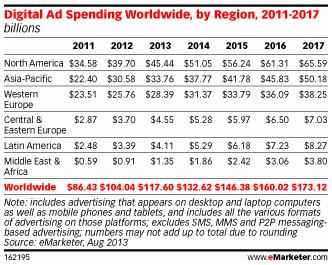
    Digital Ad Spending Worldwide
    According to recent research by eMarketer, global digital ad spending by brands has been increasing till 2014 and is projected to continue the upward trend for the next few years.

    With specific focus on social networks, according to a recent study by Decipher on behalf of the Word of Mouth Marketing Association and the American Marketing Association, 7 out of 10 marketers expect their companies to increase their social media spending in 2014.
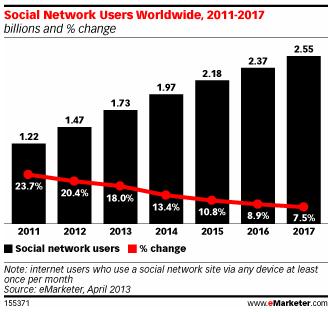
    Social Network Users Worldwide
    Another eMarketer study said that the strength of social media users worldwide will be 1.97 billion and will climb up to 2.55 billion by 2017.

    When brands are spending billions in ad dollars all over the world and social networks’ user base is expanding without being restricted to certain regions, social networks will want their share of the pie.

    To do this, social networks must expand globally along with maintaining robust ad offerings, retaining user trust, ensuring ROI for brands among other things.

    What is your take on this trend?

  • Turning Google+ posts into display ads, Four very useful iPad stats and much more…| Best of the Week

    This week’s hot news, events and videos from the online marketing and social media world.
    Turning Google+ posts into Display Ads
    From the Position2 Blog This Week:
    Turning Google+ posts into Display Ads
    Google+ Post Ads give a brands’ online content a power boost by turning their Google+ posts into display ads that will run across the web through Google Display Network. To know more on how brands can go beyond normal, static advertising, read our blog.
    Top Stories this Week: Social Media
    Top Stories this Week: SEO, PPC and Digital Media
    Best of the Week Video Best of the Week Video
    Accenture gets it! Whether it is offline advertising or going viral, they have it all figured. Check out this week’s “awesome b2b company video” channel on You Tube and get inspired!
    White Paper: Increase Visibility for Your Content by 4x
    Today’s traditional SEO is inadequate: Ignite your search results by accelerating visibility in more places than ever before.Download this White Paper and learn:

    • SEO, why the way we know it is not enough
    • Introducing and implementing Enterprise Visibility Accelerator (EVA)
    • Using multi-channel tracking tools for effective monitoring
    • How EVA benefits businesses.

    Download the complimentary EVA White Paper now

    Know more about Enterprise Visibilty Accelerator(EVA)
    If you are reading this blog post via a RSS reader, please click here to subscribe.