Tag: Pins

  • Pinterest Launches Motion-based Ads

    Pinterest expanded its ad products on Tuesday with video ads called Cinematic Pins. They work much like Pinterest’s Promoted Pins, which are designed to blend in with other items in your home feed, but are motion-based. Brands like Gap, L’Oreal, Target, Unilever, Visa, Walgreens and Wendy’s are among the first paid advertisers.

    Not to be confused with Facebook or Twitter style videos where the action begins when you pause over them and stops when you move away, Cinematic Pins are first encountered in motion as you scroll down, then stop when you cease scrolling.

    Pinterest’s General Manager of Monetization, Tim Kendall, said, “Our view is that auto-play is interruptive. Users want to feel like they’re in control, and we’ve done a bunch of user testing—users are delighted by this experience. They wind up scrolling back and forth. They love controlling the motion.”

    Pinterest to launch upgraded advertising solutions for digital marketers

    1. Audience Targeting Based What Users Plan To Do

    Taking intent based marketing to a whole new level, marketers will be able to target audiences with Promoted Pins based on what users want in the future. Advertisers will engage people as they plan future purchases, as opposed to, say, searching for concert tickets to purchase in the moment. “People,” according to Pinterest, “do tons of different things on Pinterest, but most simply, it’s about discovering, saving and planning what to do next.”

    2. Ad Engagement Pricing

    With cost per engagement (CPE) pricing, advertisers pay only when users take an action on a Promoted Pin, including repinning, clicking to see a pin close up or clicking through to an advertiser’s site. This model will help marketers track future intent.

    Pinterest is already a map for a consumer’s journey. The new eye-catching Cinematic Pins will grab their share of attention, and provide more intent-driven data to marketers.

    Watch this blog for more updates from Pinterest.
  • Pinterest Launches A Shiney New Algorithm Called Pinnability

    Pinterest is beginning to poise itself as a search engine, or what they call a “discovery engine”. Taking cues from Facebook, Pinterest is now serving up what they call a “home feed”. This feed is powered by Pinterest’s Smart Feed algorithm that was launched in 2014.

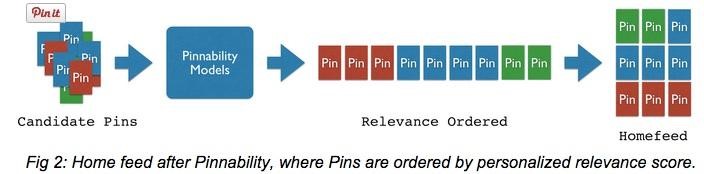
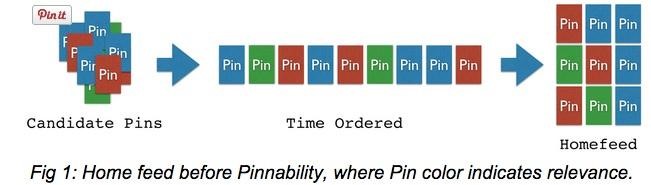
    So what is Pinnability? It’s a collection of machine learning models that allows Pinterest to serve a smart feed on a Pinterest user’s homepage.  Pins used to be in chronological order, but now it’s the job of Pinnability to order pins based on a relevance score, or more specifically, a personalized relevance score. Pinterest states that filtering by chronological order isn’t enough to help Pinterest users see pins they really want to see.

    Pinterest has a Pinnability diagram on their blog to show the logic of this machine learning model.

    Pinterest Home Feed Before Pinability

    Pinterest Home Feed After Pinability

    Machine learning models have always played a significant role in the development of Pinterest. Pinnability is powered by smart feed, the technology that brings flexibility and control over the composition of the home feed. Pinnability and smart feed work together to estimate the probability of a Pinner interacting with a Pin, with pins receiving high relevance scores shown first. The personal relevance score includes all Pins that users follow as well as Pinterest’s ‘Picked for You‘ recommendations. The algorithm takes into account ‘training factors’ like Pin quality, historical popularity, authenticity, and relevance. The demographics and the activity levels of Pinners are carefully analysed and entered into the mix. And the result is a personal relevance score for each Pin. So in theory, pinner interaction improves because their feed is more interesting and useful due to the personalization.

    Per Pinterest’s statement on the subject, “We continue to refine Pinnability and have released several improvements to-date. With each iteration, we’ve observed significant boosts in Pinner engagement, including an increase in the home feed repinner count by more than 20 percent. We’ve also observed significant gains in other metrics including total repins and clickthroughs.” Which means their accuracy of recommendation quality is still a work in progress.

    For more information on Pinterest and social media marketing, Contact Position². We love giving free audits!