Tag: mobile seo

  • Digital Marketing: Key Takeaways From 2015


    This year has seen digital come into its own as a core part of marketing activity. Brands are increasingly ploughing their budgets into digital, and we’re likely to see budgets increase further. There are a number of reasons why digital is essential, and we’ve gathered some of the key trends here.
    Digital-marketing-trends-2015

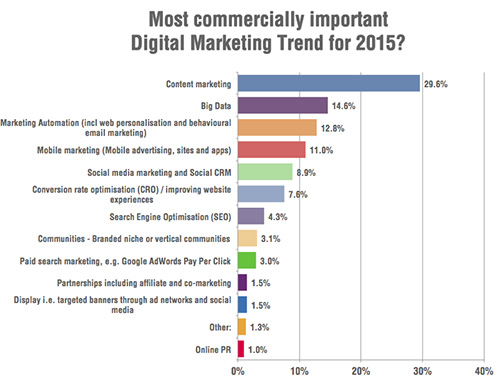
    The shape of things to come: Content Marketing took up a big chunk of responses, more than Big Data and Marketing Automation combined.

    Content marketing and personalization

    According to Hubspot, content marketing generates three times as many leads as traditional marketing methods, but it costs 62 per cent less. Providing you’re efficient, and you have a strong sense of your audience, a shift to video is going to pay dividends.

    Video is evolving to incorporate streaming media, and customers are expecting content that is tailored specifically to them. The key concept here is authenticity; you’re going to need to push beyond cookie-cutter content, and prove that yours is a brand to be trusted. While 73% of B2B marketers already use content marketing, we’re going to see an increase in investment in services like YouTube, and an emerging use of game-changing apps like Periscope.

    Marketing automation

    Digital allows you to put your data to work, and once your processes have been transformed, you’ll see huge efficiency gains.

    For a great example of automation in action, check out Marketo Ad Bridge. It serves up ads to people based on their habits, across a range of social media channels, helping you to avoid the scattergun approach that can make digital ads less effective.

    Mobile SEO

    A decade ago, anyone could make a website that displayed on a desktop computer. Now, we’re using a variety of devices to search and browse the web, from tiny wristwatch wearables to huge tablet devices.

    If you want to compete, you must have a mobile-friendly, responsive website, and it has to be optimised for use on a smartphone. A massive 60 per cent of all internet traffic in the US now originates from mobile devices; about half of internet traffic comes from mobile apps. If you still have a separate mobile website that offers a poor user experience, 2016 is the year you’ll ditch it for good.

    Social media

    Social media is an ever-evolving marketing tool, and if 2015 taught us anything, it’s that we can’t afford to stand still. Google+ has recently redesigned its interface to make the platform more appealing for its users.

    Marketers are learning to maintain focus on key social media sites, but to keep others in the frame and maintain an energised approach to their campaigns. You never know when a service like Google+ will reinvent itself with a new, killer feature, and that will be the key moment when the really responsive marketers will gain an advantage.

    Look to the future

    In digital marketing, constant evolution is the key to staying ahead of the curve. In 2016, we’re going to need to rethink and reimagine our digital marketing strategies to take customers on new, enhanced journeys. Social media is going to continue to gather pace, and the scope of digital is going to increase even further. Stay tuned to the Position2 blog to hear the first news on trends in 2016.

    Happy Holidays from Team Position2!
  • Top 5 SEO Trends for 2015

    2014 has been an eventful year in the online search space with more focus on making search experience user-friendly. Google’s algorithm updates like Google Panda 4.1, Google Penguin, all highlight the same issue. Additionally, new features on Google Webmaster & Google Analytics dashboard have enabled SEOs deliver better web-pages for the users.

    Position2 Shared Top SEO Trends for 2015

    Image Source

    It’s time for marketers to focus on 2015 and look at the techniques that will hold ground and begin showing results in the New Year!

    Top SEO Trends for 2015   

    • Optimizing for Mobile Search
    • Conversational Search
    • On-page Markup
    • Content Strategy
    • Website Architecture
    • Integration with Social Channels

    Mobile Search Optimization

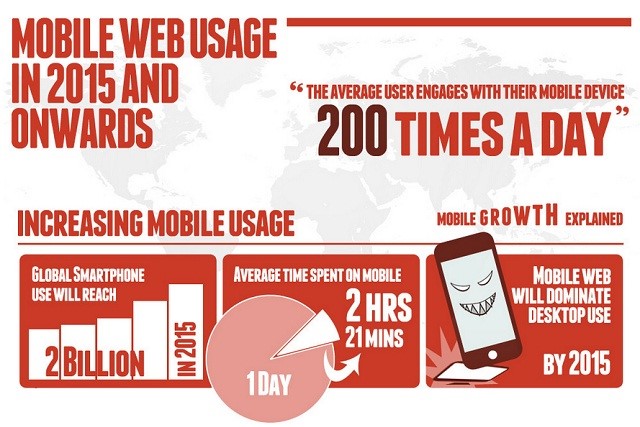
    1 out of every 5 individuals in the world now owns a smartphone. With the rapid growth in the smartphone market, usage of Internet on mobile devices has reached a new high. With this trend in place, digital marketers are now particularly targeting users browsing via mobile devices with renewed interest. All kind of digital assets now need to be optimized for mobile. Google is now updating algorithms that reward sites rendering optimally on the mobile platform with a higher mobile ranking. Your site optimized for mobile combined with a great mobile UX feature will stand out as the winning factor in 2015.

    Position2 - Mobile Search Optimization is the most trending factor in SEO

    Image Source

    Conversational Search

    Hummingbird update stressed on words as part of search queries. Phrases with conversational words are now given priority and web pages that provide a solution to these conversational queries now rank higher rather than pages that just tend to “match” these keywords. Hummingbird makes an effort to understand the real intent of a searcher rather than just the syntax.

    Conversational search queries will continue to gain more importance in 2015 – the reason being these kinds of queries address the “actual” need or the search intent. Keyword & Content strategy in 2015 should be a combination of long-tail and keywords which address Latent Sematic Indexing (LSI).

    On-page Markup:

    Schema markup should serve as a great way to display rich snippets although these may not be the only ranking factor. Schema markup helps improve click-thorugh rates as search results for schema-enabled pages have a higher tendency to boost trust among visitors.

    Content Strategy

    Content still is the “King” of SEO. The only thing that would require a re-alignment is the kind of strategy required towards content generation. Content going forward needs to be a blend of long-tail & conversational keywords. Content generation can be in various forms – websites, blogs, rich-media assets like Press Releases, PDFs, PPTs & Videos. Content syndication in lieu of link building should be the mantra. Association with other sites needs to be carefully evaluated before committing, more so after the announcement of Google Penguin 3.0. Content calendars need to be in place to serve as placeholders for developing fresh on-site content.

    Website Architecture

    Site structure & content placement will have a key role to play. The way websites are built emphasizing user navigation & other usability factors, will be a pivotal factor to rank higher on Search Engines.  Websites need to have a clear navigation, neat URL structure and an organized content architecture. All these aid in improving bounce rates and avg. session duration which are now amongst the varied factors considered for better ranking on Google. Diagnostic tools like Google Webmaster and other online tools like Moz should be of great help to diagnose and repair errors.

    Social Media Integration

    Not to be left behind in the race for SEO, is Social Media. Social posts too now have the power to rank well on Search results. As Matt Cutts says “Facebook and Twitter pages are treated like any other pages in our web index, so if something occurs on Twitter or Facebook and we’re able to crawl it, then we return that in our search results”. Leveraging Google+ & YouTube will go a long way in helping website optimization. Prominence should be given to generate additional content using Blogs, data/product sheets and spread them across the web using social media platforms. Social sharing buttons need to be integrated across websites & blogs for a better experience. Overall focus of marketers should be to give users an enhanced experience on Search – be it via a website, blog, digital asset or social post.

    Contact us now for SEO deployment that delivers real results!

    Have a Great Year ahead & Happy Searching in 2015!

  • Bing Crawls Non-responsive Mobile Sites

    The search engine Bing from the Microsoft Stable is going to affect the fledgling mobile SEO market in a more impactful way. Bing has launched a new set of mobile crawlers with BingBot Mobile User Agents in order to index mobile sites better and to offer more optimized results on the mobile platform.

    Bing recommends all webmasters to design responsive sites but unfortunately not everyone follows these recommendations. Hence Bing had to come up with a way to overcome the hurdle and give searchers a better mobile experience. Bing checks if your website is mobile compatible with this new set of mobile crawlers and offers the most optimized sites in the Bing mobile search results.

    That way Bing can differentiate how your website is viewed on the iPhone as compared to the Android platform or the desktop browser. Bing needs unrestricted access to your JavaScript and CSS files for better mobile optimization.

    This is good news to all digital marketers who had non-responsive albeit high quality mobile sites, since now their websites can rank higher in mobile search results too. If your site is mobile optimized then you can reap rich dividends courtesy of this new update from Bing.

  • Are you SEO Ready for Smartphones?

    Mobile SEO Essentials

    4.22 billion people worldwide are expected to use smartphones in 2014.

    But, most marketers still don’t understand how powerful smartphones are when it comes to influencing online product/service purchase decisions. Here are some stats that are sure to raise a few eyebrows and can compel marketers to include mobile in their planning in 2014 and beyond.

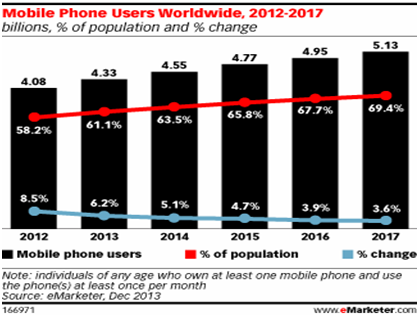
    Mobile Phone Users Worldwide (2012-2017)

    According to a report in eMarketer, mobile phone adoption worldwide, seems to be slowing down. As western nations reach a saturation point, new users from developing regions such as Asia-Pacific, Middle East and Africa will continue to drive growth. Between 2014 and 2017, mobile phone penetration will rise from 63.5% to 69.4% of the worldwide population.

    Mobile Phone Users Worldwide

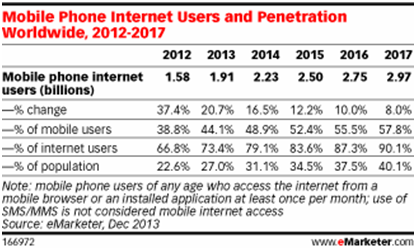
    Mobile Phone Internet Users Worldwide (2012-2017)

    It is expected that in 2014, 49% of the world’s mobile users will go online via mobile browsers or apps monthly. By 2015, it is anticipated that the global mobile phone internet audience will cross well over the 50% mark.

    Mobile Phone Internet Users and Penetration Worldwide

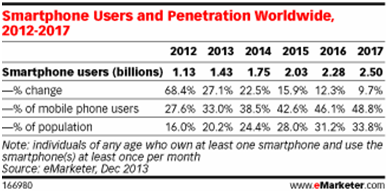
    Smartphone Users and Penetration Worldwide (2012-2017)

    Smartphone users surpassed the 1 billion mark globally in 2012 and this is projected to total 1.75 billion in 2014. A recent study by eMarketer reveals that 38.5% of mobile phone users will use a smartphone in 2014 and the usage is expected to reach one out of two mobile users by 2017. As devices become cheaper, users are quickly switching over to smartphones with 3G and 4G networks.

    Smartphone Users and Penetration Worldwide

    Mobile User Behavior

    How exactly can you leverage the information we just provided?

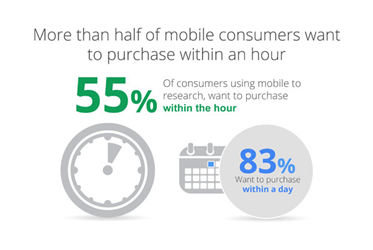
    Recently, Google certified Nielsen to conduct a study on the online purchase behavior of mobile users. The study revealed that 74% of mobile consumers use a search engine during the purchase process and 83% of mobile users intend to make a purchase within a day’s time.

    Mobile Research

    With all these indications on how mobile phone usage is going to dominate online businesses, marketers need to channelize their SEO strategy to meet these expectations.

    Before listing down the essentials for a successful mobile SEO strategy, we would like to point out that any mobile strategy that is developed should be directed to provide a better user experience and improve engagement on the website. It is important to remember the following points:

    1. Mobile Friendly Site
      With the steep rise in online mobile traffic, a mobile friendly website is imperative in 2014 for a successful mobile SEO strategy. Companies need to invest in creating either a responsive or a dedicated mobile website. Once the website is created, marketers need to form a consolidated mobile SEO strategy along with desktop SEO, which remains as important.
    2. Mobile User Experience
      User experience is the key to SEO. Over the last few years, search engines have been working to enhance user experience with mobile and provide improved results. Conversational and voice search are instances to look out for.
    3. Page Load Speed
      Although this may seem to be intuitive, it is astonishing to see a number of companies give up on page load speed for an aesthetically pleasing image or video. Page load time immensely adds to the user experience, keeps user engagement high and improves conversions for the online business.
    4. Website Design – Focus on Usability
      Usability of a website increases the probability to engage and convert users. Usability is important for mobile users as they have a small screen to view all the information. Essential elements like Call to Actions (CTAs) and relevant content should be built in for easy access to engage users and convert them on the website.
    5. Mobile User Intent
      Google’s Hummingbird algorithm update in 2013 has said it all. The SEO community is still trying to understand the effects and how to deal with the update in real time.When a user searches for something on a desktop, the intent of that user may be very different from when he looks for similar information on his mobile device. There is a sense of urgency and more likely than not, an intent to purchase.According to the Google-Nielsen study:

      • 55% of mobile users have an intention to purchase online within one hour
      • 69% expect businesses to be present within 5 miles of their location

      Hence, a smartphone user more often looks for local businesses near them and could have very high purchase intent.

    6. Conversational and Voice Search
      Improve your local SEO with specific Keywords strategy for mobile users.Marketers need to understand the mobile users’ behavior pattern. Mentions of location with the target keyword will not be of any use when mobile users opt for voice search.For example, if a mobile user performs a voice search through their smartphone for a pizza joint or restaurant, they will probably ask “nearest restaurant location” rather than typing “restaurant + location”. Hence, including conversational search as a part of the SEO strategy will help in surpassing the competition.
    7. Fully Engage with Social Media – Social Integration
      Mobile and social go hand in hand. Marketers should consider integrating both the channels – share social media buttons on mobile sites, create presence on social channels like Google+, Facebook, etc.Consumers utilize all mediums (devices) available to them to find information on products and services. A thoroughly formulated SEO strategy that will allow users to access information on product and services through all mediums will play a crucial role for success in 2014. So gear up EARLY! 2014 is set to be the year of Mobile Marketing!

    Contributed by Rahul Banerjee, Head – SEO, Position² Inc.

    Sources: