Tag: Mobile app

  • Should You Go Mobile First Or Mobile Only?


    Flipkart, India’s answer to Amazon, bid adieu to its mobile website with the Big App Shopping Sale in March, 2015. From here on out, Flipkart shopping is all about the mobile app. Myntra, India’s foremost e-commerce fashion site, has shut down its mobile website, and may ditch browser-based shopping altogether. Such is the rising power of mobile.

    With e-commerce firms actively pushing consumers to their apps and leveraging attractive discounts and deals to encourage consumers to buy through the apps, having a mobile app in place is now all but essential. From Amazon’s Happiness Day sale in November 2014 to Myntra’s Binge Weekend Sale and Snapdeal’s App Fest in February 2015, the offers on mobile apps just keep on coming.

    “There is a business reason behind promoting apps,” says Mr. Rajiv Srivastsa, founder and chief operating officer of Urban Ladder. “It leads to higher conversion and engagement. If you build only an app platform, it is cheaper as you don’t have to invest in two-sets of codes – both mobile website and app.  However, in the long run, one has to engage the user enough, so she doesn’t uninstall the app.”
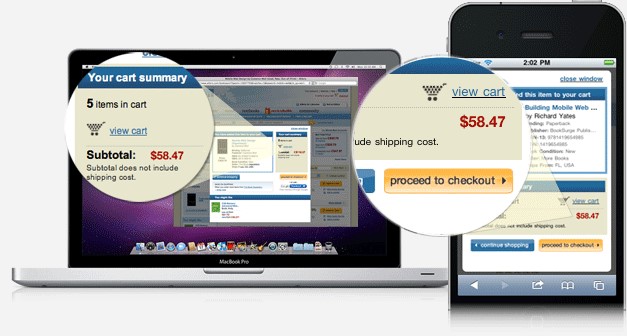
    Mobile App or Mobile Website for e-commerce Business

    Experience is the Key

    Though apps offer an attractive way for e-commerce players to interact with their consumers, it is neither easy nor advisable to force apps on customers. According to a study conducted by ICM Research in UK, a majority of customers prefer to interact with retailers through their mobile websites and only download an app if they are incentivized to do so, or if they are regular shoppers. And yet the same consumers are far more likely to complete transactions through the retailer’s mobile app than through the mobile website.

    “Going app-only makes sense if you can provide an experience not otherwise possible on the mobile web platform,” says Shamik Sharma, chief product and technology officer at Myntra.

    Consumer Experience on Mobile App

    Merits / Demerits of Mobile App

    There are crucial differences in the ways mobile websites and mobile apps help customers navigate and experience their shopping journeys. Mobile apps function a lot like mobile websites. They have certain operational and functional benefits and they have downsides as well. Customers can interact with the app 24/7 no matter where they may be. The IT advantage for business is having their own corner on a customer’s device. Mobile apps promote a customized experience because they work in the background, allowing e-retailers to collect user-specific data such as recurring purchases, duration of browsing, preferred platform to share information, geo-location and so on. The downside involves convincing customers it’s in their interest to install the app and give up permissions.

    Some businesses simply prefer both mobile websites and mobile apps. For example, India’s MakeMyTrip mobile site is an acquisition platform while the app is a loyalty and retention platform complementing its desktop presence. According to Pranav Basin, head of online products for Makemytrip.com, “The desktop plus mobile app is a great combo. They complement each other perfectly”. Ankit Khanna, Senior VP for product development at Snapdeal cautions, “We do not want to force consumers to download our app. If they want to browse first and buy later, we enable them to do that”.Website Vs. Mobile App – Position2 Blog

    While an app install “cost” is high, once you get the consumer on board the marketing cost could shrink.

    While mobile apps enable better targeting of customers, the major draw back is the extra step introduced into the shopping journey – at least the first time around. As one e-marketer pointed out, with e-commerce you click and buy. With an app, you click, you download and install, and then you buy.
  • Deep Dive Into Google’s App Indexing

    What is App Indexing?

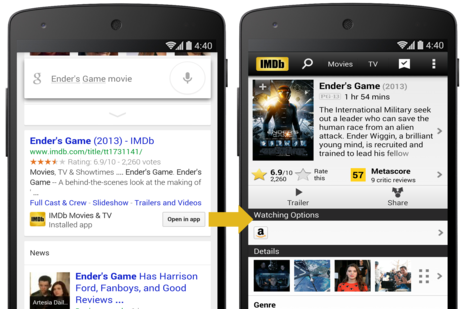
    Google’s App indexing allows webmasters to connect pages from web sites to specific content within Android apps. An Android smartphone user with a company app installed will be able to open it directly from mobile search results in Google.

    App indexing

    Image Source

    How it Works?

    “The App Indexing API provides a way for developers to notify Google about deep links in their native apps and allows the Google app to drive re-engagement through Google Search query auto completions, providing fast and easy access to inner pages in apps. The deep links reported using the App Indexing API are also used by Google to index app content and are surfaced in Google Search results.”  From Google’s App Indexing API site.

    Make It So

    • To connect company app to website enable deep linking of app from the Developers Console. Make sure the app is set up to work with Google Play Store
    • Developers must set up actions called “intent filters” that tell Google when a user is viewing a section of content, what the content’s title is, and if there is a Web page on your site that has the same content
    • When a user views content in app, Google will be notified via their app indexing API that the content exists in the app
    • By querying Google search for the corresponding content on the website a user is offered an option of viewing content in the app
    • Currently, Google doesn’t analyze any content that keeps track of content location in website and app

    Where Are We Today?

    Google’s Mobile App Indexing API helps users navigate to content located deep inside an app. The API also helps Google discover and analyze new content.

    Google has a hard time determining whether or not the app’s content outranks the competitor’s webpage content. But if Google already knows that the content on your site outranks a competitor’s content it will direct a user to read the content on your app rather than on your own site because it’s a better experience.

    And so begins a major shift in search. Apps will now start competing with traditional websites for rankings and traffic. Brands need to understand the importance of optimizing their app content so it shows higher in Google’s search results.

    Here are a few factors to consider right now:

    1. While Google can point a user to content within an app, the ranking itself is primarily based off the Web version of the content. There’s no hard proof as yet that elements like whether the user has already downloaded the app and how much time he/she spends in the app factor into the ranking as well.
    2. While unlikely at this point it is possible that content inside an app doesn’t have a corresponding Web page, in which case the app content could outrank other Web pages.
    3. Google can determine if Web content is high-quality and worthy of a number one ranking by looking at links, user behavior, social activity, page structure, site themes, and many other indicators. With apps, a lot of those same signals don’t yet exist.
    4. Currently App SEO is less about optimizing the app and more about optimizing the Web-based version of the content, and linking that to the identical content within the app. This helps Google  determine which version of the content to show to the user/searcher, depending on the device and user behavior.

    Let us know what you think of App Indexing, a new generation of SEO. Contact us to get your App Store Optimized.