Tag: mobile advertising

  • Twitter’s new Feature Offers Personalized Ad Targeting

    The micro blogging giant, Twitter on Wednesday announced that it will be collecting the list of applications installed on iOS and Android devices. Twitter clarified that it will not access any data within those applications on all its users’ mobile devices. This feature is designed to deliver tailored content that users might be interested in based on their application library. For those of us skeptical about this feature, Twitter is offering an opt-out option. Additionally, users who have opted out of internet-based ads on their devices will not be subjected to this feature.

    The App Graph, as it is called, collects “who to follow” suggestions for accounts that share similar interests, add interesting Tweets, accounts, or other content to the timeline and more importantly, displaying more relevant promotional content. To help users notify about this feature, a message will be displayed on your mobile device- “to help tailor your experience, Twitter uses the apps on your device”.

    To turn off this feature and remove your data, follow these simple instructions below based on your mobile device OS:

    Using Twitter for Android:

    • Tap the overflow icon
    • Tap Settings.
    • Tap the account you’d like to adjust.
    • Under other, you can adjust the setting to Tailor Twitter based on my apps.

    Using Twitter for iOS:

    • From the me tab, tap the gear icon
    • Tap Settings.
    • Tap the account you’d like to adjust.
    • Under Privacy, you can adjust the setting to Tailor Twitter based on my apps.

    Better Targeted Ads

    It is clear that mobile users are growing at a fast pace. By 2015, out of all the internet users worldwide, more than 52% will be over mobile. In order to optimize your ad budgets, you must target your audience in a personalized way. Like we said in our Black Friday infographic, 1:1 contextual marketing is the way to go and App Graph will help Twitter move in this direction.

    Contact us now to learn more on how to do personalized targeting.
  • LinkedIn Launches Sponsored Updates API, Partner Programs and Facebook is Rumored to Launch Mobile Ad Network

    LinkedIn

    The networking site is adding more weight to content marketing with the launch of Sponsored Updates Partners and Content Partners.

    LinkedIn Certified Sponsored Updates

    Sponsored Updates Partners can help brands increase their campaign ROI by supplying them with campaign management tools that make it easier to handle large Sponsored Updates campaigns. They can create bulk updates across campaigns, target different audiences at scale, schedule advance updates and track performance using reporting dashboards. These partners also help brands manage paid content activities on multiple social channels with a single dashboard.

    During the pilot test, participating companies experienced an overall increase of more than 30% in engagement on their Sponsored Updates campaigns, which was higher than previous campaign results without partner services.

    If your brand does not allocate resources to manage its social media campaigns, some Sponsored Updates Partners also offer managed services, providing expert campaign strategists to supervise brand activities on behalf of your company.

    LinkedIn Certified Content Partners

    Certified Content Partners help brands who do not have enough quality content to share with their audience. They build a bridge between companies and publishers, platforms and original content producers. Content Partners provide brands access to information relevant to their audience.

    Brands who want to run large Sponsored Updates campaigns on LinkedIn can now go ahead whether they have the requisite resources or not since a few Sponsored Updates Partners offer managed services.

    It does not matter even if you do not have sufficient relevant content to share. LinkedIn’s Certified Content Partners program, which puts such brands in touch with original content providers who can provide relevant content, can help you out.

    Facebook

    Is the social giant launching a mobile ad network?

    According to a post on Re/Code, yes it is. Facebook is reportedly working on a mobile ad network that will help it post ads to publishers and developers, making it possible to monetize a large user base even when users are not connected to Facebook.

    Facebook is expected to launch this network at the F8 Facebook Developers Conference on April 30.

    As per the Re/Code post, Facebook’s mobile ad network will attempt to give Google’s AdMob mobile network, Twitter’s MoPub network and small players like Millenial Media.

    Facebook seems to be stepping up its efforts to monetize the mobile space.

    What do you think about these two developments?

    Images Source: LinkedIn

  • The Future of Native Ads

    The Future of Native Ads

    Image Source: oDesk

    Native advertising has been called ‘ads dressed as content’. It is slowly changing the face of ads in the digital space. Native advertising has not only spawned a host of new ad types, it has also captured marketers’ fancy due to its ROI capabilities.

    In this blog post, we attempt to answer the following questions with respect to native advertising:

    • Why are publishers focusing on native advertising?
    • What is influencing the growth of native advertising today?
    • What is it being used for?
    • What does the future hold for native ads?

    Native Advertising to the Rescue

    The rise of native advertising will compensate media publishers who have been hit by dwindling print ad revenues. According to eMarketer, US print ad revenues will reduce from $32.16 billion this year to $31.29 billion in 2018; digital ad spending on newspapers and magazines will increase from $7.48 billion in 2014 to $8.41 billion by 2018. This shift in ad dollars is encouraging media publishers to turn towards native advertising.

    Drivers of Growth

    Web users have become so used to seeing display ads that they overlook them very easily as soon as they identify them as ads. The increasing immunity of consumers to regular display ads has prompted advertisers to adopt native advertising to regain consumers’ lost interest. Designed in the format of the host site’s content, native ads blend in to the content and lure users into engagement.

    Social media has quickly adapted to native ads’ format (for example, Facebook’s newsfeed redesign). Understandably, native ad spending is strongly focused on social media platforms. However, native ads are also flourishing on content portals, news properties, video sharing sites and streaming services, wherever fresh content is to be found.

    As per a BIA/Kelsey research, native ad spends will continue to grow in the coming years driven by mobile devices. As more people take to mobile devices, marketers will increase their focus on mobile marketing and native advertising.

    The Usage of Native Advertising

    According to the eMarketer study mentioned above, the top 3 reasons brands are using native advertising on mobile devices are for:

    • Raising awareness
    • Branding
    • Brand affinity

    Other lead-related reasons like purchase intent and customer acquisition come later in the list of priority reasons. Brand native advertising on mobile devices is more a branding exercise than a sales initiative.

    The Road Ahead

    Despite being a relatively new concept in digital marketing, native advertising has grown considerably and is poised for further growth.

    According to the BIA/Kelsey report mentioned above, in 2014, marketers plan to spend $3.1 billion on native ads in social networks. Growth projections for native ad spending are pegged at a significant 42.4% in 2014. Native advertising offers an interesting opportunity for brands who want consumers to engage with them and they are putting money on this opportunity.

    Have you tried native ads? What is your opinion about them?

  • Twitter Offers Mobile Ads Beyond its Site and LinkedIn Shuts Polling in Groups

    Twitter’s Mobile App Install and Engagement Ads

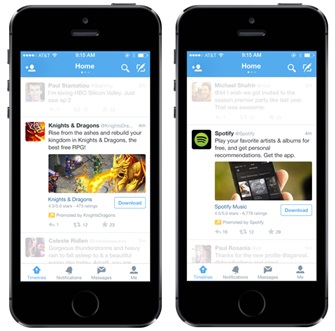
    Post its acquisition of MoPub in 2013, Twitter is expanding its reach by selling ads in mobile apps beyond Twitter. According to Twitter’s blog, “For marketers, this means a rich, native ad unit that combines the best of Twitter Cards and Promoted Tweets. Users can easily install and engage with apps, directly from the Twitter timeline.”

    Through MoPub exchange, you can purchase ads that power mobile app installs and engagement. These apps appear on Twitter as well as thousands of apps on MoPub’s network. Currently in private beta, these ads will be available for purchase in Twitter’s ad auction. You can apply other targeting parameters offered by Twitter for these ads.
    Twitter’s Mobile App Install and Engagement Ads
    You can also participate in real-time bidding to buy mobile app installs and engagement ads programmatically through MoPub within Twitter’s ad system. The ads will appear in the form of banners, interstitials, videos and also in native formats.

    A few brands like Spotify, HotelTonight, Kabam, Deezer, SeatGeek, GREE and GetTaxi have already tested this feature in beta.

    Mobile app installs and engagement ads will work on both, Android and iOS.

    MoPub reaches more than 1 billion unique devices, which is a huge bonus for advertisers in terms of reach. With Twitter being a lead source of engagement, a wide reach can help brands in enriching user experience more.

    LinkedIn Group Polling is Shutting Down

    LinkedIn is closing the Polling feature in Groups. The announcement on its Help Center claims that this update is part of LinkedIn’s bid to build a better product suite.

    As an alternative, brands can continue to engage with fans by:

    • Posting questions to get the Group’s response
    • Sharing an update or
    • Participating in conversations directly on the LinkedIn homepage

    Though this update may not interfere with brand engagement on LinkedIn Groups overtly, it does make a difference where brands will no longer be able to engage through an organized ‘questionnaire’ format that LinkedIn Polling offered.

    Do let us know your opinion on these updates…

    Image Source: Twitter