Tag: Marketing Automation

  • Want to Empower your Marketers? Get Automation to your Business!

    This week’s hot news, events and videos from the online marketing and social media world.

    From the Position2 Blog This Week:

    Top Stories of the week

    Persona Based Lead Scoring: The Mystery and the Method

    Download this White Paper and learn:

    • Classify leads based on behavior and demographic details
    • Develop a consistent methodology to proffer quality leads to sales
    • Employ data integrity and tracking
    • Deploy marketing automation to improve efficiency and cut costs.?

    Download the complimentary persona Based Lead Scoring White Paper now

    Lead_scoring

    If you are reading this blog post via a RSS reader, please click here to subscribe.

  • Why You Can’t Afford to Ignore Marketing Automation in 2016

    For too long, marketers have been overly dependent on IT to assist with their campaigns. Often, this is a slow process; requests for data dumps can be slow to appear. For many years, data has been locked down so tightly that there was no other option for marketers.

    But the task of compiling and using data is becoming increasingly devolved. This is part of a wider shift in the way we think about data, bringing it out of the server room and funneling it through tools that every department can access.

    Increased sharing of data requires high quality data that is free from errors and out of date information.

    Data in a database decays at a rate of 2 per cent per month. Up to 96 per cent of your database is currently out of date. Clearly, action needs to be taken on a consistent and long-term basis. The 2016 MarTech Data Report found that data quality is a problem for 49 per cent of its 400 respondents. Simultaneously, 51 per cent of respondents said missing information was a problem.

    Marketing automation offers great opportunities, but we all have groundwork to do first.

    Why does marketing automation matter?

    Automation assists businesses in having real time conversations with the people most likely to spend. In an era of increased social engagement, two-way dialogue is a critical part of positioning your brand as being open and willing to engage. It certainly helps if those conversations can take place instantly, without being a crippling burden on your resources.

    Customers are also using increasingly diverse channels, and automation helps businesses claim those channels and have conversations that span more than one. Thanks to better tracking and analytics, marketers can know where their efforts would achieve best results, without waiting for the IT department to turn around reports on KPIs.

    By 2020, Gartner says that customers will manage 85 per cent of their relationships with suppliers without ever talking to a person. Where there is less human effort, there are also lower costs, and a better use of data that the business already holds.

    Lead scoring, nurturing and segmentation also help boost efficiencies, passing these considerable resource savings to both marketing and sales departments. Marketing automation lets us see more granular segments and clearer signposts to engaging with prospects.

    Choosing the right platform

    In 2016, it’s not a question of whether you’ll adopt marketing automation, but which platform you should choose, and why. There are two key elements that a marketing automation platform must support:

    1. Your marketing funnel. Knowing your customer personas is key to marketing success, and when you’ve automated your processes, personas become absolutely critical. Too many companies choose solutions that don’t allow enough definition and measurement. That means content is less effective, and success is difficult to quantify.
    2. Your wider business. The marketing team does not exist in isolation. The data it uses should be the same data used by everyone else. What can marketing learn from other areas of the business? Integration is critical, because sales and customer support is part of the customer journey, and every cog is a part of the larger machine. Your automation platform needs to involved with the conversation, and needs to bring in all these different inputs.

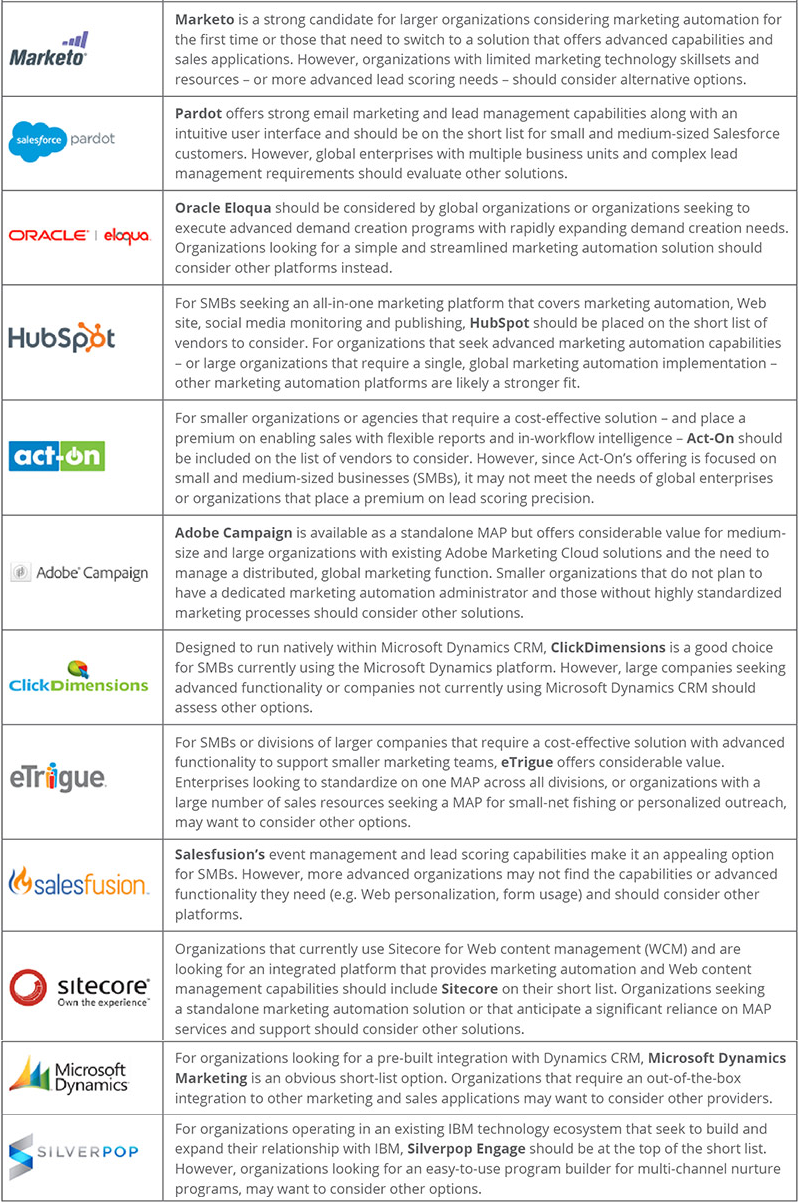
    There are dozens of options on the market, and not all of them are comparable. Some serve enterprise well, but others are SME focused. Examine the solutions you already have, and the ecosystem that will best work for your business.

    marketing_automation_vendorsImage Source

    Moving towards an automated world

    Marketing automation is pushing new boundaries in a new digital landscape. Software is delivering new features, opening up data that was previously difficult to access. Automation lets you respond quickly, adapt instantly, and tailor your approach depending on response.

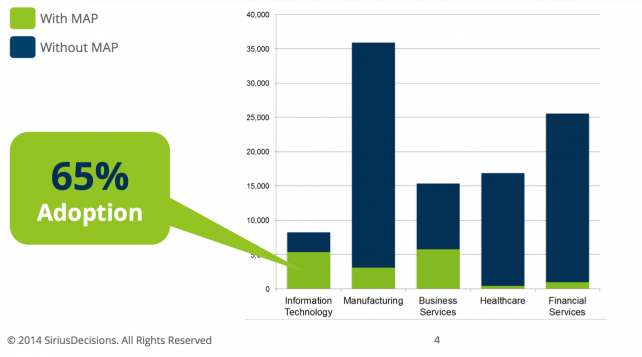
    One thing is for certain: automation drives an increase in marketing qualified leads (MQLs). This is proven in several studies. 80 per cent of marketing automation system users saw an increase in leads, and 65 per cent say leads increased by at least 10 per cent. According to SiriusDecisions, marketing automation adoption is increasing at a rate of 22 per cent; given the opportunities, it’s hardly surprising.

    marketing-automation-adoption-at-22-siriusdecision

    Your first step

    Position² is a Marketo Certified Partner, and our team already has over 4 years’ experience in the platform. Contact us for more information about our Marketo consultancy services. We have a booth at the forthcoming Marketo Marketing Summit 2016; stay tuned for more details about the event.

  • Top Trends That Will Dominate Digital in 2016

    We’ve already looked at our takeaways for 2015, and the trends that dominated the digital marketing space over the last 12 months. Now, it’s time to look ahead at what 2016 will bring for us all.

    If you want to stay ahead, you’ll need to adapt your strategy. There’s more focus on video than ever, and the Internet of Things is going to present some vital new opportunities.

    6 Trends For 2016

    Digital marketing is changing, and the coming year will shake up your plan. Here are our six key predictions for digital marketing in the coming year.

    1. Video, Video and More Video

    If you aren’t already using video to boost your online marketing, 2016 is the year that you’ll simply have to embrace it. According to Cisco, online video users are expected to double in 2016, providing an audience of 1.5 billion people. Video is particularly critical to capture the youth market, with a huge number of young consumers now favouring video over all other content.

    Social media sites are already tapping into this trend: Vine, Periscope, YouTube, Snapchat, Twitter and Instagram are all key platforms for video. As with written content, the key here is quality content that can stand up against slick competition. To compete, you’ll need a top-notch production team that can deliver accurate, branded messaging, while building a fully-engaged following across all the platforms you use.

    Online video now accounts for 50 per cent of all mobile traffic, according to Bytemobile, and that will increase to 74 per cent by 2017. This increasing focus on mobile plays out in two more of our key predictions, and we’ll look at these next.

    2. Desktop is Dying

    Video isn’t the only way that mobile is taking over, and marketers can’t afford to ignore the march towards mobile usage.

    In 2016, we’re going to see this trend continue, to the point where the desktop is going to be pretty much dominated by mobile. E-commerce on mobile devices is going to account for more than 24 per cent of total ecommerce revenue, and mobile ad spend will top $100 billion globally.

    Our collective use of social media backs up this trend. For every marketer that scales down its Facebook spend, there’s another pumping more money into Instagram. It’s this shift towards hand-held, pocketable content that will leave desktop firmly in second place.

    3. Digital Ad Spend is Exploding

    Online video advertising revenue is set to reach almost $5 billion in 2016, a huge increase from our 2013 spend of $2.8 billion. TV advertising revenue is set to decline.

    The visibility of video is increasing, and that’s leading to a massive increase in video advertising views. In December 2013, ad views on video platform topped 35 billion, which is a 100 per cent increase, year on year.

    As digital ad spend increases, we’ll see digital marketers looking at new ways to eliminate fraud and ad blocking. As we become more sophisticated at using native ads, we’ll see an uplift in efficiency. As a result, ROI will naturally increase – although there’s work to be done to improve users’ trust before that can happen.

    4. Consumers Will Expect Hyper-Personalization

    In 2016, consumers are going to expect a personal connection. Digital marketers need to embrace this thirst for one to one contact, and develop personal campaigns with joined-up, personalized campaigns.

    Personalization extends to every corner of your marketing spreadsheet, from PPC ads through to social messaging. Customer Match will be key for AdWords campaigns, while apps mobile will be instrumental in driving loyalty programs. For the best results, channels need to be joined to create a single customer view.

    Treating people like individuals marks a sea change for digital marketers, and will require analytics in a depth we’ve never seen before. Hyper-personalization is a perfect blend of big data and extreme refinement: if you can carve accurate customer profiles from your data silos, you’ll improve your chances of speaking directly to the people who will spend.

    5. Wearable Tech Has Come of Age

    Wearable technology has gone from being a niche interest to a mainstream consumer product, with smart watches and fitness bands leading the market. In 2014, wearable device shipments are set to reach 19 million units, with worldwide spending on wearables hitting $1.4 billion in 2016.

    The increase through 2016 will be even more marked, with wearable shipments hitting 111.9 million by 2018. That means we’re going to have more and more data about what people do, what they buy, and where those transactions take place.

    We’ll also see increased investment in the Internet of Things, both in the home and in the workplace, and that’s going to take marketers on an exciting new journey. While wearables tell us about people, the IoT will tell us about their homes, health and habits, giving us opportunities to optimize every step of their journey.

    6. Marketing Automation

    As our access to data is expanded, and our focus on data quality improves, marketers are going to be increasingly reliant on marketing automation. This technology allows us to tap into consumer habits, react quickly to trends and make contact with our audience more efficiently.

    Marketing automation is a key cost saving measure, and two of the world’s biggest think tanks back this up; Gartner estimates 15 per cent savings on creative production, and Forrester research suggests that automation yields 50 per cent more sales-ready leads, at 33 per cent lower cost.

    2016: Time to Expand Your Horizons

    Content may still be king, but you’ll need to transform your campaigns to stay relevant. That means expanding the scope of content you offer, broadening your reach, and looking for opportunities in new and interactive technologies. Video and the Internet of Things will be key drivers of change, and the insight we have into audiences will multiply. In 2016, marketers are going to need to equip themselves accordingly, embracing and analyzing huge amounts of data to improve the way they connect with individuals.

  • Digital Marketing: Key Takeaways From 2015


    This year has seen digital come into its own as a core part of marketing activity. Brands are increasingly ploughing their budgets into digital, and we’re likely to see budgets increase further. There are a number of reasons why digital is essential, and we’ve gathered some of the key trends here.

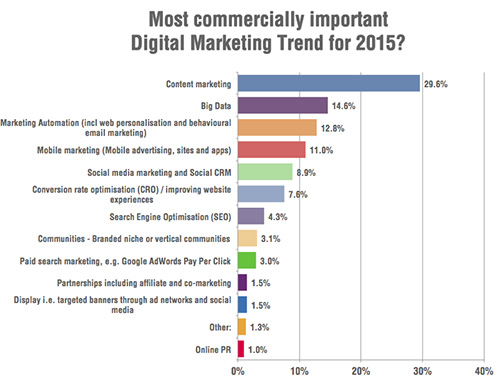
    Digital-marketing-trends-2015

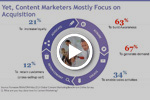
    The shape of things to come: Content Marketing took up a big chunk of responses, more than Big Data and Marketing Automation combined.

    Content marketing and personalization

    According to Hubspot, content marketing generates three times as many leads as traditional marketing methods, but it costs 62 per cent less. Providing you’re efficient, and you have a strong sense of your audience, a shift to video is going to pay dividends.

    Video is evolving to incorporate streaming media, and customers are expecting content that is tailored specifically to them. The key concept here is authenticity; you’re going to need to push beyond cookie-cutter content, and prove that yours is a brand to be trusted. While 73% of B2B marketers already use content marketing, we’re going to see an increase in investment in services like YouTube, and an emerging use of game-changing apps like Periscope.

    Marketing automation

    Digital allows you to put your data to work, and once your processes have been transformed, you’ll see huge efficiency gains.

    For a great example of automation in action, check out Marketo Ad Bridge. It serves up ads to people based on their habits, across a range of social media channels, helping you to avoid the scattergun approach that can make digital ads less effective.

    Mobile SEO

    A decade ago, anyone could make a website that displayed on a desktop computer. Now, we’re using a variety of devices to search and browse the web, from tiny wristwatch wearables to huge tablet devices.

    If you want to compete, you must have a mobile-friendly, responsive website, and it has to be optimised for use on a smartphone. A massive 60 per cent of all internet traffic in the US now originates from mobile devices; about half of internet traffic comes from mobile apps. If you still have a separate mobile website that offers a poor user experience, 2016 is the year you’ll ditch it for good.

    Social media

    Social media is an ever-evolving marketing tool, and if 2015 taught us anything, it’s that we can’t afford to stand still. Google+ has recently redesigned its interface to make the platform more appealing for its users.

    Marketers are learning to maintain focus on key social media sites, but to keep others in the frame and maintain an energised approach to their campaigns. You never know when a service like Google+ will reinvent itself with a new, killer feature, and that will be the key moment when the really responsive marketers will gain an advantage.

    Look to the future

    In digital marketing, constant evolution is the key to staying ahead of the curve. In 2016, we’re going to need to rethink and reimagine our digital marketing strategies to take customers on new, enhanced journeys. Social media is going to continue to gather pace, and the scope of digital is going to increase even further. Stay tuned to the Position2 blog to hear the first news on trends in 2016.

    Happy Holidays from Team Position2!

  • Best of the Week | How Marketing Automation Can Transform Your Business, and much more…

    This week’s hot news, events and videos from the online marketing and social media world.
    How Marketing Automation Can Transform Your Business
    From the Position² Blog This Week:
    How Marketing Automation Can Transform Your Business
    91% of users believe that marketing automation is “very important” to the success of their marketing. The question for marketers isn’t so much ‘will marketing automation technology have an impact on your business’ as ‘it is which trend is the best fit’? Read this blog for the latest and greatest marketing automation trends.
    Top Stories this Week: Social Media
    Top Stories this Week: SEO, PPC and Digital Media
    A Universal SEO Strategy Audit in 5 Steps - Whiteboard Friday Best of the Week Video
    Empowered buyers demand a new level of customer obsession in this age of the customer. Check out this on-demand session featuring Laura Ramos, VP Forrester Research and Sanjay Dholakia, CMO, Marketo. You’ll discover how to deliver optimal customer experiences and drive revenue in the process!
    White Paper: Increase Visibility for Your Content by 4x
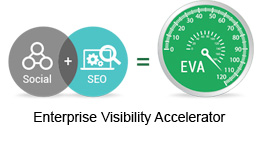
    Today’s traditional SEO is inadequate: Ignite your search results by accelerating visibility in more places than ever before.Download this White Paper and learn:


    • SEO, why the way we know it is not enough
    • Introducing and implementing Enterprise Visibility Accelerator (EVA)
    • Using multi-channel tracking tools for effective monitoring
    • How EVA benefits businesses.

    Download the complimentary EVA White Paper now

    Enterprise Visibility Accelerator-EVA


    If you are reading this blog post via a RSS reader, please click here to subscribe.
  • State of Marketing Automation 2015 [Infographic]

    Today with the explosion of digital channels and technologies you are spoilt for choice as a digital marketer. Marketing automation can effectively help put things into perspective so that you stay on top of things. Go through this insightful infographic in order to gain an inside view of the world of marketing automation now.

    position2_infographics_January_2015

  • Digital Marketing in 2015 – Concentrate on Data Quality

    As digital marketers we are in the midst of a data deluge that seems to overwhelm us if we are not accustomed to efficiently dealing with it. This makes the quality of data that we collate all the more important. A recent survey by Google has shown that over 56% of its online ads are never seen. Unfortunately digital marketers were never too concerned about data quality. 2015 might just be the right time to delve deeper into data mining.

    Big data has been getting all the right attention but there is an overabundance of it (of course that is where it gets its name from!).  Getting intimidated by big data is clearly not going to help you in any way.  Concentrate on only that portion of big data that makes sense to you. Create personas of your customers using the newfound knowledge. But there are a lot of impediments when it comes to making sense of the data that you collate from various sources.

    Consumers are cagey about their social and mobile data falling into the wrong hands. Digital marketers need to provide compelling reasons for users to part with their valuable data. Providing quality content to your users is one sure shot way of achieving this. While soliciting user information do ensure that you have a mandatory email field and the rest of the fields can be kept to only the bare essentials so that users don’t type in bogus information.

    High quality data today is any digital marketers’ dream come true. It can be used to create highly sophisticated and accurate customer profiles within marketing software that you deploy. Thus, it is imperative that you ensure the databases are built around reliable data as the first step towards creating better marketing campaigns. This is highly useful in executing targeted and personalized messages to customers.

    Remarketing – The Holy Grail

    2015 will see a lot of action on this front. All the tools needed to deploy highly effective digital remarketing already exist. For the uninitiated, remarketing lets you show your ads to people who have previously visited your website or used your mobile app. Dynamic remarketing takes it one notch higher by helping you to advertise only those products or services that users have previously viewed on your website or app. But all this needs the underpinning of quintessential data on consumer browsing habits.

    Some of the obvious benefits of remarketing are –

    • Targeting consumers when they are most likely to buy
    • Catering to a tailored list of consumers like ‘shopping cart abandoners’ that provides you insights on what exactly to advertise and to whom
    • It is possible to create a greater impact with your advertising the second time around

    Now to satiate your quest for remarketing or targeted advertising, you have a range of marketing automation software at your disposal. Take this quiz to find out how effective is you digital marketing strategy and if marketing automation software can actually help you.

    Hope you corral, cull and corroborate high quality data to deploy highly effective digital marketing campaigns in 2015!

    Contact us now for Integrated Digital Marketing campaigns to get the best ROI for your marketing spends!


  • Content Marketing 2015 [Infographic]

    Today relevant, insightful and highly useful content can no longer be sidestepped in your digital marketing campaigns. A stellar content marketing deployment will separate the men from the boys of the digital arena, come 2015. Here’s a primer of all that you need to know in order to have a successful content marketing strategy. Go through the incisive infographic now.

    content-marketing_infogra

  • 6 Important ‘Must Haves’ for a Successful Personalization Strategy

    Personalization strategy

    Personalization is a major focus area for digital marketers with mobile, cross channel marketing and marketing automation. According to a recent study, one-third of marketers said that personalization will be a key component in the future.

    Customers have a lot of information on products with less time to focus and decide. So, it makes sense for marketers to deliver a marketing experience that’s personalized and relevant. This means personalized messages, offers, products, communication and more.

    We have already written about the importance of personalization, not just in generic marketing, but also in cross channel marketing. Cross channel marketing is closely tied to personalization because of the changes in the way users are doing product research today (read on for more on this).

    Now, for the ‘must have’s’…

    • Audience Segments

    The way you have segmented your target audience plays a vital role in formulating your personalization strategy.

    Your target audience comprises of several different aspects, each of which plays a role in determining marketing effectiveness. Identifying each of these aspects and tailoring them to suit your audience is at the heart of personalized marketing. The more granular your understanding and the more personalized your approach, the more effective your marketing will be.

    For example, your customers may come from different regions – the US, Canada, France etc. and personalizing your marketing to cater to different languages and cultures can increase ROI. From within the same market, different individuals may have different information needs. Knowing what each individual in your audience wants enables successful personalization.

    • Prospect/Customer Data

    Data is central to understanding an audience. A robust and comprehensive database of prospects/ customers is extremely important while preparing a personalization strategy. Marketers recognize this – recent eMarketer research shows that marketers are increasing their efforts to gather customer data. Marketers also are broadening the boundaries of their data collection. Working without data makes marketing ineffective.

    Every bit of data can help fine tune personalization further. So, it’s important to meticulously gather information on a variety of aspects such as:

    • Demographics and zip codes
    • Loyalty membership
    • Device/s used
    • Referral sources such as websites, social network sites, ads, email campaigns etc.
    • Keyword referral data
    • Site search data
    • Past browsing and purchase history
    • Email campaign responses

    For example, using techniques like geo-targeting, you will be able to target prospects with offers personalized to their location. Add tracking codes on your website that allow you to follow prospect trails through your website and gather information about prospects’ likes and habits.

    Prospects have a plethora of channels at their disposal today and they use all of them for product research. Tracking prospects can help you follow the digital footprints they leave through channels they use. In the hands of a savvy marketer, these footprints are like gold nuggets!

    If you analyze your business’s data, you will spot many opportunities for personalization. The more relevant data you get, the greater the likelihood of fine tuning your personalization.

    • Prospect/Customer Journeys

    The customer journey offers many important cues for personalization especially in terms of personalizing information and offers.

    You want the customer journey to be smooth and quick but that doesn’t happen often. Understanding who gets stuck and where and for what reasons – this forms the basis for developing an appropriate personalization strategy. You may need to repurpose your content or develop fresh content to help the prospect get over his information road blocks or even reconfigure your offers to make him get over his inertia.

    • Personalization Technologies

    Before implementing your personalization strategy, you need to check if your technological capabilities match your strategy requirements. If you aim to collect prospect/customer data such as those mentioned above, you need to ensure that your website and marketing campaigns use technology and tools that enable collection and unification of such data. Infrastructure normally follows ambition. So, once you know your destination, you can acquire the appropriate technologies in a phased manner corresponding with your marketing readiness.

    • Strategy Cost

    Keep a close eye on the cost of building and implementing your personalization strategy. Some tools and technologies required can cost a lot. Build a basic personalization strategy that fits your budget and then make changes or retain the same depending on the availability of funds. As mentioned in the earlier point – set a high ambition in terms of where you want to reach in personalization, but get there based on what’s possible.

    • Product Suite/Service Offerings

    Your product/service spread determines your brand’s relevance to your audience. There will be people with diverse tastes and preferences in your target audience. While it’s not possible to have products for each one of them, the more relevant products you have, the more relevant you will be to individuals in your audience. This helps a lot of customers migrate across products as their requirements evolve or prospects to try out an entry level model. It’s this relevance that can lead to higher effectiveness.

    Personalization is an integrated process of constant fine tuning. You can keep adding dimensions and improve on what you are doing, but these 6 pointers should set you firmly down the road to success.

    Are there any other important pointers to consider while putting together a personalization strategy? Let us know through your comments below!