If the content you create to captivate your target audience is filled with deep insights and captures attention with your expert grasp of the subject matter you will convert your audience to clients who willingly advocate your brand or organization by sharing your content – infographics, blogs, and social media posts. Follow the step-by-step formula in this blog to optimize your content for conversions.
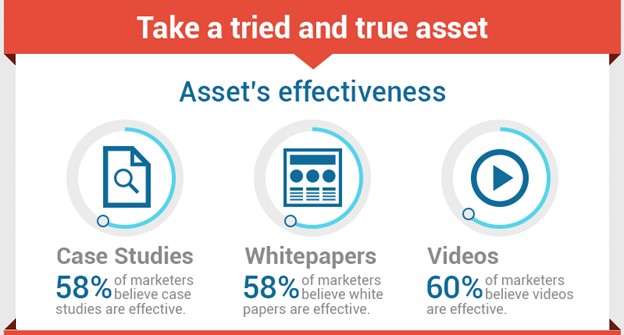
Step 1: Take a Tried and True Asset
Just 22% of US marketers have a specific process in place to reuse and repurpose their content. More often than not, marketers are sitting on a gold mine of unused content. A content inventory will help you get started. It gives you a clear picture of where existing content can be found, how well it performs, and what gaps remain unfilled.
For example: A 20 page whitepaper created three months ago, can be repurposed into an infographic, PDF, a video with voice-over and a 10-slide powerpoint (TWEET THIS!).
P.S. This blog is a repurposed infographic.
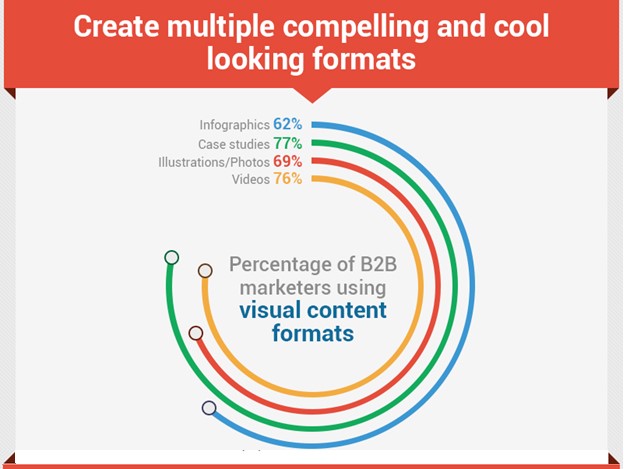
Step 2: Create Multiple Compelling and Cool Looking Formats
Great content can make a significant impact when repurposed across multiple delivery methods. Relevant portions from an eBook or whitepaper can be used both as blog and social media posts. Convert webinars into videos; create a blog post from the slide show.
People respond to visual information better than plain text. A picture is worth a thousand words because everyone is naturally wired to remember images far longer than they will ever recall a clever tag line.
Posters are one of the most effective types of visual content. Make sure to use a poster maker to create visually compelling posters that will leave a long-lasting effect on people.
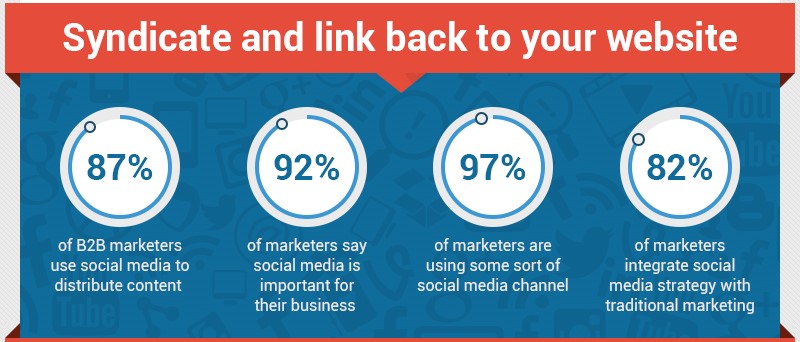
Step 3: Syndicate and Link Back to Your Website
Even though you have created stellar content that is relevant to the needs of your audience, there’s so much competition and content it’s easy to get lost in the crowd. So double down. Submit your content everywhere: social media, blog directories, online PR websites, niche communities, forums and user groups for your products or solutions.
Over a period of time you will see:
- Increase in website traffic
- Upward boost in sign-ups (newsletter, gated resources, contact us, etc.)
Step 4: Build Lead Capturing Landing Pages
Kudos! You are just over the hump and you are seeing a significant rise in your website traffic. But where is all this traffic going?
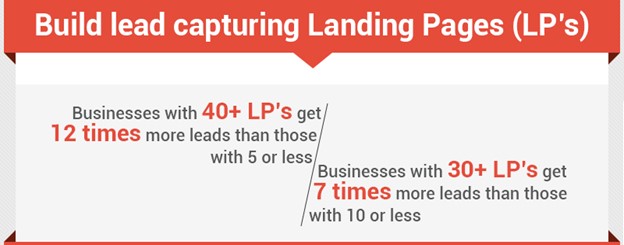
According to MarketingSherpa’s Landing Page Handbook (2nd edition), 44% of clicks for B2B companies are directed to the business’ homepage, not a special landing page. Furthermore, of the B2B companies that are using landing pages, 62% have six or fewer total landing pages.
MarketingSherpa cites the number one reason for landing page failure is a marketing department that doesn’t know how to set one up or a marketing department that’s too overloaded to get the job done. (TWEET THIS!).
Ideally, every offer should have its own landing page. The user who clicks a specific post or link and gets to your landing page remains engaged with the same messaging, and that leads him to your call to action (CTA). The advantages of landing pages are multi-fold:
- Landing pages help generate more leads
- One offer = One Landing page: Gated offers are a crucial lead generation source in your marketing efforts
- Capture information about your prospects and understand your audience better
- Thank You Pages and Email Responders will help you close the loop with your leads in real-time
Our verdict: The More Landing Pages You Have, The Merrier Your Numbers Shall Be!
Step 5: Don’t Forget Your Tracking Codes
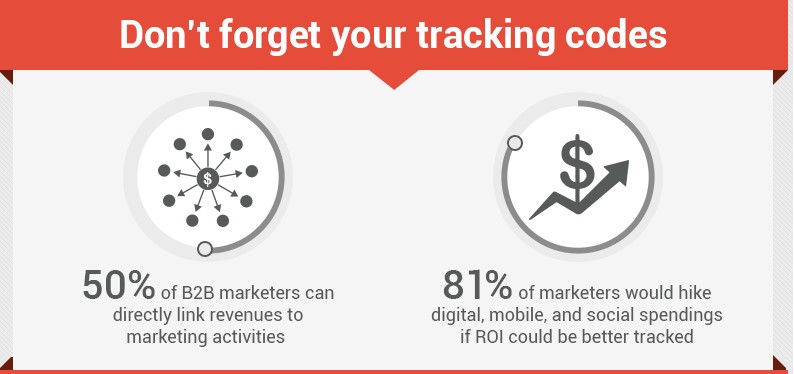
If you cannot measure content, you cannot manage content. Decide on your KPIs and then measure all your content efforts against the baseline KPI numbers. Broad KPI areas to track for different types of content are:
- Consumption metrics
- Sharing metrics
- Lead metrics
- Sales metrics
The process of content creation, distribution, tracking and analysis is an iterative cycle. You learn each cycle what your audience likes, and improve the process. The continual improvement results in enhanced lead quality, brand advocacy, happier prospects and loyal customers.
Bravo, if your numbers are off the charts! If not, continue reading…
Challenges Marketers Face
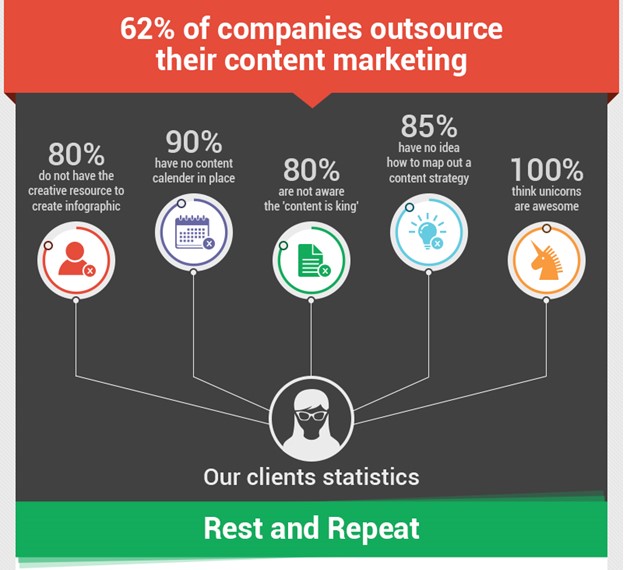
Marketers face serious challenges when creating and implementing in-house a sustainable content marketing strategy. The 2015 B2B Content Marketing Trends—North America highlights the major challenges that B2B Marketers face:
- Producing engaging content 54%
- Producing content consistently 50%
- Measuring content effectiveness 49%
- Producing a variety of content 42%
- Gaps in Knowledge and Skills of Internal Team, Lack of Integration Across Marketing and Budget were a few other challenges
I Can’t Do It All – Outsource Content Marketing
Creating a culture of capturing expertise within the organization and converting it into engaging content takes consistent time and effort. Bringing in an agency can help you fill some or all of the gaps in content strategy, content creation and distribution – right now.
An agency partnership provides:
- a different perspective
- variety and diversity in skills
- functional expertise
- industry specific expertise
“Marketing has changed more in the last two years than in the previous fifty.” – John Watton, EMEA Marketing Director, Adobe Marketing Cloud.
Is your marketing organization equipped to take advantage of every opportunity and overcome these challenges? Let us know your thoughts on content marketing, the pain points, the best practices or how unicorns are awesome!