Good SEO needs more than an understanding of the technical aspects of search and client’s requirements. It also needs a thorough knowledge of search trends relevant to your line of business.
Google Trends is a great tool to stay updated on these trends. Yes, it will also give you information on keywords that are not specific to your brand, but that’s how people search. It’s not enough to just optimize your website for brand search terms. You also need to include relevant non-brand related keywords.
Just think about it. Your target audience may not necessarily be looking for information using your brand name. They may be using search terms related to your industry. Having a wide spread of relevant keywords, though more expensive, can give you a competitive edge.
Using data from Google Trends will help beef up your SEO efforts as it will help you understand consumer behavior better.
Google has been emphasizing the fact that, in the future, SEO will be driven to cater to consumer needs. Google is now evolving from being a search engine to an interface which helps users get what they exactly want.
The settings in Google Trends offer different categories of data:
- Web, Image, News, Product and YouTube search
- Worldwide or region-wise search
- Time ranges (extremely important to know how a keyword evolved)
- Data is further available by interest categories such as, Arts and Entertainment, Autos and Vehicles etc.
You can compare up to five terms or even groups of terms at one time with up to 25 terms in each grouping, such as:
- Social + Icons + networking
- Analysis + web + tools + spend
- ROI + campaign
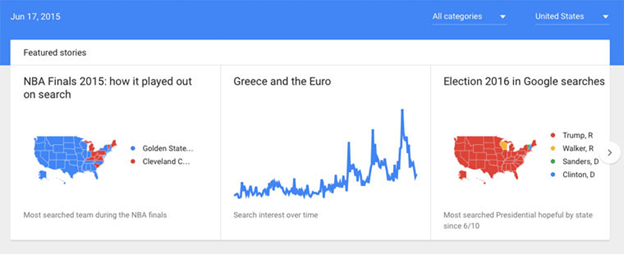
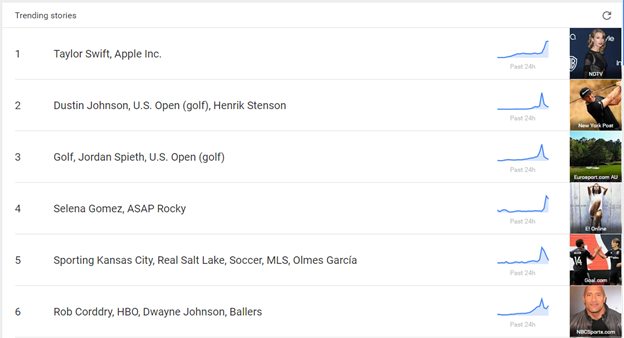
As with regular search, the + sign here tells Google that you want to cover searches that include ROI and campaign both. Using ‘Hot Searches’ and ‘Top Charts’, you can also find out about the top searches for the day and by popular categories. It is small things like this that can give you a vital edge or insight that makes a huge difference in the effectiveness of your campaign.
Avenues to Use Google Trends
Assistance in keyword research
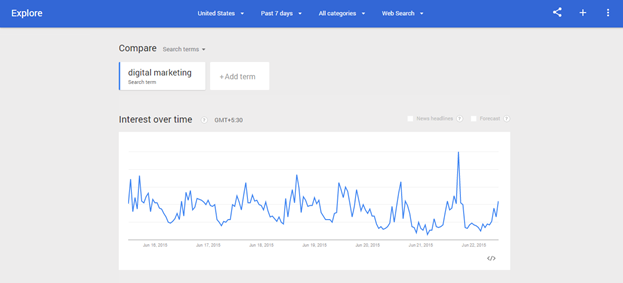
Google Trends shows popularity of search terms over a period of time with a graph that indicates interest ‘levels’. While it gives you an idea of the trend for those words, it does not provide exact numbers that search marketers can use. However by using Google Trends with the AdWords Keyword Planner, you can check the interest levels for the keywords for a particular campaign. This helps weed out relevant but unpopular keywords you may have picked.

The above screenshot shows the interest levels for terms ‘social media’ and ‘social networking’. The graphical representation clearly indicates that people have searched using ‘social media’ more than ‘social networking’. For example, if you are promoting a webinar related to social media skills through Google AdWords, you would do better using the phrase ‘social media’ in the title rather than ‘social networking’.
In geo-targeting for campaigns
You can access region-wise data on Google Trends and learn about the regions that exhibit the most interest in your keywords.
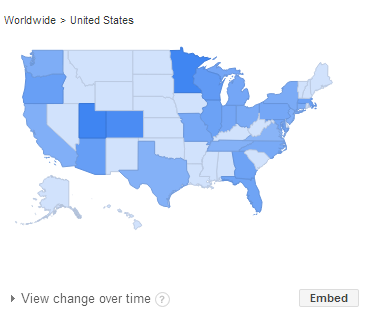
This depiction shows the maximum traction to be coming from Utah and Minnesota. You can even get data on the cities that top in these searches.
Support in content marketing
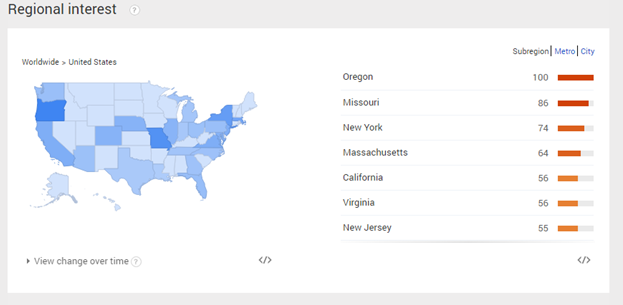
You can use ‘Hot Searches’ and ‘Top Charts’ to learn about trending topics in your industry. Do a quick survey among your clients and find out their real-time problems. Post blogs that answer those problems and build your reputation as an industry thought leader. Let’s pick Google among the social platforms and see the region where the interest has spiked.
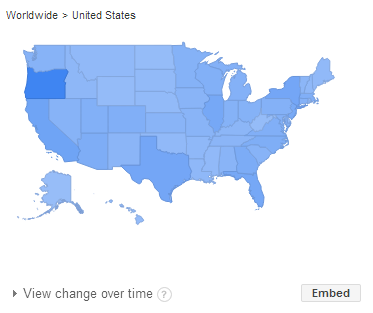
So, if you are planning on promoting an eBook on best practices for Google search optimization, Oregon should be a top contender in your list.
Video content generation
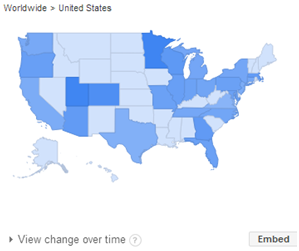
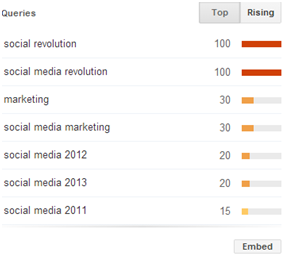
A YouTube search for ‘social media’ and ‘social networking’ reveals that again Minnesota ranks highest again with ‘social revolution’ being the topmost key phrase.
Maybe, you can convert your webinar on social media into a video or a series on how a brand can kick start a social revolution for itself by making the right moves. You can ensure your video features in YouTube search using these terms in your video title and description.
Another advantage of using Google Trends lies in estimating budgets to be allocated for paid campaigns. Data from Google Trends can be used to bid smartly on key search terms which users are actually using. This would help reach out to a larger section of the audience.
Can you think of any other ways in which Google Trends can be used to boost SEO efforts? Tell us!
Images Source: Google Trends