Tag: Google SERPs

  • Google Phantom 2 Algorithm Update

     ‘What does it mean to the businesses and search marketers?’

    Google’s on a roll. From the “Mobilegeddon” update last month to its recent secretive “Phantom 2” algorithm update, it’s delivering the best possible search results to users. And then going back for more. Google silently tweaks its algorithm much frequently than most marketers imagine.

    While the Mobilegeddon algorithm update was designed to boost the rankings of mobile friendly sites on mobile devices, Google’s Phantom 2 update will penalize sites with low quality content, specifically impacting “how-to” style content. Additionally, the impact will be felt by the entire domain not just standalone low quality website pages.

    What “Phantom” should mean for Search marketer?

    It’s a swift silent punisher of sites with thin content. They will lose the bulk of their rankings, traffic and conversions overnight.

     google phantom 2 update

    Image Source

    What does Phantom do to the actual business?

    • Your entire website is punished or sand-boxed
    • You rapidly lose a lot of traffic
    • You can’t see your high traffic ranking keywords on Google search results pages (SERPs)
    • Traffic conversions drop faster than you think
    • Your Return on Investment (ROI) disintegrates

    Essentially, you lose almost everything online you were working on the site (whether intentional or unintentional).

    It sounds scary, right?

    Reasons why a website is hit by Google Phantom 2 algorithm

    1. Sites with Low Quality Content

    Google has been cautioning everyone for quite some time now with Panda algorithm updates. Sites that add very little or no value to the audience are hit with the Phantom 2 algorithm update. This includes poor representation and lack of uniqueness in the content to the users.

    2. Engagement

    If your website content is not able to provide value to the audience, the engagement level is bound to be low on the website. The Phantom update emphasizes this fact. And the current Phantom 2 updates are a lot more strict than Panda updates

    3. User Experience (UX)

    • While content is one major aspect, others include the website load time, 404 errors, user flow, page architecture (design), color combinations, user navigation all of which should be taken very seriously by the webmasters. Make sure the website functions perfectly without distracting your audience and the search engines
    • Supplement, template content or using auto generate content tools slanders the uniqueness and the usefulness of the content for users. Marketers should be very careful and should maintain the relevance of the content for the users
    • Use of distractive and/or sponsored ads: Ads are meant to help users make the right decisions or provide information they intend to use during the buying process. Many businesses overdo by forcing users to click on these ads
    • Affiliate networks, which keep on bombarding and showcasing users with irrelevant ads
    • Sometimes ad links and content are in the same flow & color and users can’t determine the difference. Applying these tactics hurts the sites rather than helping. Remember, Google has already included human bots in deciphering these tactics
    • Pop-up’s annoy the audience if not used judiciously. Google algorithm has been optimized to identify these
    • Pages only containing images and videos without considering the theme of the webpage or over exposing the aspect of rich media are a negative impact
    • Pages with just links that point to subdomains or other websites with less/no content, are of little help. No more old school link farm techniques

    4. No Corrective Action Taken

    If your website has been hit by Google Panda or had elements hit by the update earlier, and you have done nothing to make content more appealing, fresh, and unique to the users, Phantom 2 will definitely have an impact.

    5. Duplicate Content and Canonical issues

    Happens frequently but often ignored by webmasters. Make sure you remove duplicate pages/content. Just remove them or block duplicate content from search engine indexing. Use proper canonical tags to make sure that one version of pages exist.

    6. Doorway Pages

    Doorway pages–Don’t try to deceive Search Engines and create similar pages to gain multiple rankings on SERPs. Google is smart enough to identify these and punish websites accordingly. Read here

    7. User Generated (spam content)

    Make sure user-generated conversations are relevant and checked for spam. Lots of low quality and thin ineffective user generated content raises an alarm and will be hit by the Phantom update. Ensure that community/forums are not used as junkyards for link and ad promotions. Have guidelines for the users to comment. Do periodic checks and edit/remove comments, which have negative user experiences.

    More to consider

    • Understand Your Target Audience/Personas before you write content. Attribute content across the funnel of the buyer’s journey
    • Have in place a content marketing strategy and plan. Make sure you generate genuine and unique content for the users, not for search engines
    • Try to develop a mix of content/asset types to keep users engaged. Distribute your content to relevant channels where your target audience generally visits. Content is King, but Distribution is ‘Queen’
    • Start with small. If you have constraints generating content, take small steps. Use Social Media to interact with your audience
    • Optimize your online channels Facebook, Google+, LinkedIn, etc., and reach out to your audience
    • Generate small content pieces. The traditional rule for audience engagement is 80/20. Eighty percent of your content should be for your audience, and 20% should be for your business (sales, marketing, self-promotion, etc.)
    • Have a social calendar in place to communicate with your audience
    • Regular Website Health Check up – Make sure all the technical aspects of the website are taken care of like page load time, design, navigation, etc. Regular checks on website hygiene ensures removing any major issues and creates better user and search engine experience
    • Make sure you track your content performance using analytical tools
    • Conduct regular analytics audits to make sure you are on top of your user engagement metrics. Understand what your audience needs and generate content accordingly

    At Position2 we utilize an Integrated Digital Marketing Approach to make sure our clients achieve premium results. Our proprietary Website Calibrator™ technology, a 41-point technical SEO audit, keeps our client websites equipped for any Search Engine algorithm updates.
  • Mobilegeddon – The biggest thing since Y2K?

    Google rolled out a mobile-friendly update of its search service and search rankings this week and the 24-hour media beast immediately labeled it “mobilegeddon“. Is there need for panic in the streets? Not if you have paid attention to the impact of mobile over the last few years, and adjusted your website accordingly. ComScore research confirms that 56% of digital content is now consumed via smartphones, and that makes mobile optimization a necessity.

    Despite the warnings of digital apocalypse Google’s roll out only affects search rankings on smartphones (tablets not included), and only individual pages, not entire websites.  But it should encourage a cultural change. Importing websites to mobile just won’t wash going forward. Building a mobile strategy from the ground up is now the order of the day.

    mobilegeddonmobilegeddon

    Image Source

    But in the here and now, if you are a webmaster, test your website for mobile compatibility here. To diagnose your website and get a complete mobile usability issues report across your website pages, click here. If mobile users are a big part of your core target group do this sooner rather than later.

    Google Analytics will tell you what percentage of your traffic comes from mobile search.

    First you need to Sign Up. Then navigate to Audience>Mobile>Overview and review the desktop/mobile/tablet breakdown. What you see is the overview of how seriously you need to make the transition to a mobile-friendly website. Now.

    How to “Mobilegeddon-proof” your website

    To make certain your web content stays relevant in a “mobile-first” world, check these do’s and don’ts:

    • Text has to be readable without tapping and zooming
    • Avoid unplayable video content
    • Eliminate horizontal scrolling for better rendering
    • Do not place your links so close that tapping on one is impossible
    • Avoid app download interstitials that block users from completing tasks
    • Allow Googlebot access to your JavaScript, CSS and image files
    • If you have separate mobile URLs, have immaculate redirects for all mobile users
    • Do not have irrelevant cross-links when deploying separate mobile URLs
    • Use HTML5 standard tags for animations and videos for a seamless experience
    • Steer clear of mobile-only 404s
    • Recognize and accommodate the mobile users’ need for speed for. It’s paramount.

    Position² will keep you posted on more about how the Google ‘Mobilegeddon’ update pans out in the days and weeks ahead.
    Stay tuned!!!

  • Slow Mobile Network – Google Lite is Here!

    Here at Position2 we have said it before and we’ll say it again: mobile is the preferred form factor for browsing the Internet. If you expect to engage with your target customers on their terms – when they want, where they want, on the device they use — mobile responsive sites are an absolute must-have, and ‘mobile first’ should be a core strategy.

    We recently wrote about Google’s labeling mobile-friendly sites in the mobile search, a very handy feature. Now, working behind the scenes, the Mountain View search giant has taken it a step farther to give users a seamless mobile experience.

    US smartphone penetration today is just shy of 77%. Over three quarters of the total US mobile subscribers now access the Internet while on the go. And that makes these users vulnerable to slow network areas and frustrating service. This has not been overlooked by Google engineers. Their solution, just introduced, is both simple and elegant.

    Google Lite, a new handy feature.

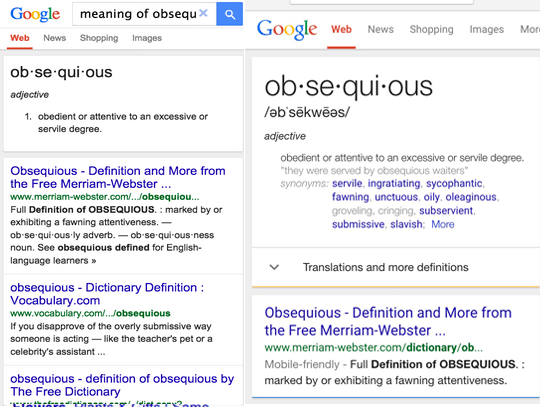
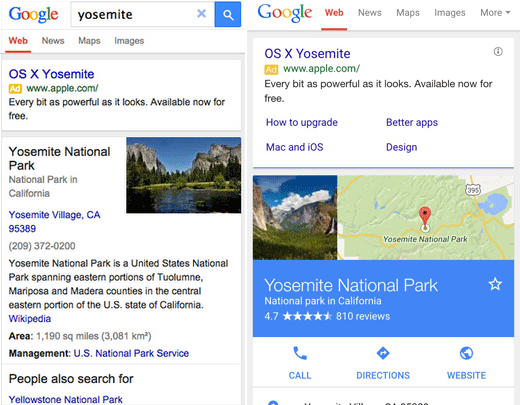
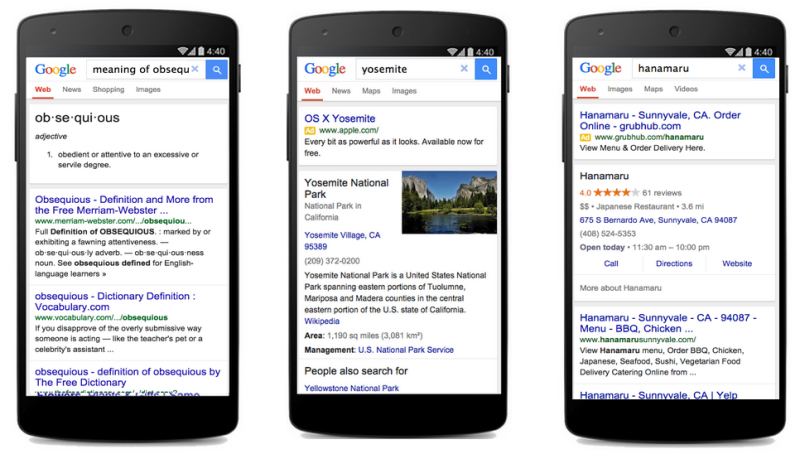
    Google’s ‘Streamlined Lite Version‘ of its search has been specially tailored for mobile phones caught in a slower data lane. It will automatically detect the slower network and display a no-frills version of search results for a keyword, i.e. stripped of all the usual bells and whistles. And the best part? No one has to download or update anything. It just is.

    Here are two side by side images showing the slow interface on the left and the normal interface on the right:

     Google search results with slow and normal interface.

    Snapshot of Google search results

    For a company like Google with a near monopoly over Internet search, making search easier in challenging situations makes the company’s position even stronger. It’s called customer service.

  • Google Rolls Out Mobile Friendly Usability and App Indexing Factors

    In case you still wonder about the relevancy of a mobile strategy, the search giant Google just announced two major changes to its search algorithm for ranking mobile sites. These factors will be rolled into mobile search results starting April 21, 2015.

    Here’s what’s coming:

    1. Mobile friendly sites to rank better on mobile search results

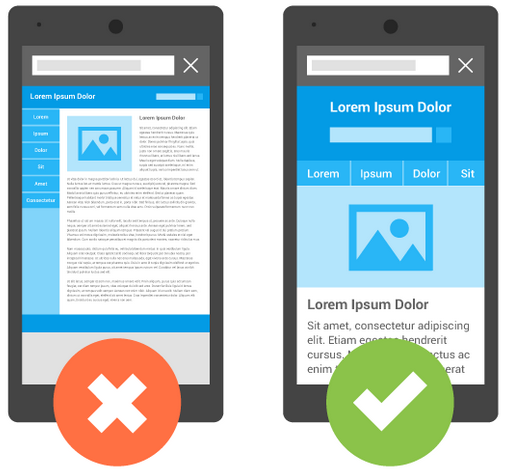
    In a major algorithmic change impacting mobile search results across all languages, Google will now label mobile friendly sites and determine if websites should rank on top of search. The intent is to provide users with the best possible and most relevant search results. Google advises businesses to make their sites mobile-friendly.

    Google guidelines for mobile sites.

    Image Source

    Check out Google’s guidelines for mobile sites.

    2. Google indexed mobile apps get prominence on mobile search

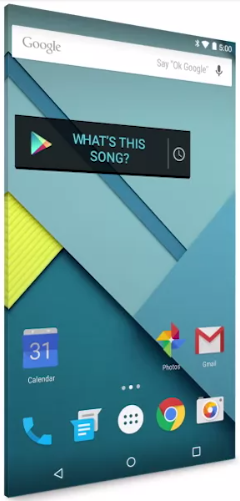
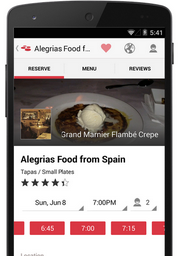
    App indexing enables apps to rank on Google web search results just like websites. This will apply to Android apps and will work for signed-in users using the app. Content from indexed apps and deep links will begin surfacing on search results.

    Google indexed mobile apps get prominence on mobile search

    Image Source

    The major implications of this update for businesses are, 1. have mobile-friendly sites in the first place, and 2. develop user-friendly apps – all of which helps businesses better align with the mobile audience.

    Here at Position2 we recommend that clients:

    • Start with a Mobile-friendly test
    • Adopt Responsive Site design – a single URL to access the site across all devices only needs a single Googlebot user agent to crawl rather than multiple user agents
    • Deploy app store optimization techniques to get the highest visibility for apps

    Be sure to check out our Website & App services

    Time to Go Mobile!

  • Pinterest, Google and Facebook Updates for the Week

    Pinterest Launches GIFs

    PinterestThe social site added another feather to its illustrious cap with the launch of GIF images. Pinterest also launched a recipe search feature at the same time.

    Pins with a GIF image will have a small ‘play’ button at the bottom left corner using which, users can play and pause the GIF image. The feature will be available to users world over on the web version of Pinterest. However, the company promises to activate this feature for mobile users soon.

    Brands can use GIF images on Pinterest to showcase real quick consumer reaction about a new product/service unveiled. Since GIF images are animated and so different from normal static images but aren’t videos at the same time, they can help capture user attention for a quick few seconds.

    Google Now Provides More Info about Sites before Clicking

    Their SERPs will now provide users with more information about sites that appear post a search. Users can find out more about every site in the results by clicking on the page name adjacent to the actual link.

    Google Now Provides More Info about Sites before Clicking

    Image Courtesy: Mashable

    The catch here is that this feature will not be active for all websites. For this information to be shown, a website has to be recognized online, there should be sufficient information to show or the content should be interesting for users.

    This information is drawn from Google’s Knowledge Graph, which strives to improve Google Search by taking semantic search information from multiple sources.

    For brands, this can mean better chances of increasing site visits when users see what their site is about before clicking. This can mean more engagement with site visitors thereby helping in gaining leads. If people are avoiding clicking on a link because they are not sure about the content of the website, this update solves the problem by briefing users about a site’s content aiding in resolving any qualms about legitimacy of site content.

    Facebook Updates News Feed Algorithm

    The latest to its news feed algorithm by Facebook has lead to reduction in the visibility of Page Updates.

    According to Facebook’s tests, more text status updates from users’ friends prompted them to write more status updates. But this was not true in the case of text status updates from Pages.

    Post this algorithm tweak, text status updates from Pages will be treated as a separate category from friends’ text status updates. Applying its learning that Page posts behave differently from friends’ posts, Facebook is reworking its ranking algorithms.

    Page admins will now see a dip in the distribution reach of their Page’s text status updates. A positive here is the hike Page admins may see in engagement and distribution for other story types. If your brand’s Page shares links simply by putting it together with a text status update, post this algorithm change, you should use a link-share.

    Facebook recommends that brand Pages should choose the story type that best fits their message without simply going for a text status update.

    We would love to know what you think about these updates. Use the ‘Comment’ section below and tell us!