Tag: CTA

  • Why UI and UX are crucial for SEO?

    UI (User Interface) and UX (User Experience) play crucial roles in SEO (Search Engine Optimization) because they directly impact user engagement, website performance, and overall user satisfaction. A website with a well-designed UI is visually appealing, easy to navigate, and provides a seamless browsing experience. This encourages visitors to stay longer on the site, explore its content, and engage with it, which signals to search engines that the website is valuable and relevant.

    Beyond Content & Links

    Search Marketers are right when they say content is ‘King’ regarding Search Engine Optimization (SEO). While we are busy generating quality content for our target audience, there is another aspect that we tend to overlook completely.

    You must have guessed it by now. It is the aspect of how content is presented to the readers. We are referring to UI/UX (User Interface/User Experience), an integral aspect of promoting content on the web.

    With the inclusion of recent updates like Hummingbird, Panda, Penguin, Pigeon, and hundreds of other Google algorithms that are being tweaked regularly, it becomes critical to know how users react to the website User Interface. The experience that the visitors go through definitely counts regarding how we perform on Search Engines, with special emphasis on Google!

    As a webmaster/marketer, it is essential to understand how users react to your website. Are visitors spending ample time on the website? Are they finding relevant information with minimal clicks? Are they taking desirable actions? Why are they bouncing off the website? Can the website drive visitors to the right content/sections and encourage them to take action after that? – While there are many questions to ponder, the simplicity behind having a great website is to have helpful content and enhanced UX with a well-laid-out UI.

    SEO

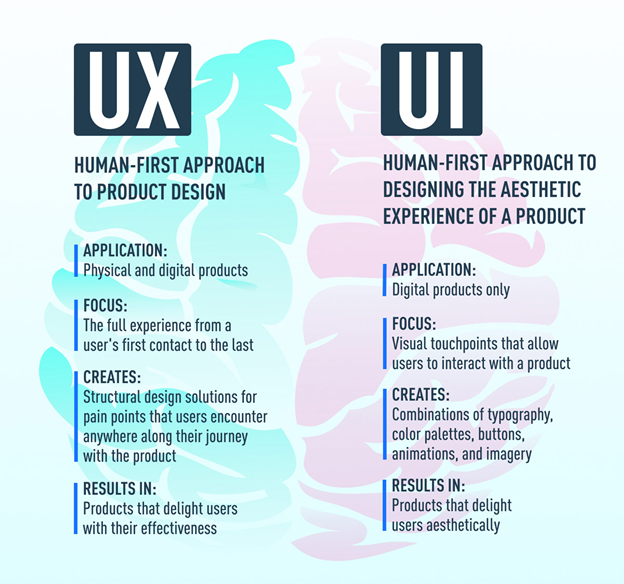
    What are UI and UX

    What are UI and UX

    User Interface (UI)

    UI refers to a website’s visual and interactive elements, including buttons, menus, and other graphical elements that users interact with. The UI creates an intuitive and user-friendly interface that allows users to navigate and interact with a website easily.

    User Experience (UX)

    UX, on the other hand, refers to a user’s overall experience when interacting with a website. This includes factors such as site speed, ease of navigation, and the quality and relevance of the content. A good UX design aims to create a positive and engaging user experience, which can lead to longer session durations, lower bounce rates, and higher conversion rates.

    In short, UI and UX are important aspects of web design that create a positive user experience.

    Impact of UI UX on SEO
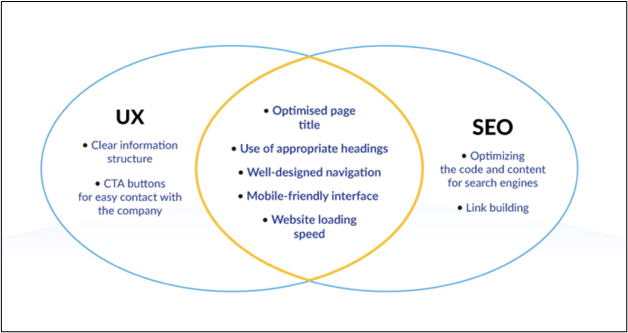
    Impact of UI UX on SEO

    UI UX both have a significant impact on SEO. A website with good UI and UX design can increase SEO rankings, traffic, and user engagement.

    A good UI design can improve a website’s SEO by making it more user-friendly and easy to navigate. This can lead to longer session durations, lower bounce rates, and higher click-through rates, all important factors that search engines consider when determining rankings.

    Similarly, a good UX design can improve a website’s SEO by creating a positive and engaging user experience. This can lead to more social shares, backlinks, and other signals that search engines use to determine the relevance and authority of a website.

    1. Teamwork: SEO + UI/UX

    SEO is the medium to drive traffic, while UX/UI creates the first impression. Both work in tandem to ultimately serve the user’s intent and hence conversions on the website. It is that bit of Creative effort which aids in boosting conversions.

    matts cutts

    “…If you don’t have search engine optimization, it’s harder to be found. If you don’t have end-user optimization, you don’t get conversions… you need to have both…Try to see them in tandem (i.e., Search Engines and End Users) …Your users’ interests and the search engine’s interests are always aligned….Hence you need to view them as one unit. .”

    SEO and UI/UX play a significant role in where the path (SEO) leads to the destination (UI/UX). What happens on the web page is our real goal or concern (conversions).

    We should know that SEO exists due to dynamic Search Engine algorithms, and hence fundamentally, it plays the role of a latent follower when optimizing a website for search.

    Google Hummingbird, Panda, and Penguin updates are now meticulously weeding out sites that don’t meet the basic content standards, design (UI/UX), utility, relevance, and speed.

    SEO and UI/UX are more like unified partners that marketers/businesses must respect since one cannot work without the other.

    2. Graphics makes your website more Attractive

    While most marketers are concerned with the content that drives traffic to the website, the other aspect that we miss is the aesthetics part. This concerns how the content is more impressive and informative to visitors.

    The image and graphics support and content make visitors interact more on the website and react positively to the information provided.

    Using the right mix of graphics, images, and text is a simple and effective idea. Using image alt tags, Meta information, and SEO-friendly URLs further helps to attain more SEO benefits.

    3. Visibility: Above and below the fold

    Don’t make your website a newspaper. The above-the-fold actions came from newspapers and were later adopted as a norm for websites. You need to evaluate the website’s objective to serve the target audience.

    With the changes in user behavior and assimilation of information available on the websites, visitors have learned to scan and scroll the webpages below the fold too. The folding concept remains important, but the judgment of how to attract visitors with content, images, and graphics that make visitors look for more cannot be ignored.

    4. Responsive Website: Facilitate improved User Experience

    As more people choose to use mobiles, smartphones, and tablets, having a responsive website that allows users to search for required information on any device becomes all the more imperative.

    In 2014, 4.22 billion people worldwide are expected to use smartphones. 49% of mobile users will go online via mobile browsers or apps. By 2015, the global mobile phone Internet audience is anticipated to cross well over the 50% mark. Hence, the importance of focusing on the responsiveness of a website that provides users with what they want, i.e., uninterrupted and high-quality User Experience (UX) on any device used for search. Read more on the importance of mobile SEO optimization.

    Responsive Website

    5. Call-to-Actions on your website pages

    The call-to-action (CTA) emphasizes what a user is expected or anticipated to do. Additionally, the Call to Action helps visitors find what they need. CTAs open the website and assist users in consuming the content they are searching for by making it easy to access, increasing engagement, and improving the probability of conversions.

    call to action

    6. Blog post-level Social Sharing

    While social signals are not a direct ranking factor, they can indirectly impact a website’s search ranking in several ways. For example, if a website’s content is widely shared on social media, it can lead to more backlinks to the site, which is a direct ranking factor. In addition, social signals can also increase the visibility and reach of a website’s content, which can lead to more organic traffic and engagement on the site. This can lead to longer session durations, lower bounce rates, and higher click-through rates, all of which are important factors that search engines consider when determining search rankings.

    Social sharing

    Furthermore, areas where UI and UX impact SEO

    1. Site Speed

    Site speed (page speed) is important for SEO. Search engines like Google prioritize providing users with the best possible search results; a fast-loading website is key. Websites that load quickly are more likely to rank higher in search results

    In addition, site speed is also important for mobile SEO. With more and more users accessing the internet on mobile devices, search engines like Google prioritize mobile-friendly websites.

    2. Bounce Rate

    Bounce rate refers to the percentage of users who visit a website and leave without interacting with the site beyond the first page they land on. A high bounce rate can indicate to search engines that the website does not provide a good user experience, which can negatively impact search rankings.

    3. Linkability

    It refers to how easily other websites can link to a website. Having a high number of high-quality external links pointing to a website is a key factor in improving its search ranking.

    Example of UI and UX elements that impact SEO

    • Instagram has become extremely popular. Users can easily move through the never-ending stream of visual content for lengthy periods of time without feeling overburdened because of its layout. There is something genuinely great about Instagram’s visual harmony and order, even though most users couldn’t quite put their finger on it.
    • Uber is a prime example of a product with a nearly evenly split UX design.
    • Disney+ has generated a lot of buzz since it first entered the streaming media. The user experience has been enhanced even if the UX design had a rocky beginning.
    • Telegram is less well-known than Whatsapp, its main competitor. Its UX design does, however, offer a thoughtful, attention-to-detail experience, which is a feature of a strong UX design example.
    • Nike’s website recognizes that proximity and visual cues significantly impact the user experience. This is a lesson that every design team should remember: proximity and hierarchy can promote sales. Nike’s various product pages are excellent examples of effective UX design.
    • Without mentioning Pinterest’s recognizable user interface, what kind of blog post about UI design inspiration would it be? As true innovators in card design, Pinterest combines card design with a waterfall flow to provide users with an extremely seamless and user-friendly interface.

    Conclusion

    User intent should be measured as a probable treasure trove for content marketers. Great content, amplified attention to SEO aspects of your website, and equal prominence to the User interface (including Call-to-Actions) are all critical for making a website add value to your business.

    UI and UX is a critical part of the online purchase cycle of a product or service, and having an optimal balance of all the aspects puts you ahead of the competition.

    Frequently Asked Questions

    How can I measure the impact of UI/UX on SEO?

    You can measure the impact of UI/UX on SEO by tracking metrics such as bounce rate, session duration, and click-through rate using tools like Google Analytics. Additionally, conducting user surveys and analyzing user behavior can provide insights into how UI/UX impacts search rankings.

    Is UX/UI part of SEO?

    UX (User Experience) and UI (User Interface) are not directly part of SEO (Search Engine Optimization). However, they can indirectly impact SEO by affecting user behavior on a website. A website with a good UX/UI design is likelier to have lower bounce rates, longer session durations, and higher click-through rates, all factors that Google considers when determining search engine rankings.

    Why is user experience the most important factor for SEO in 2023?

    User experience (UX) is one of the most important factors for SEO (Search Engine Optimization) because it directly affects user behavior on a website. Search engines like Google prioritize providing their users with the best search results; a positive user experience is key. Websites that provide a good user experience, with fast loading times, mobile experience, easy navigation, and engaging content, are more likely to rank higher in search engine results.

    How do poor UI and UX affect a website’s SEO?

    A poor UI (User Interface) and UX (User Experience) can have negative impacts on a website’s SEO (Search Engine Optimization). A website’s poor UI/UX design can lead to high bounce rates, low session durations, and low click-through rates. These factors can signal to search engines that the website is not providing a good user experience, resulting in lower search rankings.

    How is SEO connected to UI and UX?

    SEO (Search Engine Optimization) and UI/UX (User Interface/User Experience) are connected because a good UI/UX design can positively impact a website’s SEO. Search engines like Google prioritize providing their users with the best search results; a positive user experience is key.
  • Strategies For Optimizing Your Website


    A website can be the ideal platform for businesses to make their services and products available online at their customer’s and potential customer’s convenience. In other words, a website is your best bet for being available to customers everywhere, all the time.

    Websites vary according to business goals. The B2B website isn’t going to function like the B2C, C2C or even C2B websites. Website optimization begins with a clear business strategy.

    What actions do you want people to take?

    What do you want your website to accomplish? Which business goals must it fulfill? What actions do you want website visitor’s to take? Answer these questions then determine which of three website optimization strategies leads to success.

    1. Search engine ranking
    2. User experience
    3. Lead conversions

      1. Search engine ranking

    The goal here is to occupy the highest rank on search engine result pages for selected target keywords. High ranking search results are more likely to be clicked by customers.

    To optimize your website for search engine ranking, research your close competitors’ content. You’ll be able to figure out which relevant keywords should be optimized for content updates on the website. Relevant keywords are the ‘base’ of the web content that users will be looking at. This content should be relevant to the user’s search query intent — relevant to the topic of the search query — and should provide value to the searcher.

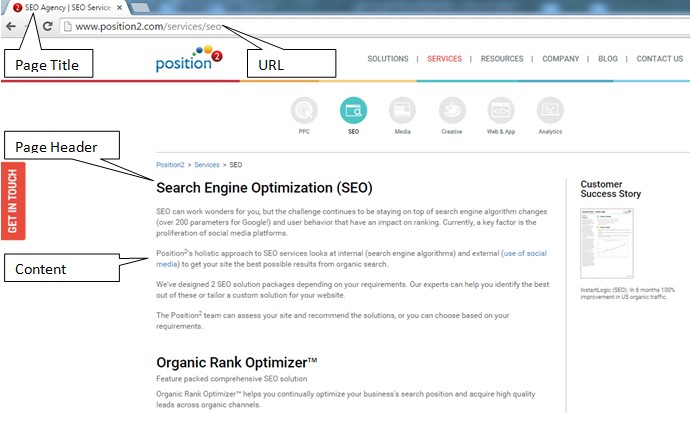
    Optimize by inserting defined keywords at Page Titles, URLs, Page Headers, into the main body content, meta descriptions and on the meta keywords. These sections of the page are crawled by search engine bots looking for keywords and using them as a ranking factor. You maintain rank position by continually monitoring and refreshing web content.

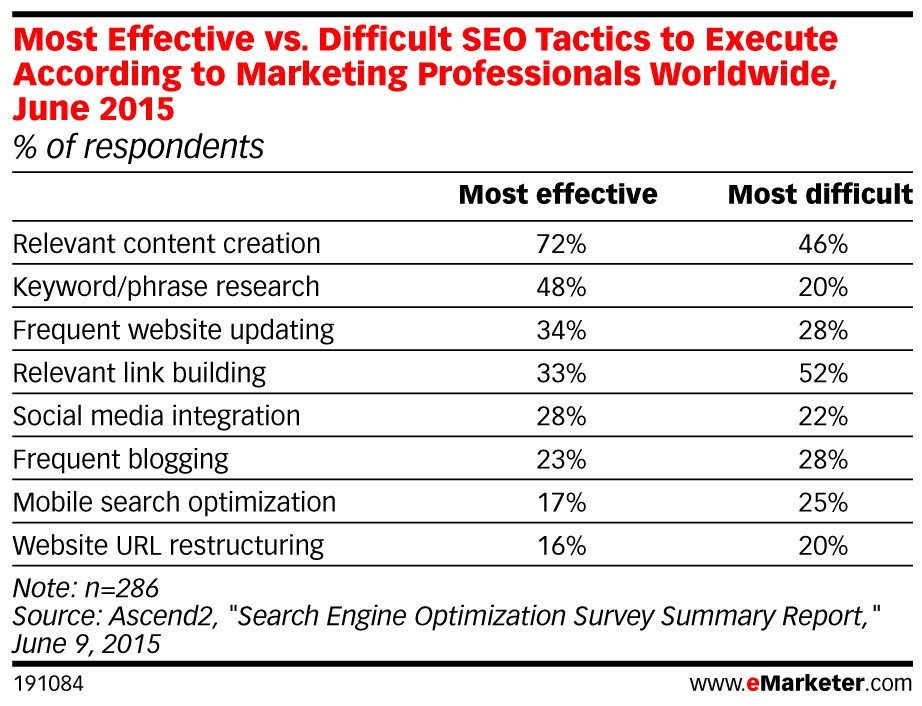
    Most effective vs difficult SEO tactics

    Double check this list for search engine ranking optimization:

    • Right keywords or content topic
    • Content relevance
    • Page title
    • URL restructuring
    • Page headers
    • Social media integration
    • Meta Description and meta keywords

    SEO Optimization to improve rankings

    2. User experience

    Optimize your website by focusing on design. Where some websites are too simple and lack appropriate content others are visually complex to the point of distraction. Users make these kinds of quick judgments on their first interactions. Consider these statistics:

    • 40% of people will abandon a web page if it takes more than three seconds to load (Source:Econsultancy)
    • 6% of mobile users report having difficulty interacting with a web page, and 44% complain that navigation was difficult (Source: Keynote)
    • When a page takes 4 seconds or more to load the change in a website bounce rate spikes 100%. At 8 seconds or more to load it jumps to 150%. (Source: Mobile Joomla)
    • 95% of those queried agree with the statement: “good user experience just makes sense” (Econsultancy)

    Websites should not be static. They should continually evolve over time. Keep these points in mind to make a website attractive and appealing for quality user experience:

    1. Maintain font hierarchy
    2. Include pictures
    3. Use short sentences and paragraphs written in an active voice
    4. Use bullets appropriately
    5. Leverage bolding, italics and hyperlinked content

    Web content should be easy to understand for visitors, and easy to crawl for major search engines.

    Brief relevant content on the website should not be sacrificed for the sake of simplicity. Coordinate between the various components like title, URL, body content, descriptions and keywords. For example, if the page topic is fitness equipment, the same message should be conveyed in the URL, title of the page, brief content, meta description and meta keywords. This is like a welcome mat for users, making them feel that they have landed on the page with the answers they are looking for.

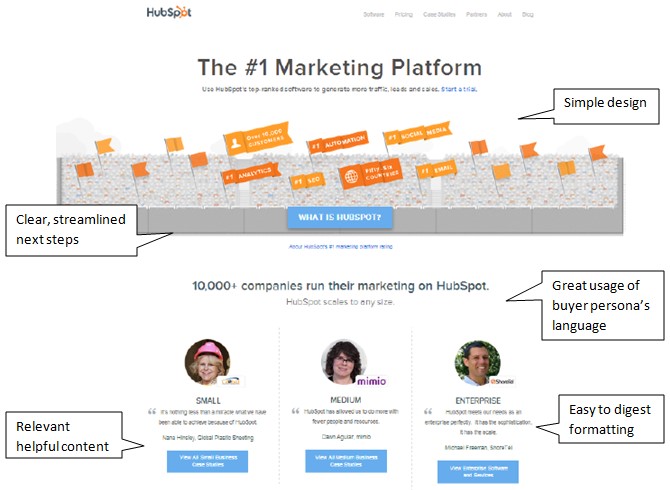
    Website User Experience (UX/UI)

    Source: Hubspot 

    3. Lead conversions

    For some businesses, acquiring quality leads may the primary purpose of their online presence. In that case, optimize your website to acquire lead information from visitors.

    Oddly enough, a lot of businesses don’t bother:

    • 56% of B2B small business websites don’t use meta descriptions that show up in search results and could help draw visitors into the website
    • 87% don’t do anything to make their “Contact Us” option stand out
    • 82% don’t bother to even list their social media profiles
    • 68% do not show an email address on the home page
    • 70% of business B2B websites lack a Call to Action

    So if you just do that much, you are way ahead of the game. Your design should be based on click-through action buttons that are visually engaging. Here are some basic click-through rules of the road:

    • Base your design on click-through action
    • Place CTA buttons above the fold of the page
    • Use visually prominent colors for CTA buttons
    • Landing pages from CTA buttons should be simple form fills

    Once users have clicked through to a landing page, don’t befuddle them with complexities.  Simple design is good design. Complex form fills requiring too much information don’t get completed, and the viable lead bounces away. See image below for lead gen form:

    Lead Conversion Tactics

    Source: Landing Page Course

    Your business needs will determine the best optimization strategy. Websites should be easy to understand and to crawl. They should satisfy search engines and searchers alike. Website optimization is more than just search engine optimization. With quality content that answers your users’ search questions you will always rank at the top of search engines and attract, convert, acquire and delight customers.

  • Best of the Week | Crafting An Effective Call To Action, and much more…

    This week’s hot news, events and videos from the online marketing and social media world.
    Crafting An Effective Call To Action
    From the Position² Blog This Week:
    Crafting An Effective Call To Action
    Highly successful websites, landing pages, email campaigns and PPC ads all have an effective call to action in common. That’s a fact. Read this blog for a few best practices to help you improve on your CTA efforts.
    Top Stories this Week: Social Media
    Top Stories this Week: SEO, PPC and Digital Media
    SMX Advanced 2015 - AMA with Google Search Best of the Week Video
    One of the highlights of SMX Advanced was the AMA session with Webmaster Trends Analyst, Gary Illyes. Watch on as Danny Sullivan of Search Engine Land asks the hard hitting questions about Google’s latest developments!
    Persona Based Lead Scoring: The Mystery and the Method
    Download this White Paper and learn:


    • Classify leads based on behavior and demographic details
    • Develop a consistent methodology to proffer quality leads to sales
    • Employ data integrity and tracking
    • Deploy marketing automation to improve efficiency and cut costs.?

    Download the complimentary persona Based Lead Scoring White Paper now

    Lead_scoring_Whitepaper
    If you are reading this blog post via a RSS reader, please click here to subscribe.
  • How to Improve Organic CTR – does your SEO take care of this?

    What is the best ROI that you can get through SEO campaigns? How do you know the end results that can be derived from SEO?

    Is it engagement, traffic, brand building and reputation management? Or is it simply lead generation?

    How do you know the end results that can be derived from SEO?                                                                                                                                                                                                 

    You need to keep some best practices in mind while generating higher ROI vs. KPIs with SEO.

    Search engines are vital in fulfilling the ‘intent’ of finding information. SEO efforts cannot be directly tied to the final purchase of products and services like paid media/advertising. Constant and dynamic updates are made every day by search engines, making it more difficult for marketers to understand it.

    The basic rules are simple and straight: stick to the ‘intent of doing good for users’.

    Users come first and then the search engines. In fact, the very foundation of success of search engines is users. Search engines want to serve the best information to their audience. The concept of optimizing content for a visitor plays a very vital role for the marketers.

    Boost Organic CTR

    Here are few tips on how you can boost organic CTR for your website and also within the internal web pages:

    1. Focus on people and consider the latest technology as support

    People are our ultimate target audience. Users/searchers use technology to attain their goals.

    Online marketers should not forget that technology is user-driven. Focus on people and consider the latest technology as support

    Tips:

    • We need to think and adapt to what the users want and need and not the search engines.
    • Get to know your audience – conduct offline and online market research. Their feedback will be useful for your success.
    • Develop strategies around human beings (target audience) and deploy them to balance both target audience and search engines.                                 Image source

    2. Keyword Research and Mapping

    Let’s start with the basics. It is important that we have all the right keywords mapped to the right content.

    Keyword research and mapping                                                                                                                                                                                     Image source

    In other words, keywords should develop out of content and not otherwise. Combine long tail keywords and conversational keywords for balanced conversions. This increases conversions on the website with better targeted content.

    Tips:

    • With the keyword level data vanishing from Google Analytics (‘not provided’), you need to benchmark page level metrics such as KPIs for your success (page level: traffic, engagement, bounce rate, new visits, etc.).
    • With unique keywords mapped to each page, track performance of the page level traffic to mark success.
    • Have a content strategy around conversational keyword targeting (with natural language understanding) that includes blogs, forums, etc.

    3. Search Engine Results Page (SERP) Ranking

    Your SERP Ranking is an indicator of a certain level of success of your SEO efforts. But it is not the complete picture. Your SERP ranking is an indicator of a certain level of success of your SEO efforts

    We need to remember that organic rankings on Page 1 are just indicators of doing the right optimization. You need an SEO strategy that is defined better to consider these as success parameters.

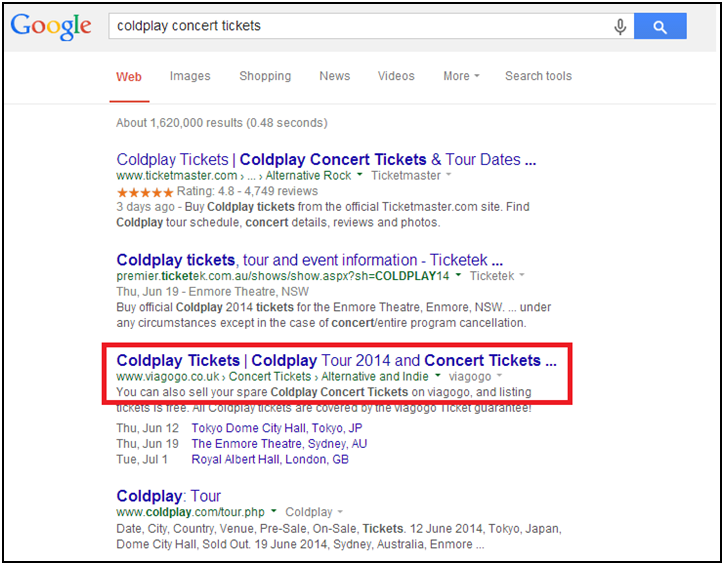
    However, when your audience is finding information on search engines, it is important that you hit the sweet spot on the first page of Google. In short, ranking between 1st and 10th on Google Page 1 does matter. However, rankings above the fold (the part of the screen visible without scroll; usually rankings 1-4) have more visibility; have higher CTR and direct more traffic to the website.

    In other words, higher the rankings on search engines, higher the probability of directing relevant traffic to the website and hence conversions.  Image source

    Tips:

    • Make sure your basic SEO and technical parameters are in place.
    • Move inch by inch. Have a detailed plan to test out your SEO strategies, both short and long-term. Create content accordingly.
    • Remember to create content for your target audience and not search engines. Analyze your audience’s wants and needs.

    4. Title Tag

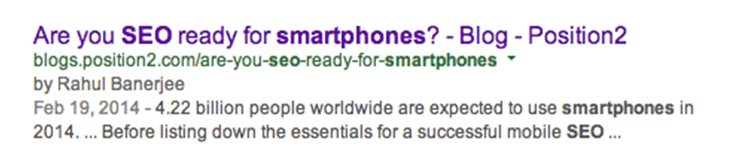
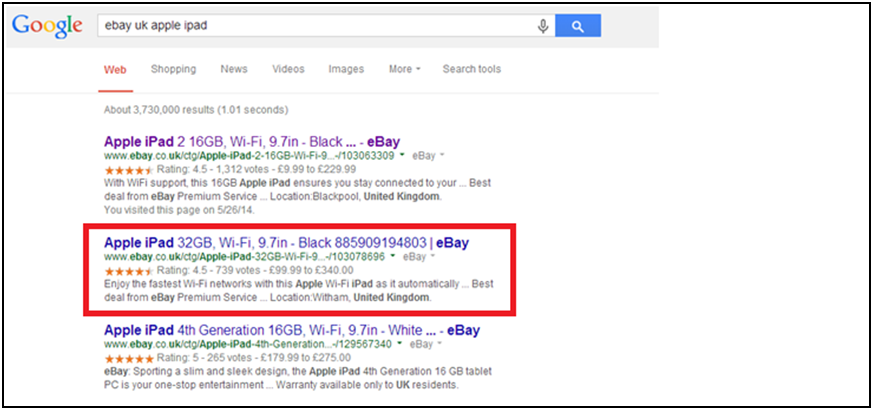
    The title tag describes the theme page in short and appears as a blue link on SERPs. These appear when a searcher types in a query to find information on search engines.

    A page title catches attention and influences the searchers to click on the link to your page. A well-defined page title has higher CTR on SERPs.

    Are you SEO ready for smartphonesTips:

    • Make your page title as natural, relevant and attractive as possible so that the target audience is compelled to click.
    • Include your target keywords to impact organic rankings.
    • Keep the title within 65 characters.

    Make it simple, short, interesting and natural to increase search inquest.

    5. Meta Description

    While the meta title gives an idea about the page users see on SERPs, meta descriptions help the audience understand what the web page content is about before they actually reach it. While search engines consider meta descriptions as ranking factors, when constructed well, they also influence searchers to click. You need to briefly describe what the page is offering.

    Tips:

    • Use it tactically. Have an objective for defining your webpage.
    • Keep it natural and understandable for your target audience. Include keywords that snag users’ attention and lead to chances of higher CTR.
    • Maintain the optimal character limits for the descriptions. It should be around 150-160 characters with spaces. Write what markets the unique content of the page. Include USPs, value adds, discounts and offers.
    • Meta descriptions are indicative of the page theme and may not show in the SERPs. Google also uses other publicly available sources of authority like Wikipedia to show relevant results. So, have a content marketing plan along with website optimization.

    6. URL Optimization

    The best approach is to frame URLs for people that are crisp, easy to read and remember.

    Clear and concise URLs on SERPs reassure readers that a page will deliver on their search and enable better CTRs.

    URL optimization

    7. Rich Snippets (Structured Data Markup)

    a) On-page markup using Schema

    Inclusion of Schema markup enables search engines to understand and categorize unstructured data on web pages. This helps provide richer search results and makes it easier for users to find relevant information on the SERPs thereby driving better CTRs.

    On-page markup using schema

    Customer rating markup on a product page: Improves credibility of the product leading to better CTRs.

    b) Google Authorship markup

    Linking the content of the author with his/her Google+ profile enables a headshot of the author to appear next to the search listing. This leads to better CTRs for blog posts and articles from SERPs.

    Google authorship markup

    8. Call-to-Action (CTA) – Visibility

    Apart from techniques to increase CTR through search, the final touch should be well-judged placements of CTAs on the website. This would increase the probability of CTRs and hence, conversions on the website. Call to action

    As mentioned earlier, it is necessary to rank above to fold in search engines and have CTAs (buttons, forms, etc.) above the fold.

    Call to action

    Call to action     Tips:

    • Test the important pages of the website, the home page, products and solutions pages with Heat Map. Monitor your audience’s movements on your website pages. Then place the CTAs accordingly.
    • Competitive analysis tells you how your competition is doing. Draw inputs through the comparison.
    • Work on your website design based on your budget and look to improve user experience.

    Contributed by Rahul Banerjee – Head SEO, Position2