Tag: amazon

  • Should You Go Mobile First Or Mobile Only?


    Flipkart, India’s answer to Amazon, bid adieu to its mobile website with the Big App Shopping Sale in March, 2015. From here on out, Flipkart shopping is all about the mobile app. Myntra, India’s foremost e-commerce fashion site, has shut down its mobile website, and may ditch browser-based shopping altogether. Such is the rising power of mobile.

    With e-commerce firms actively pushing consumers to their apps and leveraging attractive discounts and deals to encourage consumers to buy through the apps, having a mobile app in place is now all but essential. From Amazon’s Happiness Day sale in November 2014 to Myntra’s Binge Weekend Sale and Snapdeal’s App Fest in February 2015, the offers on mobile apps just keep on coming.

    “There is a business reason behind promoting apps,” says Mr. Rajiv Srivastsa, founder and chief operating officer of Urban Ladder. “It leads to higher conversion and engagement. If you build only an app platform, it is cheaper as you don’t have to invest in two-sets of codes – both mobile website and app.  However, in the long run, one has to engage the user enough, so she doesn’t uninstall the app.”
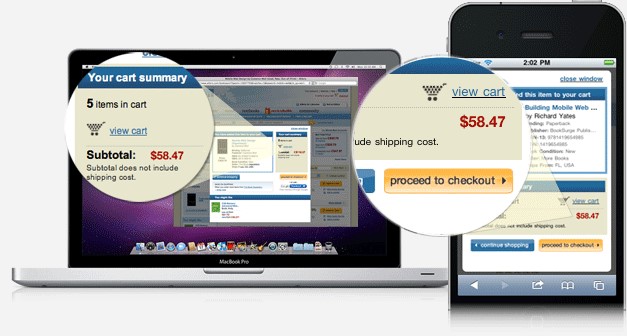
    Mobile App or Mobile Website for e-commerce Business

    Experience is the Key

    Though apps offer an attractive way for e-commerce players to interact with their consumers, it is neither easy nor advisable to force apps on customers. According to a study conducted by ICM Research in UK, a majority of customers prefer to interact with retailers through their mobile websites and only download an app if they are incentivized to do so, or if they are regular shoppers. And yet the same consumers are far more likely to complete transactions through the retailer’s mobile app than through the mobile website.

    “Going app-only makes sense if you can provide an experience not otherwise possible on the mobile web platform,” says Shamik Sharma, chief product and technology officer at Myntra.

    Consumer Experience on Mobile App

    Merits / Demerits of Mobile App

    There are crucial differences in the ways mobile websites and mobile apps help customers navigate and experience their shopping journeys. Mobile apps function a lot like mobile websites. They have certain operational and functional benefits and they have downsides as well. Customers can interact with the app 24/7 no matter where they may be. The IT advantage for business is having their own corner on a customer’s device. Mobile apps promote a customized experience because they work in the background, allowing e-retailers to collect user-specific data such as recurring purchases, duration of browsing, preferred platform to share information, geo-location and so on. The downside involves convincing customers it’s in their interest to install the app and give up permissions.

    Some businesses simply prefer both mobile websites and mobile apps. For example, India’s MakeMyTrip mobile site is an acquisition platform while the app is a loyalty and retention platform complementing its desktop presence. According to Pranav Basin, head of online products for Makemytrip.com, “The desktop plus mobile app is a great combo. They complement each other perfectly”. Ankit Khanna, Senior VP for product development at Snapdeal cautions, “We do not want to force consumers to download our app. If they want to browse first and buy later, we enable them to do that”.Website Vs. Mobile App – Position2 Blog

    While an app install “cost” is high, once you get the consumer on board the marketing cost could shrink.

    While mobile apps enable better targeting of customers, the major draw back is the extra step introduced into the shopping journey – at least the first time around. As one e-marketer pointed out, with e-commerce you click and buy. With an app, you click, you download and install, and then you buy.

  • Digital Marketing & Behavioral Targeting

    You can’t be limiting your marketing strategies to one or two channels today, not with digital media on board. If the difficulty of marketing to potential customers on this labyrinthine playing field tweaks your pain threshold, then you need to focus on behavioral targeting.

    It is nothing new. Marketers have used behavioral targeting since analog times to get better ROI. But not necessarily in the digital age. Only 24% of digital marketers actively utilize behavioral targeting techniques, no matter how straight forward those techniques might be.

    So let’s look at some ways to implement behavioral targeting in the digital world. In its simplest form, behavioral targeting means gathering information from a user’s browsing history then using it to tailor a marketing strategy. Consumers leave behind a digital footprint when they visit a website. Customer profiles can be created from page visits, time spent, links visited, search history, etc., and can then be used to deploy behavioral targeting, like pushing highly relevant (“targeted”) advertising. Statistics demonstrate that the chances are high that a targeted advertisement will convert a user into a customer.

    When Amazon seems to follow you to any website you visit and then throws up highly relevant ads, that’s behavioral targeting used by an online ecommerce behemoth. The days of one size fits all are long gone. The Internet of the future will be an even more personalized affair. Behavioral targeting might be costly to deploy but the returns more than compensate.

    The Right Approach

    It is an interconnected world all the way around and the idea of remaining incognito while on the Internet is, well, quaint. Digital marketers can turn this quality to their advantage. With each passing day the prices of ads rise and the cost of customer acquisition follows suit. This has given rise to technology firms masquerading as ad networks that partner with tens of hundreds of websites simply to obtain information on user behavior. In other words, a whole new digital industry. These ad networks use sophisticated software tools and advanced analytics to slice and dice the raw data they gather and produce readily deployable digital marketing information..

    It is not how much information you have but what you do with that information that matters. You can target your users via “cookies”, small bits of code deposited on your users’ hard drive. From this their browsing behavior can be tracked, the websites they visit, their social networking interests. If they send a tweet or publish a post on Facebook, you can keep a tab on it, too. All this information pertaining to your users can then be organized, aggregated and distributed so you can make sense of it and target them with ads that, hopefully, make sense to them. When someone shops on an ecommerce site their shopping behavior reveals itself, in detail. And so user personas are built and targeted ads are delivered. But here’s the trick for digital marketers: whenever they tracking users, they should make sure the users have a knowledge of it. In other words, the users have to buy in. Otherwise, it’s spying. It’s invading privacy.

    If done the right way your users won’t complain about behavioral targeting. It can be a win-win situation, but not if it  becomes intrusive, a perceived breach of trust. That’s when it becomes an issue with your users. You simply cannot intrude on your users’ privacy. Everybody appreciates their needs being met, actions being anticipated before they are manifested. But no one likes their privacy hacked by advertisers. The opportunity you have is to build trust. Then you not only convert a customer, you retain a customer for life.

    What do you think of behavioral targeting and its vast benefits? Contact us to deliver personalized advertising to your target group now!

  • How will Amazon Ad Network Affect Digital Marketers

    Amazon's Ad Network

    Amazon is bolstering its ad network on the Internet with renewed vigor in order to give the industry veterans like Google a run for their money. Amazon recently manifested its serious intent to be a big player in the online advertising arena with the takeover of Twitch, a video game live-streaming site for almost a billion dollars! Learn more here about why Amazon paid such a hefty price for Twitch.

    The Amazon ad network is not just a list but it is much more than that. Amazon has a massive database of consumer shopping patterns on the Internet and marketers can use this to their advantage for targeting ads to the specific consumer group in order to make the maximum impact. Retargeting is a marketing idea that really caught the fancy of marketers in 2014. But the problem with retargeting is that you need to get the consumer to visit the appropriate site before you can remarket to him/her.

    The novel idea here is to pre-target the consumer by using massive Amazon algorithms which predict consumer buying and activity patterns and gives you important metrics on who might be open to evaluating your product. Now Amazon here has an edge over Google, since Amazon is basically a consumer-oriented company and hence they have better leverage over consumer buying behavior. It’s the next wave of advertising which digital marketers are waiting with bated breath that is not just about people searching for products but introducing people to products.

    The amount of data that Amazon has is staggering. Currently it uses this to its advantage to improve conversion rates on its site. “Conversions are our key metric” – is a quote from Amazon’s 2013 annual report. Now this speaks volumes about the amount of data that digital marketers can lay their hands on in order to achieve better conversion rates, as well. Marketers can take comfort in the fact that hitherto unheard levels of targeting can be achieved just by partnering with Amazon. Consumer data is the holy grail of marketers and currently Amazon is sitting on a mother lode of such data on the Internet. Thus Amazon with its deep pockets can change the game for good, forever.