Tag: Algorithm Update

  • RankBrain: AI Comes To Google Search


    “If you say ‘Google’, people think of search,” Greg Corrado said. He’s a senior research scientist at Google working in artificial intelligence, computational neuroscience, and scalable machine learning. “Search is the cornerstone.” Corrado met with the press to highlight, for the first time, the important place of Artificial Intelligtence (AI) in search. At Google they call their AI system RankBrain.

    Making use of AI, RankBrain embeds vast amounts of written language into mathematical entities — called vectors — that the computer can understand. When RankBrain sees words or phrases for the first time it guesses what words or phrases it already knows that might have a similar meaning, and filters the result accordingly. This makes RankBrain extremely effective at handling never-seen- before search queries, of which there are more than a few.

    Google handles millions of search queries a second, 24/7/365. Let that sink in. Of that total number of daily queries, about 15% of them are completely new to Google.

    The hundreds of signals that contribute to Google’s regular search algorithm all kick in for any query, to be sure. And RankBrain is only one signal out of all those hundreds determining what results appear on a Google search page and where they are ranked. But in the months it has been deployed, according to Corrado, RankBrain has become the third-most important signal contributing to the result of a search query.

    “The other signals, they’re all based on discoveries and insights that people in information retrieval have had,” Corrado said, “but there’s no learning,”.

    And that’s the thing. RankBrain isn’t just precise in matching sites to queries. It also learns and improves its performance over time. Corrado says Google has used RankBrain to handle a massive search load over the past few months and has discovered that RankBrain is better at predicting top search results than Google’s own search engineers.

    The Google engineers who spend their days developing the algorithms that power Google Search were asked to review selected pages and guess which ones Google’s search engine technology would rank on top. They were correct a stunning 70% of the time. Rank Brain had an 80% success rate.

    RankBrain rolled out across all of Google search starting in early 2015 with the green light from Amit Singhal, Google’s senior vice president of search. The yearlong effort started with a team of about five Google engineers, including search specialist Yonghui Wu, and deep-learning expert Thomas Strohmann, before expanding to dozens of people. It took a long time to be certain the system was ranking things correctly.

    “It’s very carefully monitored,” Corrado explained. Google periodically updates the system by feeding it new data to help it better reason with new concepts.


  • Google Panda 4.2 – Algorithm Refresh


    Tens months have passed since Google’s last Panda update. Now it’s time for a refresh, again. Here comes Google Panda 4.2 — though, as Google points out, it will take several months for the complete roll-out.

    Here’s a quick Google Panda recap: The first update was announced by Google in Feb 2011. There have been four in 2015, including Mobilegeddon in April. Google’s apparent purpose is to promote quality content and reduce web spam. Panda 4.2 is the 28th iteration of Panda updates, and was announced by Google’s John Mueller and Gary Illyes on July 18. According to Search Engine Land, 2-3% of search queries are affected by this refresh, and it may take months to see the results of any changes. Gary Illyes also confirms on Twitter that the rollout will be on a global scale:

    Gary Illyes tweets -Google Panda 4.2 Update

    What does this mean to websites?

    1. Sites that were hit by Panda 4.1 and have since taken remedial measures now have a chance to regain rankings. Since the rollover effect is still to be witnessed in detail, many webmasters are not really feeling the heat.

    Changes Recorded after Google Panda Update

    Image Source 

    1. Quality content will continue, in part, to determine SEO and search ranking. Websites with good quality and original content achieve greater significance in the eyes of the search giant.

    Position2 PoV

    Our thoughts and recommendations haven’t changed from what we said about Google Panda 4.1.  This new iteration is a refresh. We continue to recommend that our clients develop unique and original content on their sites and avoid thin content. Overall content placement should be aimed at users and should provide quality information in a way that is easy for a user to understand.

    Let us know your thoughts about this update in the comments section below.

  • Evolution of Mobile SEO: Is Your Website Mobile Friendly?

    Evolution of Mobile SEO

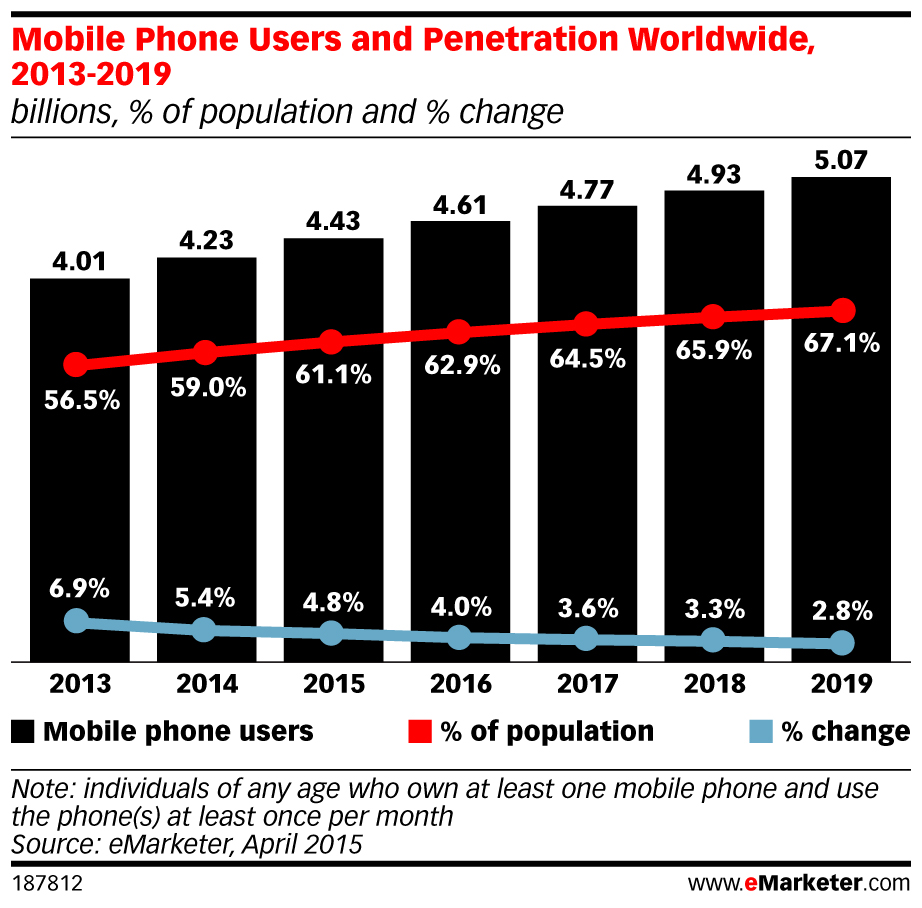
    With 4.43 billion individuals using mobile phones world wide — 1.84 billion of them smart phones –  and with half of all local searches carried out on mobile devices, it’s no wonder Google has become determined to deliver the best possible mobile user experience on search. With continuous algorithm updates the company’s message is clear: improve your mobile web development practices or suffer the consequences.

    Mobile Phone Users and Penetration Worldwide - 2013 -2019

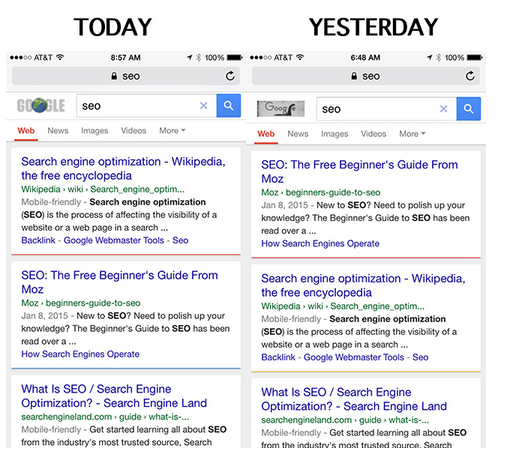
    The April 21st Mobile-friendly Ranking Algorithm rollout – Mobbilegeddon —  has had a significant impact on mobile search results, with websites not quite mobile friendly dropping in rankings overnight.

    Moz discovered as much when their rank on mobile search for search query “SEO” dropped a notch in favor of a mobile-friendly source.  Read our previous blog on Mobilegeddon to learn how it has affected search rankings on smartphones.

    Mobilegeddon's affect on Mobile Search

    Your task going forward:

    • learn to configure your website for mobile
    • help search engines understand the website configuration
    • avoid common mistakes along the way

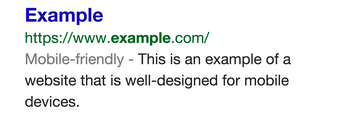
    To this end, Google has developed a mobile SEO guide to get you started. And take this test to see if your website has a mobile-friendly URL. What you are shooting for is the Google “mobile-friendly” label that appears in search results

    A search result with the mobile-friendly tag looks like this:

    Search Results with Mobile Friendly Tag

    Mobile SEO Best Practices

    Mobile Site Configuration

    Three ways to make a website mobile friendly:

    1. Responsive web design has Google’s stamp of approval. It’s the least risky course of action with the fewest opportunities for errors. Websites built using this design modality have a single URL for a piece of content. This allows users to share, like and link to the site. Getting a device optimized view requires no redirection. And that reduces page load time, saving resources for both your site and Google’s crawlers. This improvement in crawling efficiency helps Google index more of the site’s content and keep it appropriately fresh.
    2. Dynamic serving gets a grudging nod from Google. A server, relying on the user asking for a targeted page, reacts with distinctive HTML (and CSS) on the same URL. This server-side approach uses server-side plugins and custom user agent detection to decide how the website can be delivered to mobile devices. JavaScript detects the user’s device type when queried and adapts the code base so only the right layout is sent. It responds to desktops, smartphones and everything in between on the same URL but with different HTML and CSS.
    3. Separate mobile URLs – Every desktop URL has an equivalent URL serving mobile-optimized content with a separate set of HTML. And another equivalent URL serving tablet-optimized content with yet another set of HTML. These Separate mobile sites have the following configurations:
      • Separate URLs for desktop, mobile, tablet, etc. (m-dot, t-dot, etc.).
      • Different HTML is served for each site.

    Web Design

    1. Design your website for the best mobile user experience. Use HTML5 for special effects rather than flash. Lose the pop ups. They irritate mobile users and result in high bounce rates. Design the website for fat fingers — seriously. Make clicking easy.
    2. Don’t block CSS, JavaScript and Images – The most recent guide from Google focuses on ‘exposing of JavaScript, CSS and Images’.
    3. Page Speed Test – Mobile searchers want results fast, so Google tests for it. Slow load times lead to higher bounce rates. Images, codes, browser caching and redirects affect page speed optimization. More information can be found on Google Page Speed insights. Bottom line: Google prefers faster websites.
    4. Optimize Title and Descriptions: Keep titles and descriptions as tight as possible. With less screen space, go for quality.
    5. Optimize for local search – Think local since one in three searches is for something nearby. For local businesses include Name, Address and Phone Number (city as well) in the site’s meta data.

    Companies and designers that take the mobile friendly initiative to heart will come out on top, like the best ever search result. Those that don’t are bound to sink.


  • SEO: It Gets Personal

    Google launched Personal Search in early 2005, initiating a new search paradigm that didn’t depend on the user being signed on or not. Going forward, search results would be weighted on the user’s search history, not just keywords. Algorithm updates followed, one after the other, like the Venice update in 2012 and the introduction of Google Now in 2012. At this juncture it’s safe to say Personalization is more than a major factor among many. It will dominate Search in the near future.

    SEO

    Image Source

    Most Internet users don’t have a clue that their Search results are being personalized. Where Personalization initially made use of context and relevancy, localization now heavily influences the behavior of Search. Google’s algorithmic changes to Search over the years have locked in Personalization. With the Humming Bird update in 2013, we saw how search results could be tailored to individual needs by judging and understanding the entire context of search terms, not just individual words.

    Eric Schmidt, CEO of Google, has said, ”Google search will continue to become more personalized, getting away from the ‘10 link’ approach that we see in search results today.”

    How Does Personalization Affect SEO?

    1. Web-pages/websites focused only on keywords and intended only at improving links will no longer gain prominence
    2. User-centric content with a high “like” factor and greater probability of being shared among users will elevate in search results
    3. Branding will be significant enough that businesses need to build brands and not just websites
    4. Relevancy of content underscored by proper social relevance, asset optimization and syndication is vital

    Factors that affect the personalization of search results

    1. Users’ location

    Google — or any other search engine — knows exactly where a search query originates. With logged in users add age, sex, places travelled recently, et al. to the list of retrievable personal data. The increased use of smartphones has substantially increased the personal data flow into Google’s servers.

    1. Search & Web History

    User’s behavior on the web, the type of search queries made, the websites visited can be mapped to the kind of search results a user experiences on Google.  Google collects data about logged in users to understand the kinds of websites a user favors and browses. Another key factor is the user’s profile on Google+. Likes and ratings to web-pages, product reviews, etc. all factor into the search results. And so do links a user likes that get pushed to people in his Google+ circles who then make a Google search.

    Position2′s PoV

    Three things you can do to win at the Personalization game

    1. Relevant & Fresh Content

    Don’t just write for Search engines. Make your site content relevant to users. Fulfill a need. Continually update web pages to cater to users’ search behaviors.

    1. Social Sharing

    Regularize social posting and sharing activity. Utilize all social channels, but focus on Google+, Google Local and YouTube.

    1. Focus on Content Syndication

    Users reliably click on videos, infographics, and other rich-media assets much more than they click on editorial-heavy web-pages. So leverage your rich-media assets for content distribution.

    The Personalization of Search: that’s the future of SEO. Let us know what you think.

  • Google Algorithm Update: Say Goodbye to Doorway Pages!

    One of the most annoying search results will now be blocked by Google. We can all cheer a collective “hooray”!

    What are Doorway pages? In short, they are web spam. Designed to game the system, these pages rank high in search results, click baiting the searcher to an irrelevant page or site. Google described examples of doorway pages on their blog for clarity:

    • Having multiple domain names or pages targeted at specific regions or cities that funnel users to one page
    • Pages generated to funnel visitors into the actual usable or relevant portion of your site(s)
    • Substantially similar pages that are closer to search results than a clearly defined, browseable hierarchy

    Google has not officially announced a release date for the doorway page penalty algorithm update, but they did state they are “continually working on ways in which to minimize the impact of webspam on users”.

    SEO Managers and/or Webmasters are advised to review the Google questionnaire to make sure your website does not qualify as a doorway page. Check them out below:

    • Is the purpose to optimize for search engines and funnel visitors into the actual usable or relevant portion of your site, or are they an integral part of your site’s user experience?
    • Are the pages intended to rank on generic terms yet the content presented on the page is very specific?
    • Do the pages duplicate useful aggregations of items (locations, products, etc.) that already exist on the site for the purpose of capturing more search traffic?
    • Are these pages made solely for drawing affiliate traffic and sending users along without creating unique value in content or functionality?
    • Do these pages exist as an “island?” Are they difficult or impossible to navigate to from other parts of your site? Are links to such pages from other pages within the site or network of sites created just for search engines?

    If you find yourself answering “yes” to one or more of these questions, take action before Google penalizes your website.

    If you have any questions about doorway pages, Contact Position².