Category: Retargeting

  • Why Cross-Device Targeting is a New Marketing Battleground

    Cross-device targeting (or tracking) is a way to link different sessions from the same visitor on your website. The idea is simple: people may visit at different times, and on different devices. Cross-device targeting lets you tie the visits together, so that you recognize the same person regardless of the device being used.

    cross-device-marketing

    When visitors can be tracked across devices, marketers can target them with personalized offers. This makes remarketing a powerful tool. If you don’t link desktop and mobile sessions in this way, you essentially lose customers when they close their laptops. Marketers miss out on opportunities to connect with them, and find it more difficult to understand their journey.

    Two key approaches to cross-device targeting

    There are two ways to approach cross-device targeting. The first is deterministic targeting, when a user has to sign in to get full functionality. This is also referred to as first-party tracking. Using this method, there’s no doubt that the right users are being identified, because they’ve provided the data we need to follow them. While you need to convince the user to cooperate by opting in and signing up, you’ll be rewarded with 100 per cent accuracy, provided that person logs in.

    The second method is probabilistic targeting, which is far more complicated. It involves making a best guess that the customer is the same person by crunching huge amounts of data to find patterns of usage. Despite the fact that you need massive amounts of data, this method is surprisingly accurate, identifying people with over 97 per cent accuracy. The issue here is that users don’t necessarily know that they are being tracked.

    Is cross-device targeting worth the investment?

    Gartner estimates that 4.9 billion devices will be used to connect to the internet this year. In many cases, one user will have access to multiple devices and will browse to the same destinations on all of them. From desktop computers to smart watches, each device is a candidate for cross-device targeting because it fills in a blank for marketers.

    The technique offers huge benefits in terms of reducing wasted impressions, and it can help achieve more effective audience engagement and attribution. Right now, only 3 in 10 marketers are using cross-device targeting, according to an eMarketer survey.

    When it comes to collecting data about customers’ actions, mobile is particularly problematic. Cross-device targeting offers a unique chance to recapture individuals on their mobile devices.

    Caveats and next steps

    We briefly mentioned the privacy implications around user tracking, and it’s important that markers have an ethical approach when working with personal data. Right now, there is no unique identifier that can reliably track someone, but it’s likely that tracking technology will get better over time.

    Additionally, smaller companies may find it more difficult to use cross-device targeting, because they cannot tap into valuable data streams that larger businesses have come to rely on. According to Econsultancy, one-third of publishers in North America currently don’t have enough data to act on. It’s quite common for providers to restrict access to their data, which puts everyone else in the market at a disadvantage. As we try to refine our understanding of consumer behavior, first party tracking will be the new battleground for marketers.

  • How to Improve your Digital Marketing ROI Using Big Data

    Today we are in the middle of a radical shift in the way we interact and communicate with one another. Factors like democratization of data, mobile computing, broadband Internet ubiquity, faster and cheaper computing prowess have all contributed in making big data so momentous today. Big data might happen to become as important as Internet itself to businesses and the society in general in the not so distant future. You don’t need to be intimidated by big data as that is clearly not going to help you in any way. All you have to do is implement these big data essentials to enjoy better ROI for all your digital marketing campaigns.

    Use Data Analytics

    You can find exactly how your website is faring using any data analytics that is available online. Google Analytics is a very useful tool if you want to get an accurate feedback on your website. All you have to do is register for Google Analytics and you can begin monitoring your website. It gives you an accurate idea about how many people visited your website and how long they stayed. You can find out how exactly they landed on your page i.e. the external site that directed them here. This is useful if you are already into digital marketing since now you know which are the campaigns that are working for you.

    Go for Retargeting


    retargeting

    Image Source

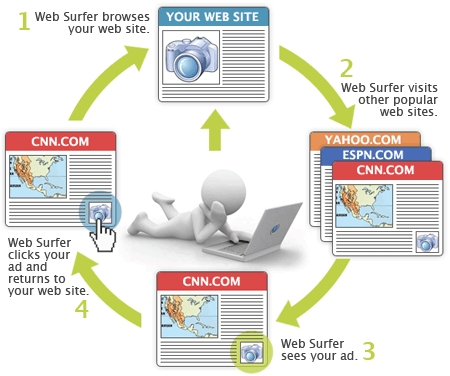
    Today it is not enough if you track your users on your website, you need to keep tabs on them even after they leave your website. It is an essential part of retargeting wherein when they go to some relevant website you can again target them and have better chances of converting them to customers. Since the user has already seen your ad before, he is more likely to reciprocate positively to your ad this time around. But for this you need to use cookies in order to keep track of your user whenever he is online.

    Exploit Social Media

    The explosion of social networking sites is one of the hallmarks of the Internet since the rise of the search engines during the early part of the millennium. Today everybody is connected via Facebook, Twitter, Pinterest, Instagram, et al. This makes your job easier since all you have to do is find out what these people are saying about you and your competitors thus offering you a lot of insight into customer opinions and proclivities. You can then dovetail your digital marketing strategy accordingly and make the most of this new found knowledge.

    social media

    Image Source

    Learn from People’s Searches

    Learning from people’s search queries can be a very rewarding experience for you if you do it analytically, diligently and persistently. This can throw light on what people are demanding and what are their expectations from any product or service. Google Trends is a very good platform to delve into people’s search patterns. You might not get too excited in the beginning since it is a whole lot of data that you have to sift in order to get anything valuable out of it.  But if you do it with perseverance then you would be surprised to find out how much insights you can gain about your customers both existing and prospective. You can get a detailed list of what people are searching, the frequency with which they are doing it, the websites that they click on the results page and such other useful nuggets of information.

    Put your House in Order

    Before you go about looking for data anywhere on the World Wide Web do organize the data that is lying in your own data centers. This can be immensely helpful in ways you would have never imagined possible. You can do detailed research about your customers and profile them as per their past interactions with your website and the result that it delivered to you. You can compare two instances where you received different results and find out the exact reasons for such a disparity; sales is one parameter to consider here.

    DBMS (Database Management Systems) from marquee names like Oracle, IBM and Microsoft cost prohibitively high and are beyond the reach of small business enterprises. In such a scenario, you can consider buying the software from small suppliers who differentiate themselves by focusing on niche markets. You can even try Linux operating system as a database platform since it is an open source product. According to Forrester Research’s product evaluation, open source databases viz. Ingres, PostgreSQL and MySQL come out as some of the best.

    You can find out the exact reasons why you could not convert your leads to sales in a particular scenario as you are now backed by compelling data from your own database. This shall help you fine-tune your digital marketing strategy saving you precious resources by offering you better insights into conducting highly targeted campaigns.

    Position² Point of View

    Today we are living in a world where information is generated at an unprecedented rate and off-the-shelf raw computational power is getting better by each passing day. Now these are the two parameters that make big data so widely popular and sensational. You might love it or you might hate it but you just cannot ignore big data. The field of big data analytics is still in its infancy. The explosion of data in today’s world is really mind-boggling to say the least. Data scientists today are the new age rock stars (excuse the metaphor). There is highly valuable information out there in all that raw data that is zipping from one end of the globe to the other in the blink of an eye. Though it is still nebulous as to where we are headed in terms of exploiting big data to our advantage, one thing is for sure that big data analytics has evolved today from being a business initiative to a business imperative. The faster you realize that, the better it is for the fortunes of your company.

  • Apple iAd Offers Retargeting Sans Cookies

    Apple, a company that revolutionized cutting-edge gadgets is now trying to get a foothold in the lucrative mobile ads market that was hitherto dominated by industry giants like Google and Facebook. With the re-launch of iAd (Apple’s mobile ad platform), advertisers can now better target audience across the iOS mobile platform letting them have a shot at a bigger customer base. Apple for long was actively striving for cross-device ad serving and retargeting via the iAd platform without much influence. But this renewed attempt from Apple will help open the floodgates for advertising agencies cutting across industry sectors like retail, game developers, travel apps and a lot more. Thus, whenever a user is exposed to a certain ad, he/she can be tracked across the iOS platform in order to make the maximum impact.

    Apple has added audience retargeting capabilities to its mobile ad platform iAd on iOS 8. This means that digital marketers can now follow their customers across different apps and also various websites on iPhones & iPads. This way the customers will feel a greater sense of connection with the brand as advertisers make a renewed attempt at reaching out to them.

    Since cookies don’t work on mobile devices, Apple had to create a roundabout way in order to target the mobile users. They achieved this using the universal Apple Id that gives access to iTunes, iCloud, iMessage and all things Apple. This way digital marketers targeting Apple customers can get a detailed report of all the users on the mobile iOS platform helping them understand quirky user behavior to serve tailor-made ads.

    Using the Apple iOS platform you can create audience segmentation which will get updated automatically and thus you will see that you can target people in a certain segment using a unified strategy since there is a semblance of a single unit here. Now digital marketers can improve their ROI as they can send personalized messages to users depending on their past interactions with the iOS platform. Apple users spend a majority of their time on connected devices engrossed within apps. Hence no digital marketer can afford to lose such a big opportunity.

    If a particular user is at a certain level of a game he/she could be sent a targeted ad in order to encourage him/her to upgrade to the next level. If some user has abandoned an app then he/she could be encouraged to revisit that app. Thus the opportunities are many and Apple is just beginning to experiment with this new idea of tracking customers on their mobile devices where cookies seem ineffectual.

    Apple has been a late entrant in the mobile ad space or any ad space for that matter. But it is definitely hoping to take giant strides with the iAd upgrade. Looking at Apple’s history of triumphing at almost everything that it has undertaken in the recent past, it is just a matter of time before it succeeds in this venture too.

    If you are a digital marketer excited about this new advertising opportunity and would want to leverage it for your brand then please get in touch with us by clicking here.

  • How will Amazon Ad Network Affect Digital Marketers

    Amazon's Ad Network

    Amazon is bolstering its ad network on the Internet with renewed vigor in order to give the industry veterans like Google a run for their money. Amazon recently manifested its serious intent to be a big player in the online advertising arena with the takeover of Twitch, a video game live-streaming site for almost a billion dollars! Learn more here about why Amazon paid such a hefty price for Twitch.

    The Amazon ad network is not just a list but it is much more than that. Amazon has a massive database of consumer shopping patterns on the Internet and marketers can use this to their advantage for targeting ads to the specific consumer group in order to make the maximum impact. Retargeting is a marketing idea that really caught the fancy of marketers in 2014. But the problem with retargeting is that you need to get the consumer to visit the appropriate site before you can remarket to him/her.

    The novel idea here is to pre-target the consumer by using massive Amazon algorithms which predict consumer buying and activity patterns and gives you important metrics on who might be open to evaluating your product. Now Amazon here has an edge over Google, since Amazon is basically a consumer-oriented company and hence they have better leverage over consumer buying behavior. It’s the next wave of advertising which digital marketers are waiting with bated breath that is not just about people searching for products but introducing people to products.

    The amount of data that Amazon has is staggering. Currently it uses this to its advantage to improve conversion rates on its site. “Conversions are our key metric” – is a quote from Amazon’s 2013 annual report. Now this speaks volumes about the amount of data that digital marketers can lay their hands on in order to achieve better conversion rates, as well. Marketers can take comfort in the fact that hitherto unheard levels of targeting can be achieved just by partnering with Amazon. Consumer data is the holy grail of marketers and currently Amazon is sitting on a mother lode of such data on the Internet. Thus Amazon with its deep pockets can change the game for good, forever.