Category: Marketing Analytics

  • Marketing Dashboard Essentials Is Your Campaign Data Truly Integrated

    This is the first in a series of blog articles called Marketing Dashboard Essentials. This series is designed to help you quickly and effectively assess KPIs from a range of marketing activities and prove the value of your strategies to stakeholders.

    In our engagements with clients, we see that the majority of them had “data” issues. It seems funny that in a world of cloud-based analytics products and APIs, companies would face an issue here. A recent study by Gartner highlights the challenges still faced by digital marketers when it comes to marketing analytics and says that a large proportion of senior marketers “are unimpressed by the results they receive from their marketing data and analytics investments.” (Read more)

    What Does Integrated Data Really Mean, and Why Is It Important?

    While it’s easy to connect data sources and get data in from your Google Ads, Google Analytics, Linkedin, Facebook, CRM, and marketing automation platforms into a single database, it’s hard to integrate the data. Since each platform has its own way of storing data and analytics, you need to build a foundation based on your marketing funnel and then fit in data from each platform in the right slot. We call this joining data at the hip 🙂

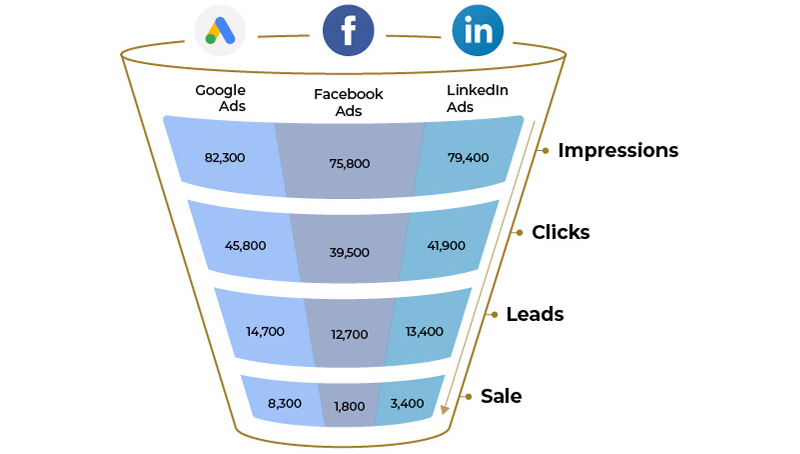
    For example, while one can get Impressions, Clicks, Lead, and Sale data for say Google Ads and Facebook Ads separately – what we really need to make a meaningful comparison is seeing this data in the same chart. Eg. Impressions from Google, Facebook, LinkedIn in one chart. As a campaign manager, you are most likely – working on excel to copy/paste these – or if you have an excel expert you use macros. Google Data studio too can be used. But these need to be set up by an expert and that means when things break – you need to go back to the expert.

    Data Across the full funnel

    Data Across the full funnel

    Is My Dashboard Truly Integrated?

    The simplest way to assess this is to see if you have data from multiple sources in one chart or in separate charts.

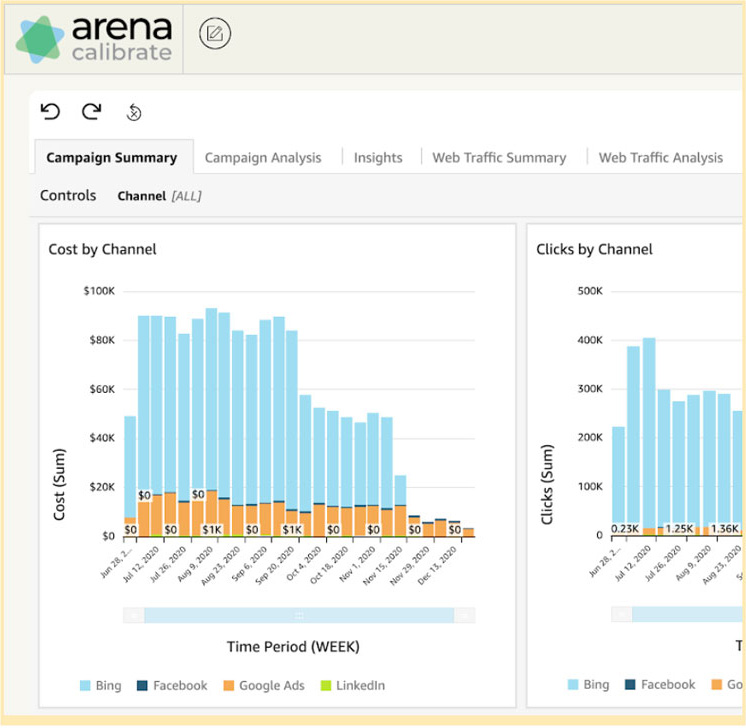
    (a) Integrated data dashboard: Data from multiple sources are in each chart for easy comparison. In this, you have the ability to see each parameter across different channels and you also have an option to drill down further into the data.

    Integrated data dashboard

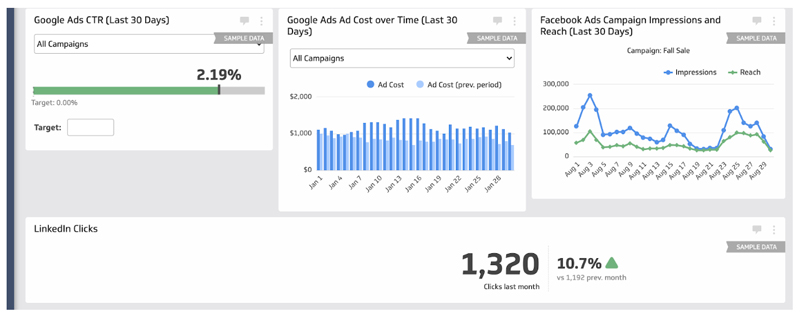
    (b) Non-integrated data dashboard: Data from multiple sources are in separate charts, making comparisons difficult

    Non-integrated data dashboard

    To get a truly integrated marketing dashboard, please test Arena Calibrate, a free dashboard from Position2 that integrates your campaign data from Google Analytics, Google Ads, LinkedIn and Facebook.

  • 5 Things Every CMO Must Know About Conversion Rate Optimization (CRO)

    Look before you leap! We learnt this lesson from childhood. Unfortunately, many of us forget this as we dabble with our hyper competitive and fast paced work regimes. Marketers are no exception and neither are their Conversion Rate Optimization (CRO) projects because results are expected quickly – too quickly!

    In recent years, CRO has gained significant traction. Many senior marketers want to start CRO projects. Their aim is to increase the conversion rates of people visiting their website. This, of course, is not a bad objective, but many times, it is their “only” objective.

    So, what do marketers need to focus on as they embark on their CRO journey? Here is a list of the top 5 items:

    1. CRO is not A/B Testing

    CRO is about deploying measurable techniques that can be used to improve customer experience and consequently website or landing page(s) performance, which adds to the company’s bottom line. A/B testing is exactly what it is – you test two variants of the same experience. This is a small component of CRO. In many instances, A/B testing may not be needed in a CRO project.

    For example, before you start a CRO project, you need to thoroughly analyze your site’s analytics data. If data indicates glaring problems that can be fixed immediately, you should fix them – don’t A/B test! Examples of problems include page load times, issues with Mobile load, or UI. Look for ways to improve customer experience immediately and great performance will follow.

    2. Conversion Rate is Not Important

    Yes, it’s contrary to what many marketers believe what a CRO’s end goal should be. However, conversion rate should not be the ultimate KPI. What really matters is business KPIs such as Number of Customer Wins and Monthly Recurring Revenue. These objectives are harder to measure and take longer to report.

    Ultimately, a CRO project needs to measure the bottom line impact in any business.

    3. CRO is Multidisciplinary – Put the Right Team in Place

    CRO can get complicated. It is a methodology that taps into skills from Business consulting to UI/UX to Content to Analytics.

    Here’s how these critical digital disciplines interconnect on a CRO project:

    • Business consulting helps you position your solution.
    • Marketing tells you if you have the right offer for the persona at the right time.
    • Analytics helps you identify the baseline performance and gives you regular data segmented by source, device etc.
    • Copy teams tell you if your content is persuasive and if your value proposition is clear.
    • Design teams will help identify and resolve the UI/UX challenges.
    • Content teams guide you with the right keyword strategy and SEO.
    • Developers and peers who are tech savvy help bring the technical solutions to solve a problem.
    • Marketing Automation and CRM teams inform you of the much-needed history on consumer behavior, sales cycle, type of content that has worked, and how best to retain customers/prospects – a.k.a offers intelligence around loyalty and customer advocacy.

    There is no CRO without these multifaceted teams integrated together.

    4. Statistical Significance is a Crucial Factor

    Here’s a good reality check – analyze your home page traffic (specifically unique visitors/month) and existing website conversion rate. Next, use a test duration calculator (from VWO or Optimizely). Finally, make some reasonable assumptions on the number of variations and minimum improvement to expect.

    You might get surprised to see the recommended test duration with statistical significance, especially if you are a B2B marketer or in a niche business. This kind of check helps you plan realistic goals and time frame for CRO.

    Once you start the CRO project, resist the urge to end tests quickly. Look for the best-case statistical significance you can live with – we recommend 90% +. Some marketers make changes on 75%, but just know that higher statistical significance means better chances of making the winning variation do well in the long run.

    5. Focus on the Strategy

    Focusing on individual LPs or certain website CTAs alone cannot drive significant business impact from CRO.

    Instead, focus on a larger content strategy based on target personas and corporate or product messaging. For example, ask questions: who is the target audience for a whitepaper? What they already know and how this whitepaper will impact them in a positive way? What will be the next logical action for that persona? Questions like these will help you build the right long term strategy and pool the right resources together for success.

    Conclusion:

    Even though CRO has gained significant interest among digital marketers, a lot of them don’t know what to expect, how to read results, or how to differentiate between tactics and strategy. Coincidently, according to an HBR article from 2012, marketers depend on data for 11% of their decisions, while a majority struggle with statistics, and a few who use data don’t do it the right way. Given the way marketing data has exploded in the last few years, we believe the proportion of people in the last category has increased. We hope the tips in this article help you navigate the complex CRO landscape with more planning and caution.
  • Profit on the Go: How to Boost Conversions on Mobile

    When it comes down to it, everything that happens in digital marketing has one simple aim – drive sales.

    Converting ad click throughs, website and Landing Page visitors, Social media likes, shares into purchases is why businesses spend so much on their online presence. Successful companies are differentiated from the average ones, by their ability to maximize conversions while optimizing efforts and spends.

    And, that is why more than half of companies now use Conversion Rate Optimization (CRO) as part of their digital strategy. CRO is any one of a whole range of strategies for improving the performance of a website or other online platform using analytics and user feedback. Given the exponential growth of mobile medium, marketers now are focusing on mobile optimization and have started including it as part of their marketing plans.

    Mobile Optimization

    Mobile is becoming the number one means people use to access the internet. According to Google, most searches are now conducted using mobile devices.

    The importance of mobile should alert businesses to two objectives. First, it is now virtually essential that businesses optimize their web pages for mobile devices. If more people are viewing your pages on mobile than desktop, not having the correct layout and functionality could be costing you leads.

    Once your site is optimized for mobile, then you can focus on optimizing conversions from mobile. With almost a third of all commerce transactions in 2016 originating from a mobile device, getting the best from your mobile presence means opening up huge potential revenue streams.

    In fact, for new initiatives it makes sense to have a Mobile First approach, where a website or any online presence is built keeping the mobile audience in mind.

    What Makes Mobile CRO Work?

    Moving beyond mobile-ready web design to boost conversion is all about careful data analysis and smart decisions. Input costs can be minimal, but the benefits of turning page visits in sales can be enormous. So much so that nearly two thirds of companies say they will engage in some mobile CRO activity in the next year.

    Fine tuning the user experience

    Mobile CRO is partly about focusing on the little things which will make the user experience intuitive, straightforward and enjoyable. In this sense, Mobile CRO is a different discipline to desktop optimization – tweaks made to improve the desktop experience can actually damage functionality on mobile. The two platforms need to be optimized separately.

    Mobile-specific tweaks which boost conversion include:

    • Condensing copy. Make text copy more readable on a smaller screen by using shorter headlines, shorter paragraphs, more read more buttons and basic sans fonts.
    • Vary your Call To Action buttons. Smaller screens make it necessary to navigate more to access content. Varying Call To Action buttons can make a site more dynamic and engaging.
    • Optimize load times. 3G/4G and public Wi Fi connections can be variable. Minimize the time it takes pages to load as much as possible.
    • Mobile-specific support. Quick links to maps to your premises and one-touch call buttons help customers on the move.

    Put your data to work

    Mobile devices are extremely useful tools for harvesting user data, as they log such large volumes of personal and usage information on the go. The first step to analyzing mobile data is to separate it from desktop and other access points – Google and online tools like Mobilizer make this a simple task nowadays.

    The analytics process is much the same for mobile as it is when looking at all forms of conversion. Look for drop offs and blocks in the funnel, paying particular attention to rates of click through from product pages to shopping cart, and from cart to check out.

    The wealth of data mobile devices supply is also useful for tracking lead quality. A/B Testing is still the most popular means used by analysts to track conversion rates, but businesses should bear in mind that mobile may be driving more conversions than expected – customers who view a product online still often head in-store to buy.

    The Future of Mobile CRO – 3 Trends to Look Out for

    Mobile CRO is an evolving science, and will keep improving the opportunities for businesses to improve conversion over mobile. Here are three trends to look out for.

    • Cross-channel promotion. The majority of time consumers spend online on their mobile devices is concentrated in just a handful of sites, including Facebook, Instagram and Snapchat. Using social campaigns to promote your digital content will ultimately boost conversion.
    • Site Personalization. Offering different content to different groups of people can have a big impact of optimization. Companies offering optimization have reported a 14% increase in optimization, while Adobe claims that 90% of consumers purchasing decisions are influenced by personalization.
    • Mobile App CRO. Apps are growing in importance as the channel consumers use to navigate the web when mobile. This opens a whole new avenue for specific optimization based on functionality and layouts, connections to other platforms and user feedback.

    Conclusion

    Conversion Rate Optimization is what a business must invest in as it helps you give guaranteed results and help you track and analyze your leads better and, to walk with the current trend all you need is work on optimizing mobile presence to keep conversion rates healthy.

    If you find it any complicated, we have got you covered! All you need to do is contact us right away and we can guide you.

    Sources:

    1. Econsultancy blog
    2. Searchenginepeople
    3. Emarketer
    4. Mobify
    5. Vwo.com/blog
  • To A/B Test or To Personalize?

    A/b testing or website personalization?

    To A/B test or to Personalize?These are two separate concepts each geared to deliver more effective marketing.
    Let’s examine a few important aspects of these before we go any further.

    As is true for most things, a/b testing and personalization also have their unique pros and cons.

    A/B Testing

    A/B testing is an approach towards making your website/emailer/online ads more effective by testing each aspect of them individually to see what delivers the greatest effectiveness. It’s a process of identifying which combination of elements, placed in what order can deliver the best results.

    Even if you have been carrying out a/b testing for years and have tested every element on your site, you can convince yourself that you don’t need website personalization only if your company is a single product/service selling entity and you sell to the same people in the same way, every time. This is a highly unlikely scenario.

    With multiple products and services, the task of A/B testing is far more complex, as one can only test one variable at a time. Testing multiple elements, one at a time can be tedious with a high possibility of confusion and errors. However, complexity should not necessarily be a deterrent to effectiveness and the investment of effort is often worth it.

    A/B testing builds effectiveness by focusing on what works with various segments of prospects. It looks at what works with the majority in each segment. What it misses out on are commercially important people who are not represented by the majority but possess significant business potential and this is where personalization comes in.

    Personalization

    Personalized marketing is about marketing to individuals based on their individual preferences and choices. This helps make them feel more predisposed towards the brand and inclined to buy. Personalized marketing includes personalizing website appearance, information, products, offers etc. This is based on data of the individual’s preferences if he is a regular customer.

    But companies can hardly mine lots of data from a first time site visitor and target them with a great personalized experience. It takes time to build that kind of robust, informative database and apply it into your website experience. Sometimes marketers use a combination of individual data and data analytics to predict what the customer will like based on the behavior of other customers who closely resemble the individuals’ profile.

    So, you should be using a/b testing, which will help you have a strong foothold with the best performing elements till your database gathers strength.

    If you have a large website, it may not be likely to gain so much of traffic that you have sufficient data to personalize every page/section. In such a case, a/b testing is useful which helps to optimize specific points on your site.

    Personalizing your website without a/b testing is like being a brand that is very interactive and friendly but does not know what its customers like.

    Website personalization lets you can target every unique individual audience member. If you have your user personas down right, you can easily target almost everyone in your target audience by embedding their personas in your website.

    What we suggest is that you take up both a/b testing and personalization. What do you think about a/b testing vs. personalization?

  • Google Releases Universal Analytics For All

    Universal Analytics, which was in beta till now, has been launched by Google for everyone.

    According to Google, Universal Analytics equips you to power up for the measurement challenges of today’s multi-screen and multi-device environment.
    Universal Analytics
    A few important things you need to know about Universal Analytics are:

    • It has all the features, tools and reports of classic Analytics, including remarketing and audience reporting.
    • Google will be launching the User ID feature gradually, which will help you understand your customer’s complete journey. This feature provides a more user-centric view of website traffic by showing anonymous user engagement activity across different screens and site visits. User ID will also enable cross device reporting.
    • Current premium accounts will upgrade to Universal Analytics with the same service level and additional product features. Users with free accounts can also upgrade with all features intact.
    • Unlike the prior lag in data, Universal Analytics offers timely reporting with fresher data if you are in a different time zone.
    • The User Agent/IP Override feature will help you to proxy data from devices and intranets through internal servers onto Google Analytics.

    For a real-life example of how Universal Analytics works, you can check out this case study.

    Universal Analytics helps marketers in better tracking, campaign configuration and measurement with enhanced features:

    • The tracking code is more flexible and easier to implement on different levels.
    • It is easier to set up cross-domain or sub domain tracking.
    • Access to new configuration options such as organic search sources, session and campaign timeout handling, referral exclusions and search term exclusion.
    • Access to custom dimensions, metrics and new features, which will arm marketers with better measurement options.

    If you want to know more about Universal Analytics, click here.

    Image Source: Google Analytics

  • Checklist to Develop User Personas for Your Website

    Personas

    Images Source: Alex Morley

    Everyone knows that it’s important to have a website that is appealing, informative and technically updated. But, an informative and friendly website is not all that it takes to connect with visitors these days.

    Your website needs to be able to talk individually to every visitor and cater to their needs. This requires knowing:

    • Why do users come to your website?
    • What are their needs?
    • Do they have a particular problem that has to be addressed?
    • What approach do they usually take to tackle their business problems online?

    These are just some of the questions that you need to be thinking about while developing your website content. It’s easier to talk to visitors when you know who they are and what they are looking for.

    Prospects visit websites in search of solutions for stated or unstated problems but it’s not enough just to have a solution to their problem. You need to make them want to listen to you and buy from you.

    Online buyer personas define groups as specific individual types and in doing so, help the website speak directly to these individuals. For example, typifying a user type as ‘Deal seeking Donald’ helps you write your content as if you were talking to him directly, answering his questions as they form in his mind. This makes your brand look like it knows him and cares about his problems.

    Also, if you are considering embracing personalized marketing, building buyer personas will be an important step to send out the right information to the right personality type.

    Check out this step-by-step procedure that will help you create user personas for your website:

    Step 1: Define Industries & Roles

    List out the different industries your target audience belongs to: IT, e-commerce, finance etc. The next thing is to identify their role within the organization:

    • What is their designation?
    • Are they the decision makers?
    • Are they executives who actually use the product/service?

    Step 2: Define Demographics

    Gather demographic details about your target audience. Here are some questions you can ask across industries:

    Step 3: Learn their Business Objectives

    Know what makes their business tick:

    • What are the passions that drive them?
    • What business goals are they trying to achieve?
    • What are the business problems they need solutions to?

    Step 4: Your Value Proposition

    Tell users how you can enhance their business:

    • What is it that your company can offer users?
    • How is your company different from the competitors?

    Step 5: Categorize personality types

    Divide your target audience by their overall personality types:

    • Are they problem solvers?
    • Are they early adopters of new technologies?
    • Are they conservative?

    After defining your personas, here are some aspects that you need to understand:

    • What will these users expect from you in terms of products and solutions?
    • What should be your top content communication format?
    • Depending on their needs, which are the pages they are most likely to view and spend time on?
    • How will you structure those pages?
    • What keywords are the users typing in to look for your brand or industry?

    Imbibe the information you gain from user personas into your website building process.

    Can you think of any other important questions you need to answer while building user personas?