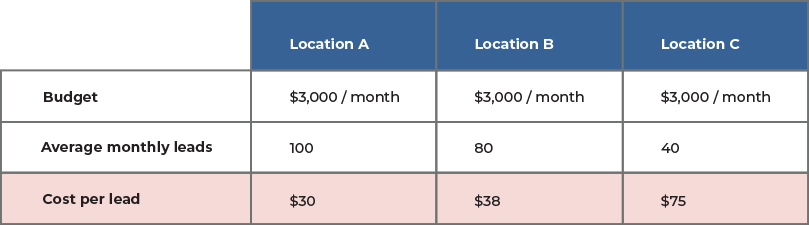
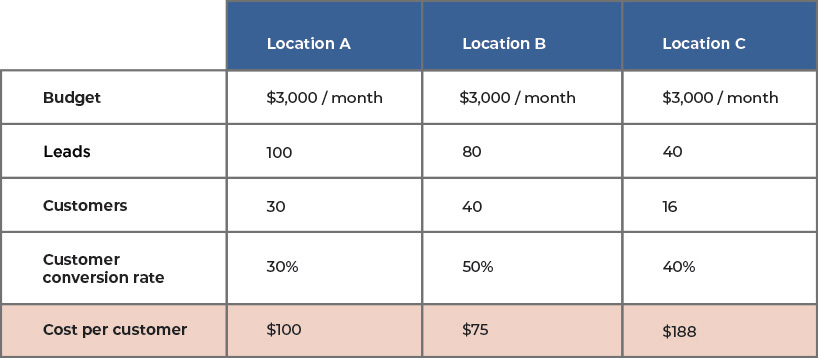
Whether you run a small business or a multinational corporation, your reach extends beyond the local area where you began. Whether this expansion is via acquisitions, franchises, or mergers, you start thinking of multi-location presence, which is critical to continued growth. This is a huge project that needs careful planning and execution, such that your potential customers can find and connect with you easily.
According to HubSpot:
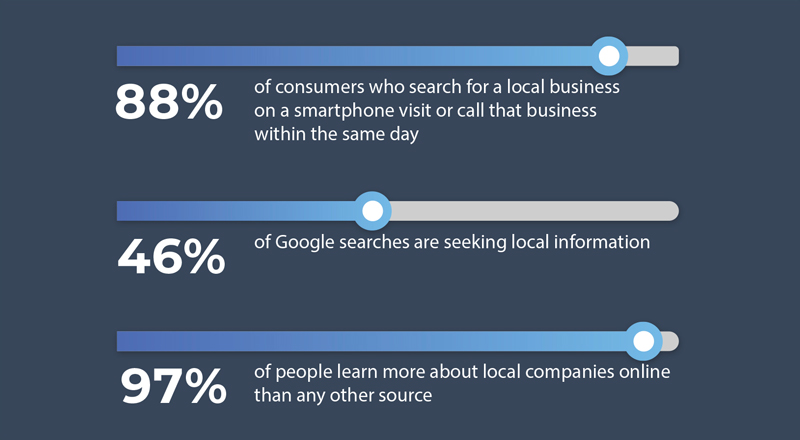
Here are 5 points to consider when building your multi-location website:
- Unification: Branding and reputation
- Set-up Structure: For scalability
- Relevancy: Location-specific information
- Lead Follow-ups: Centralized, decentralized, or hybrid
- Maintenance: Content updates
Let’s explore each of these elements.
1) Unification: Branding and Reputation
- Branches vs Franchise: Multi-location business marketing have a different approach compared to franchises. However, their branding should be the same. The website design for the branches may be slightly different from each other whereas the website design for franchises should be unified under one brand look and feel.
- Personalization: Visitors are most engaged and feel welcomed when a location page is personalized to them. This can be done with a familiar local landmark image, community events, or a personal note from the local office executive team. How does one maintain the overall brand, endorse brand reputation, and yet give it a local feel? This is an art that can be mastered for the multi-location website.
| The average local marketer spends 17% of their time on online reputation management. [Source: BrightLocal, Online Reputation Management Survey] |
2) Set-up Structure: For Scalability
- The Set Up:
Depending on the amount of information that may differ from location-to-location, there are various site structure approaches to incorporating multiple locations on one website.- Option 1: The easiest approach is to have minimal location-specific information. Example: a small pop-up box with the address, contact info and services. This enables a click-to-call on mobile views.
- Option 2: Have a standalone long-scroll landing page within the website and tabs with the rest of the company information on the same page. Visitors will find all the decision-making info without the need to move away to any other page of the website, thus increasing the conversion rate.
- Be Found Easily:
- Domain/URLs: The domain and URLs play an important part of every multi-location website. Use automatic redirects from the older domains so that your site can be found easily. There are two ways to structure the URLs: (1) give each location a distinct domain; (2) have each URL be related to a root domain. You can create location pages with their own unique URLs broken down within the geographic sub-pages reflected in the breadcrumbs.
- SEO: Design the navigation so visitors, as well as search engines, can crawl and find the landing pages easily. Make sure your navigation allows for easy indexing of all your geographic locations. Finally, create a Google My Business page as a listing for each location, with phone numbers, email address, google maps, and photos of your local office to generate traction in the communities they serve. Optimize this page continuously to enhance your SEO search results.
- Search ‘Near Me’: As the business scales, the website scales concurrently. Therefore, it is important to provide a reverse IP look-up. Using geolocation, it is convenient to auto-find the closest location based on the zip code. According to Google, about 76% of people using ‘Near me’ searches visit a related business within a day. Page speeds and cross-device functionality (desktop and mobile) are important for local store marketing success.
- Optimize Conversions:
- User experience: Consistent icons, CTAs, and responsiveness across all the pages promotes predictable UI/UX and results in higher conversions.
- Paid advertising: You want to optimize your paid search, so the new branch or franchise location pages should be standalone pages with all relevant information to retain the visitors on your location page. This would be the entry page from the PPC ads. Thus, when new branches or franchises are added under one brand, businesses gain more exposure. Run the Ads often and do A/B testing to optimize the performance.
- Design for Scalability:
- CMS: An expert web designer will agree that a Content Management Systems (CMS) like Drupal and a solid dependable hosting site, that offer a high degree of scalability.
- Local SEO: Promote social media shares and reviews. Use SEO listing tools and social media to boost the local SEO. These work in combination to expand your digital reach and gain more clients.
- Analytics: Run drilled-down analytics and heat maps to evaluate website usage, user behavior and metrics that will help your website evolve into a productive asset to grow your business.
3) Relevancy: Location-specific Information
- Relevant Overview page: This page can be designed to accommodate multiple locations, categorized in any of the following ways determined by the business needs: geography (states or regions), verticals, services, or business units.An example of a good multi location overview page
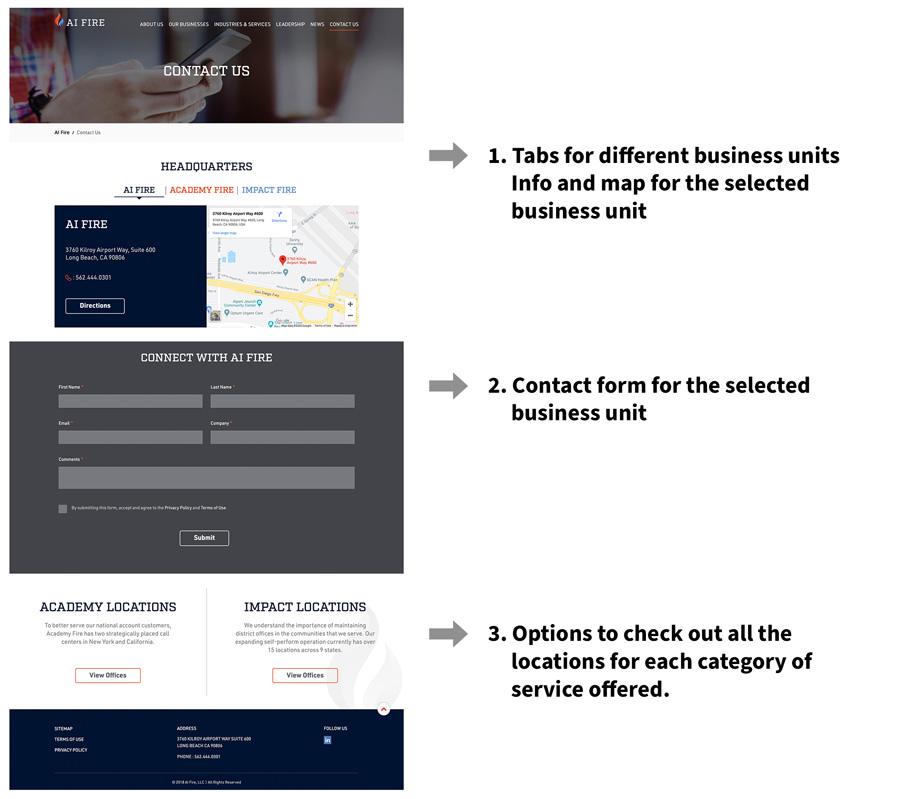
- Content adaptability: Use location-specific content on the landing page, and a clear CTA, as shown in the example. In addition, you can also add product specs, visual content like photos, videos, podcasts, and social media, and localize your content. An example of a good multi-location web page
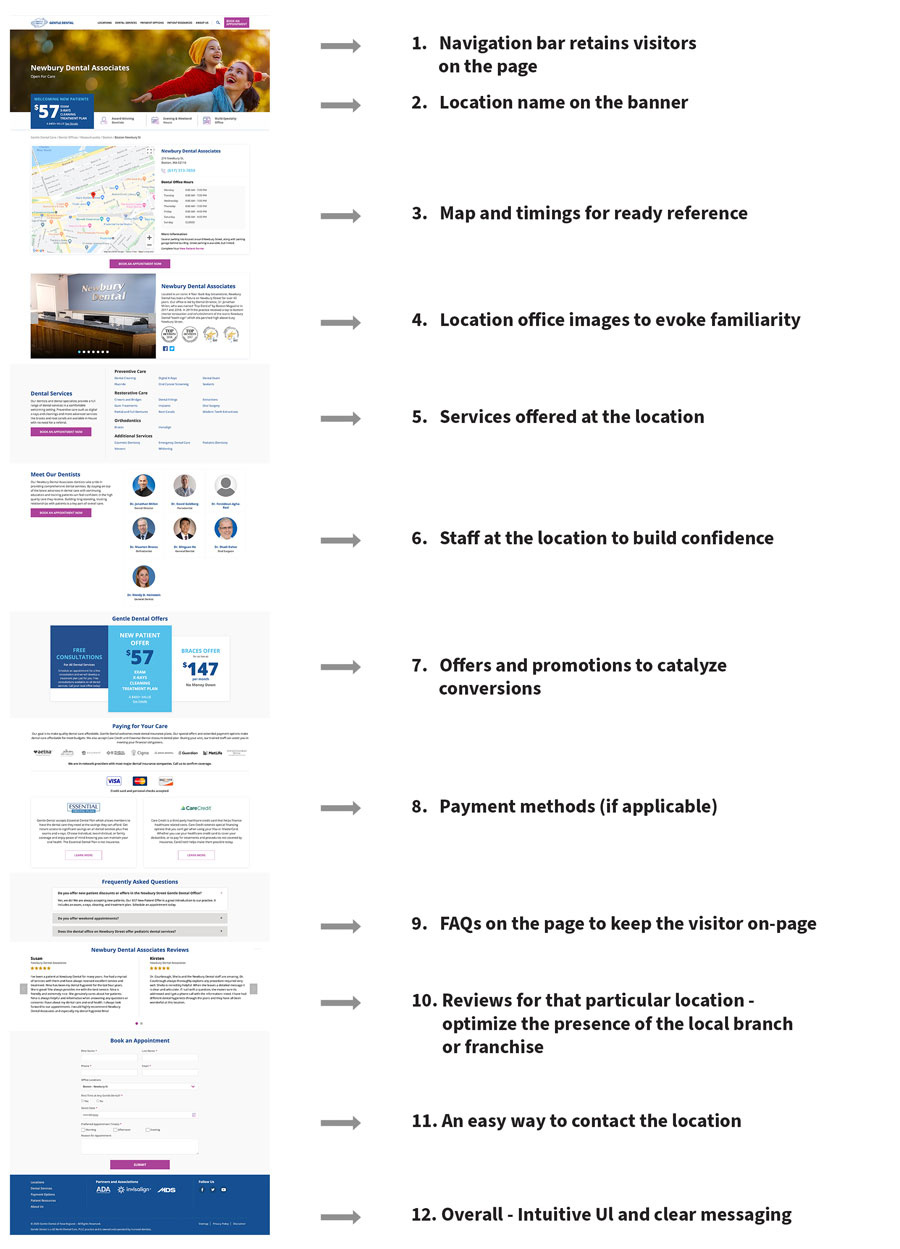
4) Lead Follow-ups: Centralized, Decentralized, or Hybrid
- Follow-up methodology: Different businesses have different criteria for justifying the set up that best works for them. For example, most service-oriented businesses such as restaurants and home contractor services would want a decentralized system of follow-ups, because they serve their clients locally. However, larger businesses, especially franchises prefer a centralized system to address their clients and follow up leads. This allows for geographic lead follow-up re-allocation to their dealers or distributors, and yet allows the company to maintain control over the entire ecosystem.
- Hybrid model: Certain businesses, such as dental offices run by central management team may want a hybrid model where prospective patients’ contact-us forms or calls are auto-forwarded to multiple entities (i.e. sent to call centers, local offices of their choice as well as the central office for tracking) to ensure that quality service is provided to these prospective patients.
- Integrations: Small, medium and large organizations have the website form fills captured by their marketing automation systems and sync-ed up with their CRMs to track and record the follow-ups all the way to closure. This gives businesses good visibility on the role of their website from leads to revenues.
5) Maintenance: Content Updates
- Keep the content current: Due to the dynamic nature of the different locations, it is critical to keep each location’s information updated. Often, there are distinct variables between locations of the same parent company of the franchisees. Examples include offers and promotions, timings, time zones, staff, services and possibly, local notices and messaging. This poses a logistical challenge and warrants an answer to this question: should the location specific content management be central or localized?
- Logistics: Ideally, the multi-location website should be structured to have a central agency maintain all the elements of the website, including branding, search engine rankings, and local news. This agency will also be responsible for back-end maintenance and overarching universal changes across the whole website. However, it is equally important to tailor the website such that there is an efficient process to update the local information in a time-sensitive manner. Sometimes, this can be accomplished by allocating a site-specific local manager who is responsible for implementing the content on the staging site for specific sections (such as promotions), simultaneously setting up a backend access for a central 24/7 person as backup for quality check and taking it live.
It is apparent that in order to gain new customers and retain the acquired or merged companies’ customers, it is imperative to cater to the wide range of geographies with a user-friendly multi-location website. Businesses explore all the options and create multi location digital marketing tools for consistency as they scale and add new locations.
Your website is the face of your business. The brand is its personality. Your multi-location approach helps you reach a wider audience. As the company grows, so will your website and you can achieve success with an effective multi location-website under one brand umbrella.
Contact us, to find out how we can help you build and maintain your website to reach your corporate goals.