Category: Digital Experience

  • Content’s Primary Role In The Customer Decision Journey

    Putting the Customer First

    Now, more than ever, today’s customers are more discerning and it’s not just about your competitors. They have access to a wide variety of information at their fingertips and can easily compare products and services from different businesses. With limited time, budget, and attention, businesses need to do more than just offer a good product or service. One of the most important aspects of a great customer experience is content. Content can be used to educate customers, build relationships, and drive sales. It can also be used to shape the customer journey. Failing to do so could result in lost revenue and growth. So, how do you manage to capture your audience while transforming them into your customers? You put their needs first.

    The best way for a business to position itself is to solve the needs of its customers. That said, in order to achieve optimal positioning, it’s vital for a company to effectively articulate the pain points that it solves. This is where content comes into play, as marketing efforts help or hinder brand awareness. It’s one thing to drive audiences to your content. But to convert readers into customers, that takes fine-tuning and understanding the customer journey.

    The customer journey is the path that a customer takes from first learning about your business to becoming a loyal customer. We break it into five stages: awareness, consideration, purchase, use, and advocacy.

    Leverage content at each stage of the customer journey to:

    • Attain awareness: Content can be used to introduce your business and its products or services to potential customers. This can be done through blog posts, articles, social media posts, and other forms of content.
    • Generate interest: Now that potential customers are aware of your business, use content to generate interest in your products or services. For example, highlight information about the benefits of your products or services, or by sharing customer testimonials.
    • Drive consideration: As potential customers journey through the pipeline, considering your products or services, deliver content experiences to help them make a decision. Case studies are a phenomenal method for highlighting customer challenges while positioning a business as the solution.
    • Close the sale: Once potential customers are ready to buy, it’s time to sign on the dotted line. And, content is key to getting to the finish line. Design your content to deliver clear and concise information about your business and how it can fulfill a need.
    • Nurture relationships: After the sale is closed, leverage content to nurture relationships with customers. We’re not talking about spamming them with emails, but rather sharing targeted content that speaks to their needs. For example, providing customer support, sharing educational content, or simply staying in touch with customers up-levels the customer experience.
    • Drive advocacy: Happy customers make the best evangelists. The ultimate goal of any customer journey is to drive advocacy and when customers are so happy with your business, they are willing to recommend you to their friends and colleagues. In this stage, use content to drive advocacy by sharing customer testimonials, offering referral bonuses, or simply making it easy for customers to share your content with others by adopting social media.

    Effective content strategy shapes and influences the customer journey, creating a positive experience that will lead to repeat business and referrals.

    Not sure where to start? Here are some tips for using content to shape the customer journey:

    • Be relevant. The content you create should be relevant to the interests and needs of your target audience. This will help you to capture their attention and keep them engaged.
    • Make your content easy to find. Your content should be easy to find on your website and social media channels. You can use search engine optimization (SEO) to make your content more visible in search results. Make sure you’re using best practices in website design to drive visibility on your site.
    • Promote your content. Once you have created compelling content, you need to promote it to generate viewership. Automate your content through social media, email marketing, and other channels. Let technology do the heavy lifting by highlighting your content.
    • Measure results and impact. In order to improve, It is important to measure the results of your content marketing efforts to see what is working and what is not. You can use analytics tools to track website traffic, social media engagement, and other metrics. By knowing where you’ve been and how you’ve done, you can significantly improve your roadmap for the future.

    Content has always been a mechanism for creating satisfied and repeat customers. But in order to tap into its benefits, you have to put the customer first, which starts with the customer journey. To achieve great results, the customer journey strategy has to be enveloped within your content strategy. Create targeted content campaigns for each stage of the customer journey. In doing so, content is at the helm of the customer journey shaping a positive experience that will lead to repeat business and referrals.

  • FedNow -The Evolution of Real-Time Payments and the Consumer Experience

    In today’s world, the busy highway of traditional payment methods can cause a slew of roadblocks for businesses and their customers including including slow transfer times, high transaction fees, and inadequate data security. These challenges can significantly impact customer service scores and compromise a company’s credibility and bottom line.

    FedNow, the Federal Reserve’s anticipated answer to inefficient financial transactions, boasts lightning-fast processing, enhanced security measures, and additional features that may have the power to revolutionize the way businesses and consumers exchange money forever.

    Join us as we explore this new frontier in instant payments and uncover the advantages that FedNow offers over other payment methods, potential implementation and safety concerns, and ways to leverage the payment system to improve both business operations and consumer experience.

    What is FedNow?

    FedNow is a new real-time payment system in development by the Federal Reserve Banks. While some Bank to Bank transfers can take up to three days or longer, the FedNow Service will allow for near-instantaneous transfers of funds between financial institutions 24 hours a day, seven days a week, 365 days a year, all while working to create a safe, efficient, and modern payment infrastructure.

    Here’s a brief timeline of FedNow’s development:

    • August 2018: The Federal Reserve announces its intention to build a new real-time payment service called FedNow.
    • September 2020: The Federal Reserve Board approves the development of the FedNow Service.
    • January 2021: The Federal Reserve begins a pilot program for the FedNow Service, which grows into 120 participating financial institutions.
    • August 2022: The Federal Reserve Bank narrows launch timing to mid-year 2023.
    • March 2023: The Federal Reserve announces its most specific launch date yet; the FedNow Service will start operating in July 2023.

    As the nation prepares for the anticipated launch of FedNow, it’s essential that businesses familiarize themselves with the system and prepare for its implementation.

    How does FedNow differ from other payment systems?

    Compared to the current standard for electronic payments, the Automated Clearing House (ACH) system, FedNow provides faster, near-instantaneous transfers between financial institutions. Additionally, FedNow is available 24/7/365 with higher transaction limits, setting it apart from ACH.

    Unlike credit card transactions, which can take several days to process and come with high transaction fees, FedNow again gains the upper hand with faster processing times and lower fees. In the same way, FedNow offers quicker and more cost-effective transactions compared to digital wallets like PayPal and Venmo, which can also take several days to transfer funds to a bank account unless the sender pays a higher fee.

    3 Benefits of Real-Time Payments for Businesses

    Businesses of all sizes and industries can benefit from FedNow’s real-time payments system. Here are three reasons why.

    1. Faster payment processing times

    FedNow enables near-instantaneous transfers of funds, which means businesses can receive payments and make disbursements more quickly than with traditional payment systems.

    2. Improved cash flow management

    With faster access to their funds, businesses can improve their financial planning. With a better plan in hand, a business is less likely to rely on loans and can avoid late payments and any resulting fees.

    3. Reduced transaction costs

    While FedNow’s fees haven’t been released in detail yet, they’re expected to be lower than credit card fees and competitive with ACH fees, making it a more cost-effective payment option for businesses. Additionally, since the FedNow Service will operate 24/7/365, businesses can avoid expedited or overnight payment costs.

    FedNow benefits extend beyond business

    FedNow’s benefits extend beyond a business’s doors; consumers can also reap the rewards of a virtually instant payment system.

    For example, FedNow’s enhanced security measures can reduce cybersecurity threats that put consumer data at risk. Additionally, real-time payments can help fintech companies offer swift payment solutions for customers needing quick fund transfers.

    FedNow can benefit consumers beyond convenience and security, especially in the healthcare industry. According to recent data, 17% of Americans pay medical bills with credit cards. By switching to FedNow, healthcare providers can reduce their transaction fees and pass these savings on to patients.

    Overall, FedNow offers significant advantages to businesses and consumers alike, changing the digital payment landscape indefinitely.

    Addressing the Potential Challenges of FedNow

    While FedNow’s real-time payments system offers many advantages, there are also some potential concerns that businesses should be aware of, including:

    • Integration challenges: FedNow integration requires significant time and resources, including upgrades to existing technology and collaboration with third-party providers.
    • Cost considerations: While FedNow’s transaction fees are expected to be lower than credit card fees, businesses must still consider the potential implementation and maintenance costs.
    • Customer reaction: Businesses must explain the advantages of FedNow to customers and address any concerns they may have regarding the security and dependability of a new payment system.

    Will FedNow be a requirement?

    The Federal Reserve has not announced any plans to make FedNow mandatory. However, with its potential to improve day-to-day operations and enhance the customer experience, it’s likely to become an increasingly popular payment option in the coming years that businesses may need to offer to stay competitive, even if not legal.

    Overcoming potential FedNow hurdles

    To ensure a smooth implementation process for businesses interested in experiencing the benefits of FedNow, it’s crucial to address potential challenges proactively. Here are a few tips for companies preparing to adopt FedNow as a payment option:

    • Boost internal security protocols and training programs to protect against fraud and cyber-attacks.
    • Partner with payment processors with experience integrating new payment systems to streamline the process and minimize disruption.
    • Communicate the benefits of FedNow to patients and address any concerns they may have about the security and reliability of the system.

    Using FedNow for Customer Satisfaction: 4 Marketing Strategies

    FedNow offers many potential benefits for businesses but can also be a powerful marketing tool. Here are some tips on how marketing directors can leverage FedNow to enhance their marketing strategies and improve customer relationships.

    1. Offer real-time incentives

    FedNow allows for real-time incoming and outgoing transfers. Marketing directors can use this feature to offer real-time incentives to customers, such as cash-back rewards. Research shows that 80% of consumers are more likely to shop with a brand for the first time if given a cash-back offer. By providing this form of instant gratification, businesses can draw in new target audiences and increase loyalty with existing customers.

    2. Gather better data and insights

    Companies that use big data solutions increase profits by an average of 8%. FedNow can provide businesses access to better data and insights into customer behavior.

    For instance, when a consumer uses FedNow to make a payment, a business can view that payment right away in their account and gather data about it, such as the time and location of the transaction. This information can help companies identify patterns and trends in customer behavior, such as popular purchase times and locations.

    Marketing directors can use this data to better understand their customers’ needs and preferences and create personalized content that connects on a deeper level.

    3. Educate customers to create trust

    Research shows that 33% of customers credit trust as the reason they will pay a premium for a service or product. Similarly, over 90% of customers say they would buy from a company that worked to gain their trust.

    To maximize the benefits of FedNow, businesses should start planning education-based marketing strategies about the new payment system, explaining the benefits of FedNow to customers and how to use it. This can help customers feel more comfortable and confident using the new system and increase adoption rates.

    4. Make it a selling point

    More small businesses have lost a sale as a result of limited payment choices than as a result of negative customer feedback. By marketing FedNow as a convenient payment option in their marketing materials, businesses can attract new customers and differentiate themselves from competitors.

    FedNow: Revolutionizing the Payment Industry

    FedNow represents a significant shift in the payment industry, with real-time payments offering numerous advantages for businesses and consumers alike. While there may be some concerns around integration, cybersecurity risks, and costs, companies can mitigate these with the right approach and preparation.

    For businesses, it’s crucial to start preparing for FedNow now and exploring how to leverage its advantages for customer satisfaction and loyalty. Ultimately, companies that embrace FedNow and adapt to the changing payment landscape will be best positioned for success in the future.

    Is your agency delivering the right return on your marketing investment? We combine strategy, execution, and knowledge into award-winning marketing solutions. Contact us today and find out how Position2 can help you grow. Contact us today to learn more.

  • The Psychology of UX – Decode the ‘X’

    We hear a lot about UX, DX, CX, and PX … It’s all about the ‘X’, which stands for ‘Experience’. User experience drives web and app behavior. The bigger question is: How can we address user experience variables and factor in the underlying rules of the psychology of UX to driving user behavior toward predicted outcomes? UX developers are focused on creating viewer interest and an engaging digital experience – resulting in improved user interactions and conversions.

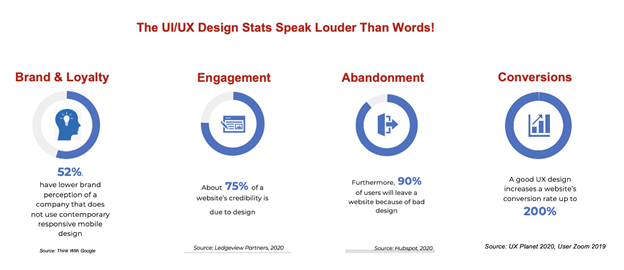
    Design Stats Speak

    The Role Of Human Emotions

    Human reflexes instinctively connect vision with emotion. This happens in milliseconds, especially with impulse-based B2C eCommerce. Evidence-based information, reasoning, and evaluation are the next step for collective or larger decisions. Social identity, community, and convenience aspects kick in to make the final interaction decision.

    Role of Human Emotions

    Human experience resides subconsciously in the reptilian brain.

    Reference: DrawingTutorials101

    A Fun-Fact:

    “Gamification” evolved out of the synergy between online interaction and the psychologically addictive journey to ‘win’ or ‘achieve an end goal’.

    UX Goals

    User experience is essential for driving conversions. Design psychology is critical for mobile app designers, web designers, and graphic designers who create the marketing assets tap into to achieve the following goals:

    1. Create simplicity
    2. Designing for the user
    3. Focus on engagement

    We’ll explore some psychological principles that can be used to achieve these goals for browsers and apps.

    1. Create simplicity

      Psychological Principles:

      • Mental models – Although our brains can process complex information, design shouldn’t make the user ‘think too hard’. Focusing on the tried and true processes or standard UI/UX approaches helps engagement and conversions. Incorporate widely recognized icons for certain functions – don’t get overly clever with your design. Keep the number of options limited to empower decision-making – limit distractions. Cognitive overload can lead to confusion and abandoned conversions. For e-commerce sites and apps – always include search filters to deliver what your users are looking for.Here are examples of universal icons:
        Universal Icons

        Reference: Icon Library

      • Avoid content blindness – The brain cannot register quick minuscule changes – cues are missed and go unseen. The design and content need to be processed by the brain. If you’re using motion as a way to transition between components – focus on the user – don’t add it for the sake of something cool. Don’t use motion to highlight a change in state. From an ADA perspective – flashy or jarring motion is not compliant with current standards. In the example below, the team is highlighted and motion indicates changes in the images of people in the mosaic:
        Cross Link Capital

        Reference: Crosslink Capital website – Created by Position2

      • Dual Coding Theory – Memory has two systems (a) verbal and (b) non-verbal. The interplay of both is important to engrain into the users’ memory for retention and brand recall. Some of the best examples of this theory are intuitive, non-verbal brand recognition:
        Dual Coding Theory

        Reference: App Logos Another example of how the visuals capture the emotion of the moment to convey care and curriculum:

        New Story Schools

        Reference: New Story Schools, a special education school website developed by Position2

        The use of images to convey content (or emotion) is critically important. The average attention span has gone down significantly over the last 20 years. People will often glance through a page – imagery that tells a story is critical to grab the attention of the user. When you use images to support content – it’s equally important to use ALT text to describe that imagery that people with a vision disability may not get as they access digital media.


        Below, is an example of a visual that conveyed a humorous message.

        Creative Lenovo Logo

        Reference: Position2 developed this creative for Lenovo

    2. Make a good first impression

      Psychological Principles used:

      • Gestalt Theory – Visceral Reactions to visual
        design elements that make it more appealing (ref diagram).

        Gestalt Theory

        Reference:https://uxcam.com/blog/8-gestalt-principles-design-infographic/

      • Occam’s Razor – Simplest solutions keep users razor-focused, and have the highest engagement/conversion. The classic example of the simplicity is Occam’s Razor is the Google screen – it’s clean – focusing the user to interact in only one way (i.e. enter your search topic):
        Occams Razor

        Reference: Google

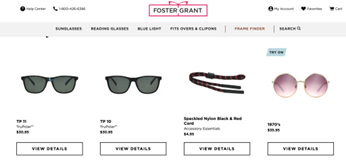
      • Hick’s Law – Too many options can delay a decision. Minimize the choices to reduce friction and retain users with only relevant information and UI elements.A user was recently shopping for reading glasses and chose one pair after researching options. They were offered a “You might also like” list of glasses with potential options similar to what the user had chosen. In this case, the ‘you might also like’ didn’t add value – it distracted the user and resulted in no purchase.
        Hicks Law

        Reference: Foster Grant website

    3. Increase Engagement

      The UX psychological principles that work to achieve this are:

        • Variable Ratio Schedule – To encourage adoption, vary the number of times a person displays a certain behavior (not every time), then phase out the reward once that behavior is established.


      • Psychological Resource Model – Some people are more prone to repetitive behaviors related to their purchasing profile. For example, Amazon saves users’ searches and based on their repeat searches serves them ‘similar types’ of products they have repeatedly purchased based on their history.
        Psychological Resource Model

        Reference: Amazon

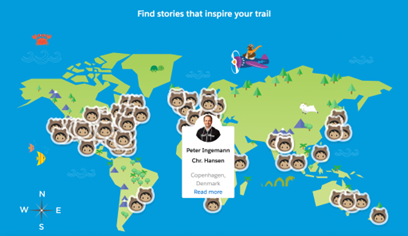
      • Emotional Contagion – Humans are subconsciously drawn into personal stories and take on the emotions and behaviors of other people, thereby becoming a part of the emotional and social tapestry.In the example below: Salesforce has compiled a large amount of personal stories of trailblazers in their ecosystem. The page highlights their personal journey to success. These stories are inspiring “Every Trailblazer has blazed their own trail through Salesforce”. This visual is interactive and humanizes the experience, making it more engaging.
        Emotional Contagion

        Reference: https://trailhead.salesforce.com/trailblazers

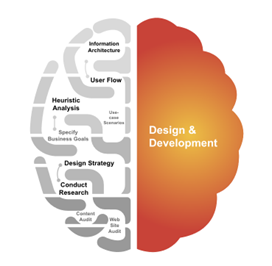
    Position2 has dozens of successful websites and creative assets that combine these psychological aspects, best practices, and the science of design. In addition, we combine information architecture, heuristic analysis, user flow, design strategy, and deep research on industry practices to bring engaging digital experiences to life.

     Position2 Creative

    Reference: Position2 creative

    Repetition and habit-forming cues can result in intuitive and predictive interactions. Simplicity with the ease-of-use principle of least effort to drive conversions. All this sounds like a lot but once you follow the basic human psychological principles, it’s a breeze.

    Conclusion

    Mobile app designers, web designers, UX designers, and graphic designers have to understand and apply the principles of UX design psychology to achieve their goals to drive engagement. ‘X’ is not an unknown. Decode X easily.

    Connect with us, and we can provide the best digital marketing experience for your target audience.