Why AI Marketing Agents Deliver Results Traditional Tools Cannot
Editor’s Note:This is the second installment in a three-part series examining how AI marketing agents are revolutionizing the industry. In Part 1, we introduced the fundamental shift from reactive tools to proactive execution partners. In this article, we explore the tangible advantages these agents deliver and how they’re transforming content marketing from concept to execution.
Key Takeaways
Organizations report dramatic efficiency gains: UX audits completed in minutes instead of days, 20+ hours saved weekly on website maintenance, and persona-aligned messaging produced in hours rather than weeks.
Unlike generative AI that creates content or predictive AI that forecasts trends, agentic AI autonomously reasons through situations, makes decisions, and executes complete multi-step marketing campaigns.
Successful implementation requires robust data infrastructure, clear operational guardrails, and a cultural shift where marketers operate as orchestrators, directing intelligent systems.
The shift to marketing automation with AI agents delivers transformative benefits across efficiency, engagement, scalability, and decision-making capabilities.
1. Dramatically Improved Efficiency
AI agents streamline repetitive and time-consuming tasks, allowing marketers to focus on strategic initiatives by automating processes like data entry, transcription, and simple customer interactions. Organizations report:
UX audits delivered in minutes instead of days
Website health monitoring reduces 20+ hours of manual maintenance
Content workflows scaling across thousands of assets with consistent quality
2. Enhanced Customer Engagement
AI agents trained on organizational data provide round-the-clock assistance across time zones, maintaining cohesive relationships with individual consumers over long periods through highly personalized experiences that increase loyalty and conversion rates.
Marketing AI agent solutions enable:
Real-time personalization at the individual customer level
24/7 customer support with minimal human intervention
Continuous journey optimization based on behavioral signals
Context-aware interactions across all touchpoints
3. Limitless Scalability
Generative AI easily handles large volumes of customer interactions or content creation needs, accommodating growing audiences and quickly converting content in multiple languages or formats. This scalability allows organizations to:
Manage global campaigns across markets simultaneously
Test and optimize hundreds of content variations
Handle peak demand periods without resource constraints
Scale personalization efforts beyond human capacity
4. Always-On Campaign Management
By continuously collecting and analyzing data, AI agents enable marketers to run constant, real-time campaigns that adapt based on performance feedback without requiring human input at every step. This creates marketing operations that never sleep, continuously optimizing toward better results.
5. Data-Driven Decision Intelligence
AI agents analyze historical data and forecast future trends through predictive analytics, helping marketers make data-driven decisions and optimize workflows by identifying customer behavior patterns. Teams gain:
Actionable insights from complex datasets
Predictive lead scoring and customer lifetime value calculations
Market opportunity identification based on consumer demand
Understanding how ai agents transform content marketing requires examining specific use cases where autonomous execution delivers superior results.
From Static to Dynamic Content Creation
Traditional content production limits the number of variations marketers can create. AI agents for marketing eliminate this constraint by generating multiple, distinct content versions in seconds. This enables strategic hyper-personalization where high-value customers, new leads, and seasoned brand fans each receive uniquely tailored messaging.
Intelligent Audience Segmentation
Marketers without technical expertise can now build complex target audiences using natural language prompts. An agent translates descriptions like “customers with high engagement scores who live in the Northeast and haven’t purchased in 90 days” into precise segment attributes, democratizing advanced targeting capabilities.
Automated Campaign Brief Generation
Starting a new campaign requires a clear brief. AI agents build comprehensive briefs instantly based on simple natural language prompts, incorporating organizational goals and pre-configured marketing guidelines. This accelerates planning and approval stages significantly.
Multi-Channel Journey Orchestration
Agents can build complete draft journey flows from original briefs and content, allowing marketers to review, refine, and activate campaigns automatically while ensuring seamless multi-touch personalization. What once took weeks of planning now happens in hours.
Continuous Testing and Optimization
Since agents automate journey creation, embedding continuous A/B testing becomes significantly easier. This transforms testing from a periodic task to an automated capability, with agents learning from results and adjusting strategies in real time.
Real-World Applications: From Theory to Practice
Position2 has transformed how to automate marketing with AI from concept to operational reality through our Agentic Platform.
1. Vertical-Specific Agent Development
Our teams design and train agents based on real client work, creating specialized capabilities for:
Campaign Concept Generation
Content Creation and Optimization
UX and Website Health Audits
Persona Intelligence and Orchestration
Performance Monitoring and Reporting
Journey, ICP, and Segmentation Development
These aren’t generic AI assistants—they’re vertically tuned systems wired into knowledge bases for AI & SaaS, Computing Systems, and Multi-Location Healthcare.
2. Integrated System Architecture
Agents run inside the channels where work happens:
Slack for team collaboration
Analytics platforms for performance tracking
CMS systems (WordPress, Drupal, Webflow)
Arena for content management
Client-specific knowledge bases
Vertical playbooks and data libraries
This integration enables on-brand, accurate, context-aware outputs rather than generic AI responses.
3. Human-Centric Governance
Our teams maintain full control over:
Strategic objectives and priorities
Operational guardrails and boundaries
Brand voice and messaging standards
Quality thresholds and approval workflows
Final direction and decision-making
Agents execute and learn; humans supervise and lead. Our agents don’t work independently—our people and agents together form the service delivery model.
4. Measurable Business Impact
Across clients, we’re documenting substantial gains:
Speed: UX audits reduced from days to minutes
Localization: Multi-location healthcare campaigns automatically customized by region
Efficiency: 20+ hours saved per week on website maintenance
Quality: Persona-aligned messaging produced in hours instead of weeks
Scale: Content workflows managing thousands of assets with consistent quality
This represents early proof that AI Agentic Services-as-a-Software delivers: speed + accuracy + repeatability—powered by AI, directed by experts.
Where We Go From Here
The advantages are clear. The results are measurable. But successful implementation requires more than just deploying technology—it demands careful planning around data infrastructure, governance frameworks, and organizational readiness.
In Part 3, we’ll examine the practical considerations for implementing AI agents: data quality requirements, integration complexity, governance and monitoring frameworks, change management strategies, and the organizational shifts needed to evolve toward true human + agent teams. We’ll also look ahead to what’s coming next in the evolution of agentic marketing.
The future of marketing is agentic. The transformation is already underway.
Stay tuned for Part 3, where we explore implementation strategies and the future evolution of human + agent collaboration.
Before we discuss Vector Search Engine and when to consider using them, let’s start with a simple question.
What is a vector?
In terms of data representation, a vector is a sequence of numbers (or scalars) that can represent data points in a multidimensional space.
It’s not a new concept – its use in mathematics was first introduced by polymath Hermann Grassmann in the mid-19th century. In this article, we will discuss how the vector representation of data works with machine learning, natural language processing (NLP), and image processing. Using vectors to represent data has been around since the 1980s (through Spatial databases). You’ve probably used a spatial database more than once – Google Maps? Two billion users a month rely on that database, which uses vectors to deliver accurate results efficiently to get where they need to go.
So, let’s discuss the difference between a traditional database and a Vector Search Engine. A traditional database is organized on structured data (think rows and columns) and can be paired with a relational database. Traditional databases can be queried with exact match (or range) queries and filtered based on specific criteria, relying on structured query languages (like SQL).
Vector Search Engine represent and store data as vectors, numerical representations of those data points in high-dimensional spaces. High-dimensional spaces are datasets that contain many variables (columns) compared to the number of data points (rows). Vectors capture the underlying meaning of data, enabling similarity searches.
Understanding Vectors
To understand vectors, it starts with embedding.
Embedding is the numerical representation (vector) that captures the meaning and relationships of text, image, and audio files. Each embedding or vector has a high-dimensional aspect. That means that each vector can have hundreds or thousands of dimensions—each dimension captures a different feature or aspect.
When creating those vectors, the goal is to keep data with similar meanings close to each other in the vector space to allow for an optimized similarity search.
Word embedding
Here’s an example of word embedding (provided by Google Gemini):
We have two sentences:
Sentence 1: “The cat is on the mat.”
Sentence 2: “A feline rested on the rug.”
An embedding model (like those used in NLP) would convert these sentences into vectors. These vectors might look something like:
Because the sentences have similar meanings, their vectors would be relatively close to each other in the high-dimensional space.
Image embedding
It is common to use a convolutional neural network (CNN) to extract features of an image and generate image embeddings.1
Here’s an example of image embedding (provided by Google Gemini):
An image of a dog might be represented by a vector like:
[0.78, 0.12, -0.45, …, 0.91]
A similar vector would be used for another image of a dog. Conversely, a significantly different vector would be used for a picture of a cat.
Digging into convolutional neural networks a little more, they excel at learning hierarchical features from images. Their layers can detect patterns like edges, textures, and more complex object parts.
Image embeddings from convolutional neural networks can be used for:
Similarity search: Finding images that may be visually similar (think two images with two different dog breeds, both are sitting)
Image retrieval: Searching for images based on their content
Image classification: Using the embeddings as features for classification tasks
Facial recognition: Representing faces as embeddings for comparison
An important aspect of Vector Search Engine is their capacity to store, index, and manage high-dimensional data. This concept is not easy to understand, so I asked Gemini to give me an easy way to describe it.
Imagine you want to describe a simple object, like a color. You might use just one number: its position on a rainbow scale (e.g., 0 for red, 100 for violet). That’s a one-dimensional space.
Now, let’s describe a point on a map.
You need two numbers: its latitude and its longitude. That’s a two-dimensional space.
If you want to describe a cube, use its length, width, and height. That’s a three-dimensional space, and we can easily visualize all of these.
Core concepts of Vector Search Engine
A Vector Search Engine is designed for efficiently storing, indexing, and querying high-dimensional vector embeddings. These embeddings are numerical representations of data, capturing the semantic meaning (or features) of various forms of unstructured data. We covered one of the core concepts above – embeddings, and we’ll dig deeper into a few more core concepts.
High-Dimensional Vectors
Vector embeddings typically have a large number of dimensions.
Each dimension captures a nuanced aspect of the data, allowing for a rich and detailed representation.
An embedding with many dimensions requires specialized indexing (and querying) techniques.
Similarity Search:
Unlike a traditional database (which focuses on exact matches), Vector Search Engine excel at finding data points similar to a query vector.
Similarity is determined by measuring the distance between vectors in the high-dimensional space.2
Standard distance metrics include:
Cosine Similarity: measures the angle between two vectors, which are useful for text and high-dimensional data, as it’s insensitive to magnitude. Magnitude in this reference is a calculation that allows for the normalization of vectors, enabling the metric to measure the similarity based on the orientation or direction of the vectors rather than their size.
Euclidean Distance: The straight-line distance between two points in the vector space. This is the fundamental distance metric in various fields, including mathematics, physics, computer science, and particularly in machine learning algorithms.
Dot Product: Another measure of vector similarity. It’s used in geometry, physics, and computer science.
Indexing:
Vector Search Engine employ specialized indexing techniques to perform similarity searches across large datasets of high-dimensional vectors efficiently.
Traditional indexing methods used in relational databases are not efficient for high-dimensional data.
Standard vector indexing algorithms include:
Hierarchical Navigable Small Worlds (HNSW): builds a multi-layer graph structure for an efficient approximate nearest neighbor (ANN) search.
Inverted File Index (IVF): Divides the vector space into partitions and searches within the most relevant partitions.
Product Quantization (PQ): Compresses vectors to reduce memory usage and speed up distance calculations.
Approximate Nearest Neighbor (ANN) Search:
Due to the computational cost of finding the exact nearest neighbors in high-dimensional space, Vector Search Engine often use ANN algorithms.
ANN algorithms sacrifice some accuracy to achieve significantly faster search speeds, which is acceptable for many similarity search applications.
These core concepts revolve around representing complex data as high-dimensional vectors, indexing these vectors for efficient similarity search using specialized algorithms and distance metrics, and performing approximate nearest-neighbor searches to retrieve semantically related information quickly.
Use cases for a Vector Search Engine
By now, you’ve got a good understanding of the concepts around Vector Search Engine and their differences.
1. Semantic Search and Information Retrieval: Imagine searching for “pictures of cute fluffy animals” and getting back images that look like cute fluffy animals, even if the captions don’t explicitly use those words. Vector Search Engine excel at understanding the meaning behind text and images. By embedding queries and documents (text, images, audio, video) into a shared vector space, the database can find the most semantically similar items, going beyond simple keyword matching. It powers more intelligent search engines and recommendation systems.
2. Personalized Recommendations: Imagine your favorite streaming service suggesting movies or shows you might like. Vector Search Engine can store user preferences (represented as vectors based on their viewing history, ratings, etc.) and content characteristics (also as vectors). By finding the closest content vectors to a user’s preference vector, the system can deliver highly personalized and relevant recommendations for movies, music, products, articles, and more.
3. Fraud Detection: In the financial world, Vector Search Engine can help teams identify unusual patterns that indicate fraudulent activity. By representing user transactions, account details, and other relevant information as vectors, the system can detect anomalies – data points far away from typical behavior in the vector space. This process can identify potentially fraudulent activities that a rule-based system might miss.
4. Chatbots and Conversational AI: When you interact with a chatbot, it needs to understand the nuances of your questions. Vector Search Engine store embeddings of previous conversations, user queries, and knowledge base articles. The chatbot can retrieve relevant information and generate more contextually appropriate and helpful responses by embedding a new user query and finding the most similar existing vectors.
5. Image and Video Similarity Search: Beyond just text, Vector Search Engine are powerful for finding similar images or videos. By extracting features from visual content and embedding them as vectors, you can perform searches like “find me other dresses that look like this one” or “show me all video clips with a similar scene.” It has applications in e-commerce, media management, and content moderation.
6. Drug Discovery: In pharmaceutical research, Vector Search Engine can help accelerate discovery. On average, it takes 10 years to bring a drug from initial discovery to market approval. Utilizing a Vector Search Engine, in drug discovery, molecules can be represented as vectors based on their properties. Researchers can then search the database for molecules similar to known drugs or target compounds, potentially identifying new drug candidates faster – potentially improving the time to clinical trials (and eventually to market).
While Vector Search Engine offer exciting possibilities, there are some common challenges and important considerations to keep in mind when working with them:
Challenges:
1. The Curse of Dimensionality: Vector embeddings can have hundreds (or thousands) of dimensions to capture the richness of the data completely. This high dimensionality can lead to the “curse of dimensionality,” where distance metrics become less meaningful, and overall search performance degrades. Finding the right balance between information richness and dimensionality is critical.3
2. Scalability and Performance: Maintaining efficient search performance can become challenging as the data volume and vectors’ dimensionality increase. Indexing high-dimensional data for fast similarity search is a complex problem. Indexing techniques (like HNSW, Annoy, etc.) have trade-offs regarding build time, query speed, and memory usage. Scaling the database horizontally to handle large datasets while preserving query latency requires careful architectural design.
3. Choosing the Right Embedding Model: The quality of the vector embeddings is paramount. The choice of embedding model (e.g., different transformer models for text, CNN architectures for images) significantly impacts the effectiveness of the Vector Search Engine. Understanding the specific data type and the desired semantic understanding is critical; selecting the right model that is appropriate can have an impact on your success.
4. Indexing and Query Optimization: Efficiently indexing and querying high-dimensional vector data requires specialized techniques. Understanding the characteristics of different indexing algorithms and how they perform under various workloads is essential for optimizing query latency and throughput. Choosing the right distance metric (e.g., cosine similarity, Euclidean distance) for the specific use case also impacts performance and relevance.
5. Data Updates and Maintenance: Real-world data is dynamic. Updating vectors in an extensive database while maintaining index integrity can be challenging. You need to develop strategies for handling inserts, deletes, and updates to avoid performance degradation.
Monitoring and Observability: Monitoring the performance and health of a Vector Search Engine is crucial. Effective monitoring and alerting systems are important for identifying and addressing potential issues.
Considerations:
1. Defining the Use Case and Data: The first step is to clearly understand the specific problem you are trying to solve with a Vector Search Engine and the nature of your data. This will guide the choice of embedding model, indexing strategy, and distance metric.
2. Embedding Strategy: How will you generate the vector embeddings? Will you use pre-trained models or train your own? What are the trade-offs regarding accuracy, computational cost, and customization?
3. Indexing Technique Selection: Which indexing algorithm best suits your data volume, dimensionality, query patterns, and performance requirements? Understanding the trade-offs between approximate nearest neighbor (ANN) search algorithms (speed vs. accuracy) is essential.
4. Distance Metric: Which distance metric aligns best with the notion of similarity for your data? Cosine similarity is often used for text embeddings, while Euclidean distance might be more appropriate for other data types.
5. Accuracy vs. Speed Trade-off: Many ANN search algorithms offer a trade-off between search speed and accuracy (recall). You need to determine the acceptable level of approximation for your application.
6. Integration with Existing Systems: How will a Vector Search Engine integrate with your existing data pipeline and infrastructure? Considerations should include ingestion, query execution, and synchronization.
7. Cost and Infrastructure: Vector Search Engine can have specific infrastructure requirements – especially for large-scale deployments. You need to fully understand the costs associated with storage, compute resources, and managed service offerings.
8. Security and Privacy: If your Vector Search Engine contains sensitive information, your team needs to ensure that the appropriate security measures are in place to protect the data. Standard security tactics like encryption and access control are necessary to ensure that you’re meeting compliance requirements.
Whether your focus is on developing a Retrieval-Augmented Generation (RAG) for an LLM or a semantic search feature, keeping these challenges and considerations in mind – you’ll be able to tap into the full power of Vector Search Engine.
Successfully integrating a Vector Search Engine into your product or feature hinges on a clear understanding of its capabilities and a planned approach to implementation. You will need to clearly define your use case and have a solid understanding of your data. Those two steps will inform your decisions regarding the following:
1. Embedding Strategy: Which embedding model (pre-trained or custom-trained) will best represent your data’s semantic meaning for your specific problem?
2. Indexing Technique: Given your data volume, dimensionality, and query speed requirements, select the most appropriate approximate nearest neighbor (ANN) indexing algorithm (e.g., HNSW for balanced performance, PQ for memory efficiency).
3. Distance Metric: Choose the distance metric (e.g., Cosine Similarity for semantic text search, Euclidean for more general feature comparisons) that accurately reflects ‘similarity’ for your application.
Outside of the initial setup, you will have ongoing operational considerations that need to be addressed.
From planning for data updates to establishing monitoring and observability to track performance (and resource utilization) and ensure your chosen solution aligns with your scalability, cost, security, and privacy requirements, you can harness the full power of Vector Search Engine for intelligent data retrieval and advanced applications by addressing these factors proactively.
Some analysts predict that the Global LLM and Agentic AI markets could reach $36 billion and $47 billion in revenue by 2030, respectively. Understanding the infrastructure and underlying technology that will support that growth is important. Making the right decisions now will ensure scalability and future growth.
This article was a collaborative effort between Qdrant and Position2.
Qdrant is a leading open-source, high-performance Vector Search Engine and vector search engine. Built to power semantic search, recommendation engines, Agentic AI memory and AI-driven retrieval. Qdrant offers both a managed service (Qdrant Cloud) or the option to run it on-premise.
Position2 is an AI-first Growth Marketing firm that drives growth for innovative brands. We understand your needs, and that understanding drives us to develop the right marketing mix for your company. Our unique process of mapping content to each customer journey stage and deep knowledge of AdTech & Martech platforms deliver exceptional results for your ABM programs. We power our integrated marketing campaigns with the most advanced tactics in Paid Acquisition, Marketing Automation, CRM, Analytics, and cutting-edge Content Creation, Design, and Web Development.
1. Clainche, S. L., Ferrer, E., Gibson, S., Cross, E., Parente, A., & Vinuesa, R. (2022). Improving aircraft performance using machine learning: A review. https://doi.org/10.1016/j.ast.2023.108354
Marketo Co-Founder Jon Miller and Serial Entrepreneur Kumar Ganapathy Join Board of Directors
Position2, the AI-first growth marketing agency, today announced the appointment of Jon Miller, co-founder of Marketo, Engagio, and a new stealth Martech startup, and Kumar Ganapathy, Managing Partner of 3iPartners, to its Board of Directors.
The appointments come as Position2 scales its Services-as-a-Software model. This approach transforms traditional agency engagement by delivering customized, software-powered experiences for each client, backed by deep domain expertise. AI-led automation manages operational execution while Position2‘s expert teams concentrate on the high-impact strategic work that drives client growth.
Proven Leadership for AI-First Marketing
Jon Miller brings 25+ years of experience at disruptive marketing technology platforms. As co-founder of Marketo, he helped achieve IPO and category leadership. Previously, Miller served as CMO at Demandbase following the merger with Engagio, where he was founder and CEO. Miller is a recognized thought leader who authored “The Clear and Complete Guide to ABM” and “The Definitive Guide to Marketing Automation.”
“Position2 represents the next evolution for modern agencies-a move to a ‘Services-as-a-Software’ model,” Miller explained. “This means clients hire the company for driving results and benefit from AI-enhanced capabilities for faster go-to-market, lower costs, and predictable growth. This precision-focused, AI-driven marketing is what the industry needs.”
Kumar Ganapathy has founded multiple successful companies over 25 years across telecom, enterprise IT, and AI, including VxTel (acquired by Intel), Virident (acquired by Western Digital), and, through Enterprise Labs (incubator), companies like Akridata (Visual AI), Ampool (acquired by HPE), and Kinara (Edge AI silicon). As Managing Partner of 3iPartners, he has invested in over 50 tech startups.
“AI-enabled growth marketing requires operational discipline – shorter cycle times, smarter budget allocation, and continuous experimentation with strong governance,” said Ganapathy. “Position2‘s focus on reliable outcomes to improve win rates and clarity in every dollar spent aligns perfectly with what clients in AI, SaaS, Cybersecurity, and Healthcare need.”
Transforming Marketing Through AI
Position2’s approach redefines marketing by fusing AI-first methodologies with proven expertise to deliver:
Faster Go-to-Market: Accelerated campaign deployment and optimization
Continuous Experimentation: Real-time testing across the buyer’s journey
Source to Revenue Connection: Every touchpoint is tied to the revenue
This methodology addresses critical challenges where traditional methods struggle with sluggish GTM, low conversion rates, and unclear ROI attribution.
The company’s pioneering AI-enabled model gives clients software-level efficiency with human-level strategic thinking, eliminating the traditional trade-off between cost and quality.
“We’ve fundamentally reimagined how AI-enabled marketing should operate—with precision, accountability, and unwavering focus on revenue impact,” said Rajiv Parikh, CEO of Position2. “Our clients expect complete transparency from marketing spend to revenue generation, along with the speed and agility that only AI can provide. With Jon Miller and Kumar Ganapathy joining our board, we’re positioned to set entirely new standards for the industry.”
About Position2
Position2 is a pioneer in AI-led marketing- unifying data, accelerating insight-to-action, and connecting every dollar spent to revenue. We partner with ambitious teams that expect measurable outcomes and enterprise-grade execution.
With over 20 years of experience and a 200+ person global team, Position2 has served hundreds of brands across B2B Tech, Computing Devices, Healthcare, and Enterprise markets.
The development of artificial intelligence is now at a new level—one that will augment its role within enterprise strategy. Agentic AI is more than automation or data processing; it is a class of intelligent systems capable of autonomously developing goals, making decisions, and taking action.
Organizational leaders must think strategically, be able to coordinate operational processes, and ensure governance and ethical alignment.
From Reactive to Proactive Intelligence
Traditional AI models have assisted many business functions by accelerating workflows, improving analytics, and enabling process automation; however, these are primarily reactive systems as they can only operate within prescribed definitions and when instructed by a human.
The world of agentic AI takes us out of this predictable paradigm. Agentic AI is a new opportunity for a more proactive AI – one that is capable of acting without prompting, contextualizes actions, and learns from actions to modulate behavior in a real-time space.
The move from AI as a supportive technology to AI as a decision-enhancing technology is a meaningful shift in thinking about decision-making. It will provide us with new opportunities in a business environment that is unpredictable.
Business Opportunities: Strategic and Operational Value
Integrating Agentic AI for business units provides various benefits:
Customer Experience: AI agents can drive customer service workflows, manage problem resolution, and escalate exceptions independently, which improves the response time and ultimately, customer satisfaction.
Operations: Adaptive systems can respond to supply chain planning disruptions, optimize inventories, and reroute logistics in real time, resulting in decreased downtime and cost.
Revenue Functions: Sales and marketing units can fundamentally leverage autonomous agents, allowing them to experiment, learn, and customize campaigns in a personalized way, utilizing live dynamic feedback.
Knowledge Management: AI can augment the ability to surface insights, draft reports, or provide insight into complicated decision-making, allowing executives and analysts to reduce their cognitive load.
In summary, Agentic AI enables organizational agility at scale, which will be crucial and highly valued in increasingly volatile and uncertain markets.
Governance and Oversight: The Risk of Autonomy is Structural
The complexity in governance and accountability increases with AI, making autonomous decisions. Business leaders and practitioners must build frameworks to answer essential questions such as:
How do we validate the reasoning behind its autonomous actions?
Who will be responsible for the decisions taken by the autonomous AI agent?
What checks are in place to ensure that the agent’s work aligns with the organizational goals and compliance standards?
Businesses need to think about building policies considering legal and data compliance to ensure proper audit trails are created for tracing the action taken by AI, and building accountability models that can guide these audit trails. Adding human intervention at various decision-making touchpoints will establish escalation paths and help prevent any risks.
Ethical Alignment
The ethical implications of Agentic AI impact trust, brand reputation, and sustainability.
Reputational damage (choosing to ‘put out a fire’ kind of conduct) in terms of bias in training data, a lack of transparency into the logic of decision-making, and hidden behavioral drift can result in reputational damage, regulatory risk, and customer loss.
Companies should simply weave ethical design principles into the AI lifecycle:
Consistent assessments to ensure fairness and reduce bias.
Reviewing the explainability of model output.
Inclusively using data sources and designing user experiences.
Ethical alignment is not soft – it’s a strategic necessity within the current landscape and accompanying expectations from stakeholders for humans and machines to be held accountable.
Lead with Purpose
Agentic AI is more than an upgrade in technology – it’s a shift in how a business operates, produces, and serves each stakeholder in a manner we collectively recognize as “the place where the bottom line meets social conscience”. The most successful organizations won’t be the first to adopt the technology, but rather the organizations that are thoughtful when integrating the technology while also balancing opportunity, governance, and ethical stewardship.
As we introduce Agentic AI into our organizations, we need to consider how the clarity of our vision and sense of responsibility matter; we’ve reached a time when AI doesn’t just help, it acts.
As AI agents powered by large language models (LLMs) continue to evolve, developers face a common challenge:
How do we consistently and securely connect these powerful models to real-world tools, data, and applications?
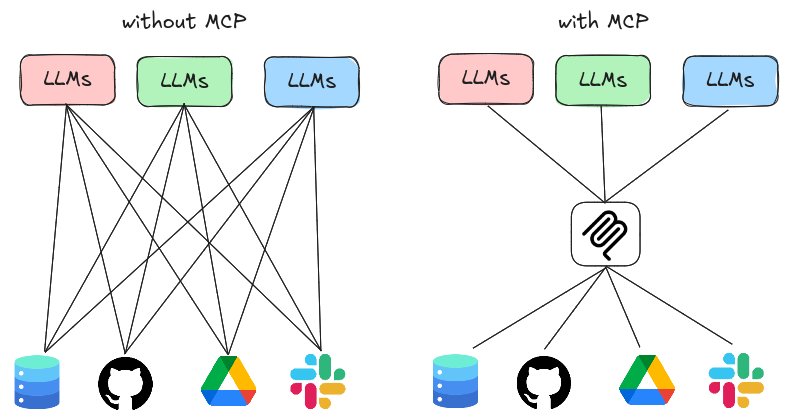
Enter Model Context Protocol (MCP), a groundbreaking solution that standardizes how LLMs interact with the digital world, much like USB-C standardized device connections.
What is MCP?
Think of MCP as the USB-C for AI. It’s a universal protocol that allows LLMs to seamlessly plug into:
Tools (APIs, scripts, third-party services)
Data sources (databases, files, APIs)
User interfaces (apps, websites)
Application logic (backend workflows)
By defining a shared format and communication layer, MCP ensures that AI agents can interact with their environments in a standardized, modular, and secure way.
What Are LLMs?
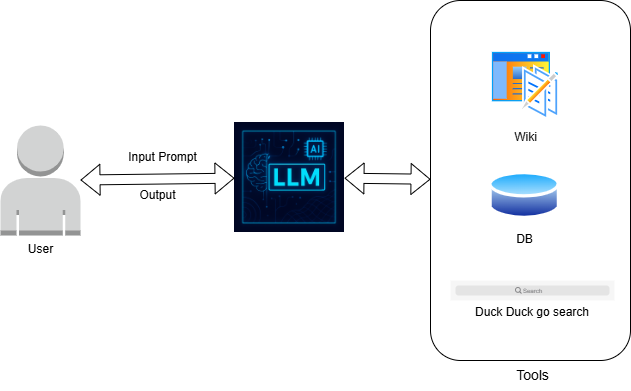
Large Language Models (LLMs) are AI systems trained on massive datasets. They can understand, generate, and manipulate human-like text and much more.
LLMs can:
Write content (emails, blog posts, code)
Answer questions and provide recommendations
Translate, summarize, and rephrase text
Generate images, charts, and more (with multimodal capabilities)
Intelligent Agents
When LLMs are paired with tools, they become Intelligent Agents—capable of taking action, automating tasks, and interacting with real-world systems.
Examples of what agents can do:
Access APIs like GitHub, Notion, or Slack
Run code or scripts dynamically
Query real-time databases or update spreadsheets
Chain multiple tools together for automated workflows
But to make all this work smoothly, agents need a common protocol—that’s where MCP shines.
The MCP Solution
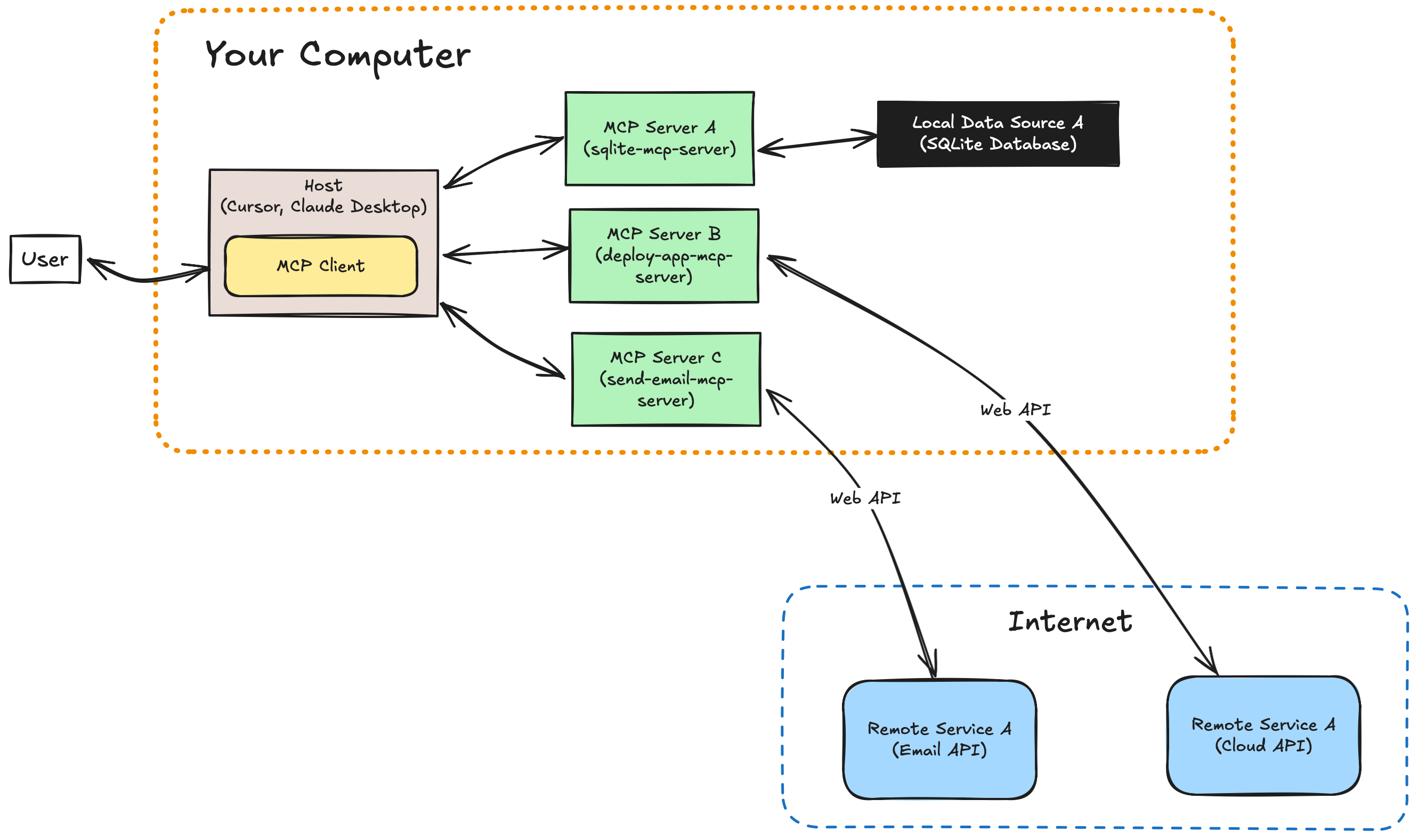
MCP offers a well-defined architecture to bridge LLMs and external systems:
MCP Architecture Overview:
MCP Host (The Brain): The LLM or AI agent that performs reasoning and decision-making.
MCP Client (The App): The application or interface that supplies tools, context, and environment information.
MCP Server (The Middleman): Facilitates structured, secure communication between the client and the host.
MCP Protocol: A shared data format (usually JSON) that ensures consistency in how commands, tools, and results are represented.
This setup allows developers to create modular, interoperable agent environments, independent of specific models or frameworks.
Who’s Using MCP?
MCP is already being adopted by some of the leading names in AI:
Anthropic (Claude): Creators of MCP, using it to integrate agents across desktop and productivity tools.
OpenAI: Embedding MCP into the Agent SDK and ChatGPT Desktop App for streamlined agent tooling.
Cursor: A developer-first code editor that uses MCP under the hood to provide intelligent AI-powered workflows.
Why MCP Matters
Without MCP, developers often reinvent the wheel, writing custom integrations, managing context manually, and struggling to scale agent capabilities.
With MCP, you can:
Build modular and reusable agents
Standardize tool and API integrations
Scale agents across different platforms and use cases with minimal friction
Conclusion
MCP is the missing link that bridges the gap between raw AI power and real-world usability. It gives developers a common language to build, scale, and easily compose intelligent agents.
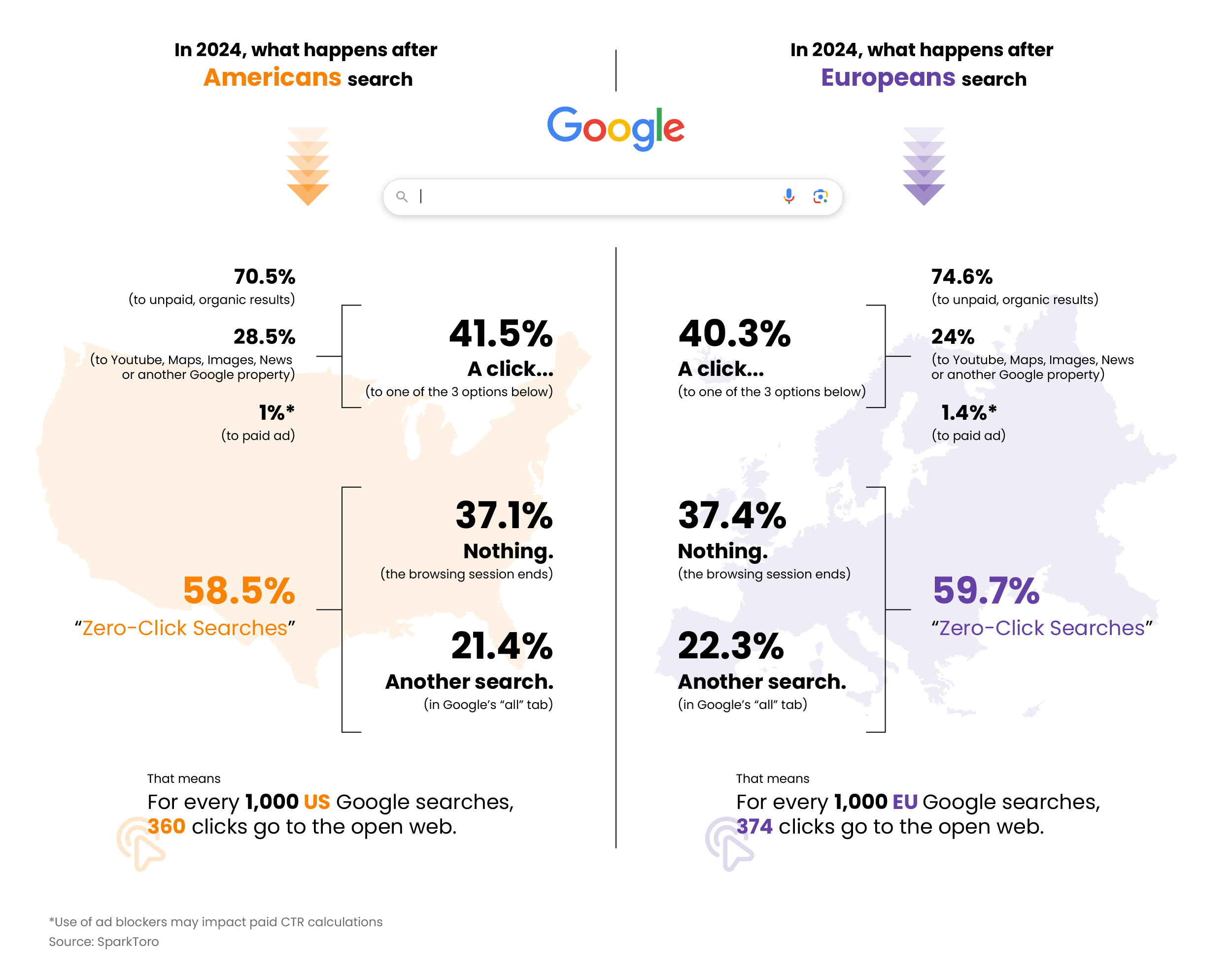
Is your website traffic tanking? The rise of zero-click searches is dramatically altering the search landscape, leaving many websites grappling with decreased traffic. A study by SparkToro reveals that nearly 60% of Google searches in the U.S. and EU result in zero clicks. This trend means users often find the information they need directly on the search results page, eliminating the need to click through to any website. With nearly 30% of clicks directed to Google’s properties like YouTube, Google Images, and Google Maps and only about 30% of the total searches going to the open web, many websites are experiencing a sharp decline in organic traffic.
While zero-click searches were initially driven by features like featured snippets and knowledge panels, AI Overviews are becoming a significant contributor, amplifying their impact. To stay competitive, it’s crucial to understand and adapt to these changes, leveraging Google’s ecosystem and enhancing user engagement with high-quality, authoritative content.
While the rise of zero-click searches poses challenges, it also presents opportunities for those willing to adapt. Don’t let your website fade into obscurity while your competitors thrive. Learn to stay ahead of the curve and master the new rules of the digital landscape to safeguard your organic traffic from plummeting.
Google’s AI Overview: Revolution or Ruin for Your Website?
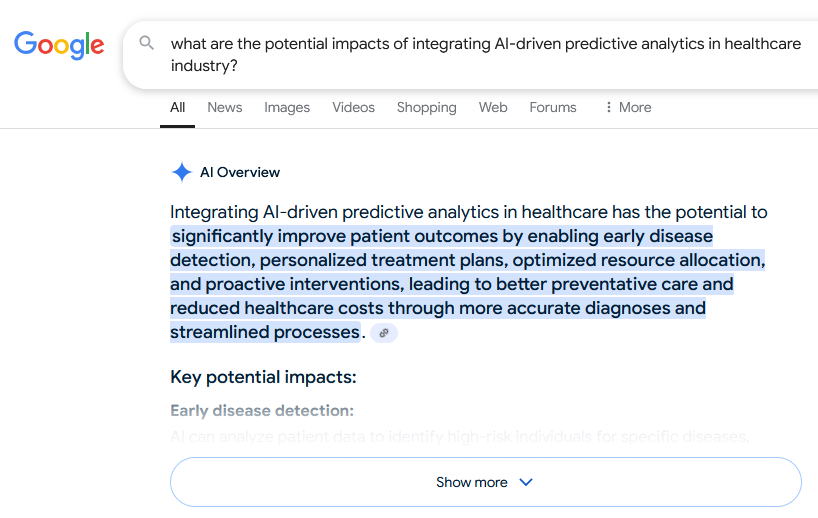
Google’s AI Overviews, formerly known as Search Generative Experience (SGE), are revolutionizing search technology by delivering personalized SERPs that go beyond traditional listings. By harnessing the power of Google’s Gemini language model and Knowledge Graph, AI Overviews offer precise, relevant information through concise summaries drawn from multiple sources.
This innovation is a game-changer, fundamentally shifting SEO strategies. We can no longer rely solely on traditional keyword optimization. Instead, the focus must shift to creating high-quality, relevant content that aligns with AI-generated answers. This means providing comprehensive, authoritative information that AI Overviews can trust and display.
As AI Overviews continue to integrate deeper into search results, the imperative for businesses and content creators is clear: adapt or be left behind. Those who succeed will produce content that not only ranks well but also serves as a reliable source for AI responses. The future of SEO is here, and it’s AI-driven.
Example of an AI Overview Result
Which Searches Trigger a Google AI Overview?
Google’s AI Overviews is a dynamic feature in search results designed to provide users with natural language responses and direct links to webpages for deeper exploration. The appearance of AI Overviews depends on the type of query and the perceived user intent.
1. Selective Display: Google does not always display an AI Overview, especially for queries involving financial recommendations or other sensitive topics. Initially, Google indicated that AI-generated responses would not be available for “Your Money or Your Life” (YMYL) searches, which include financial and legal advice. However, testing has shown that AI Overviews are still provided for many health and medical-related queries, likely due to the confidence provided by Med-PaLM 2, Google’s specialized medical language model.
2. Complex Queries: AI Overviews are more likely to appear for complex queries that traditionally require multiple searches to be fully understood. These are often tasks where users need quick and comprehensive answers. For example, queries like “how to start a business,” “best ways to lose weight,” or “how to improve mental health” might trigger an AI Overview because they require detailed, multi-faceted information.
3. User Intent: The system aims to identify when a generative AI response can be particularly helpful. This typically occurs when users need to quickly understand information tied to a specific task or decision-making process. For instance, if a user searches for “how to set up a home office,” the AI Overview might provide a step-by-step guide directly in the search results.
4. Search Refinement: Studies on zero-click searches indicate that many users perform another search after their initial one, suggesting a need for more precise or additional information. AI Overviews can help bridge this gap by providing more comprehensive answers upfront. This feature is particularly useful for refining searches and ensuring users get the most relevant information without having to sift through multiple links.
In summary, Google’s AI Overviews are designed to appear for queries where comprehensive, quick, and accurate information is essential. By understanding the types of searches that trigger these overviews, businesses can better tailor their content to meet the evolving demands of search engine algorithms and user expectations.
Example of AI Overview triggered for a complex query
Will Google’s AI Overviews Sink Your Organic Traffic?
With Google’s AI overviews expanding, some may fear a catastrophic decline in organic traffic. However, AI overviews can revolutionize the user’s search experience and catapult visibility for specialist sites.
High-quality content is more critical than ever, as AI overviews thrive on precise data from authoritative sources, channeling traffic to these origins. If your content isn’t up to par, you risk being left in the digital dust.
Website owners must adapt by optimizing content to be AI-overview-friendly, ensuring it is rich in information and meticulously structured. This strategic move will skyrocket their chances of being featured as a source in overviews. Failing to adapt will cause your traffic to plummet.
In the ever-evolving digital search landscape, adaptation is not just necessary—it’s imperative. Embracing advancements in Google’s algorithms can safeguard organic traffic and unlock unprecedented growth opportunities. Quality content and strategic adaptability are the linchpins of success. Ignore this shift at your peril.
How to Optimize for AI Overviews and Drive Traffic
To dominate traffic through AI overviews, craft meticulously documented, irresistibly digestible content that catapults your site to authority status.
By leveraging crystal-clear headers, structured data, and seamlessly interlinking related topics, websites can supercharge their content for AI-driven summaries, ensuring they become the go-to high-quality sources in AI overviews.
Sources listed on an AI Overview Result
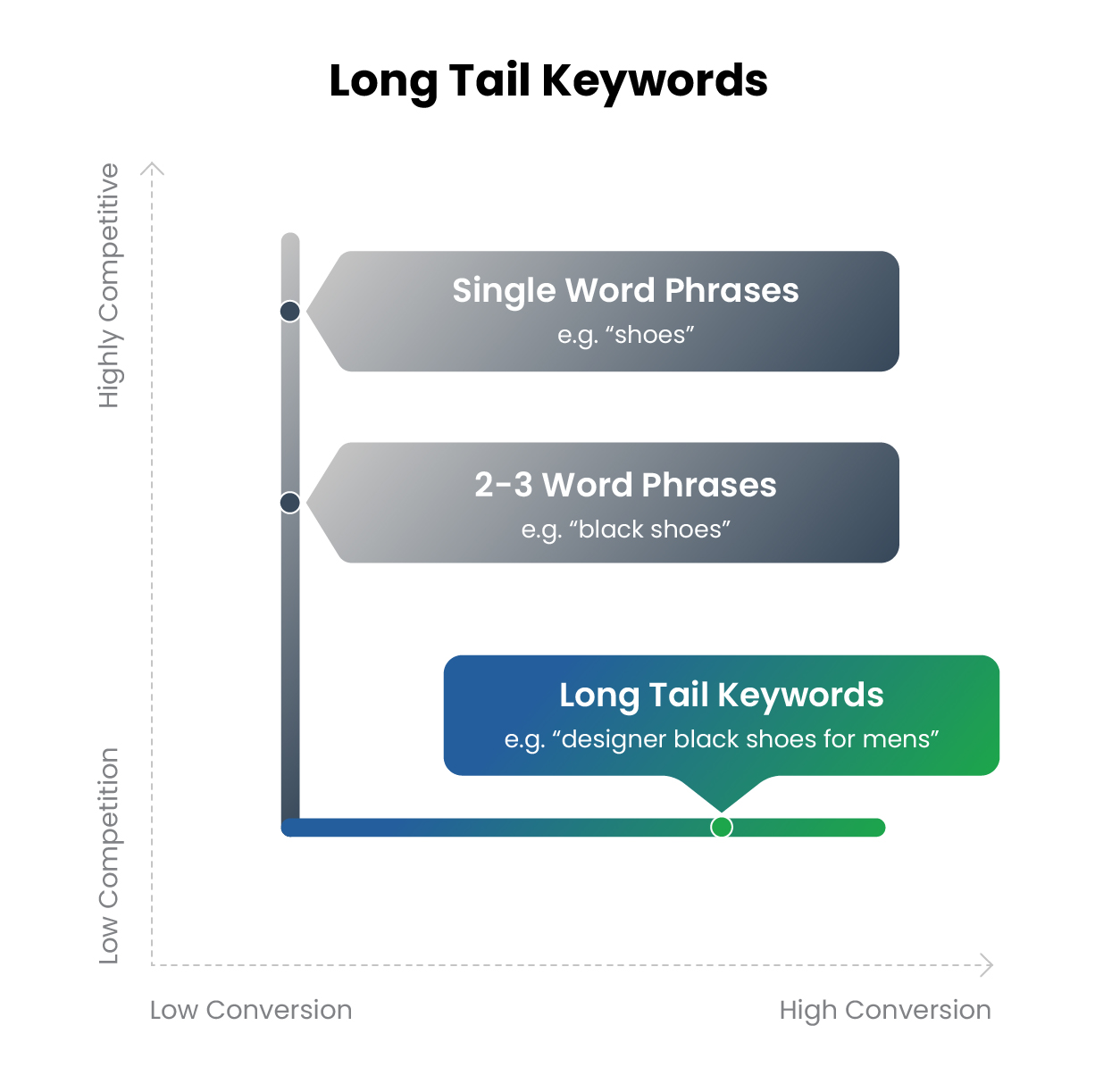
Focus on Target Long-Tail Keywords
Targeting long-tail keywords can revolutionize a site’s chances of dominating AI-driven overviews. These phrases, typically three to five words long, deliver an exact match for specific search queries, drawing in highly targeted traffic.
Long-tail keywords make up about 70% of all web searches.
Incorporating long-tail keywords ensures content remains laser-focused on niche audiences, catapulting its ranking in search engine results. By aligning content with user intent, site owners can captivate Google’s AI, skyrocketing visibility within specialized segments. This strategy not only turbocharges organic traffic but also cements the site as an authoritative resource, driving relentless user engagement.
Focus on High-Quality Content
High-quality content is the cornerstone of optimizing for Google’s AI overviews. This means creating valuable, engaging, and informative material that resonates with the audience.
1. Conduct Thorough Research: Ensure that all information is accurate and up-to-date.
2. Use Clear and Concise Language: Make complex topics easy to understand without oversimplifying.
3. Incorporate Visuals: Use images, infographics, and videos to enhance and clarify the content.
4. Implement Internal Linking: Connect various pieces of content on the website to keep users engaged.
5. Optimize for Readability: Use headings, bullet points, and short paragraphs to make content digestible.
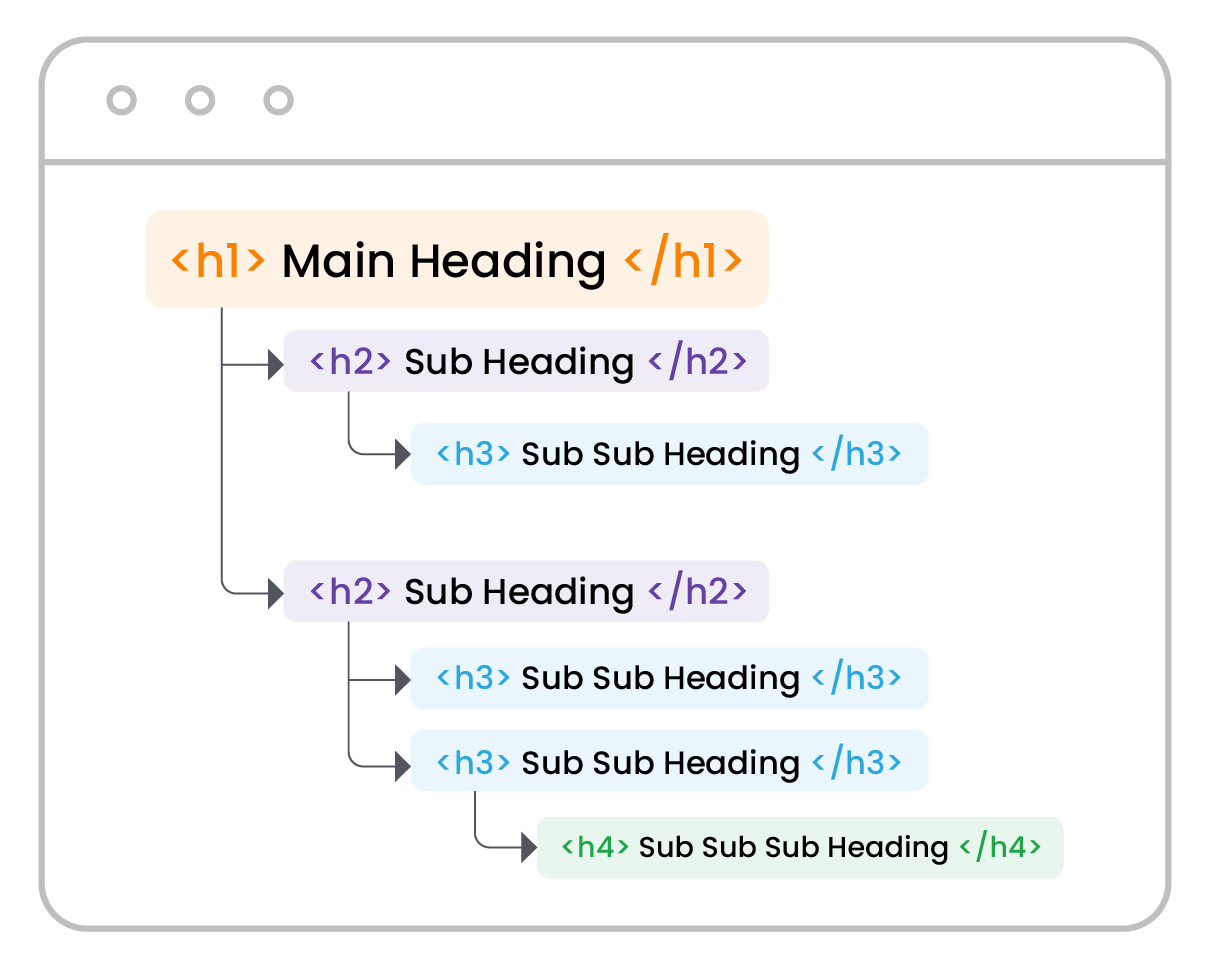
Use Clear Structure
A well-defined structure significantly enhances the chances of ranking on AI Overviews by organizing content with clear headings and subheadings. Logical segments encourage deep engagement, promoting a rewarding experience for users. Hierarchies streamline navigation and improve SEO, making it easier for Google’s AI to understand and index the content effectively.
This meticulous organization not only boosts site rankings but also reinforces authority and attracts new audiences. By presenting information in a structured and accessible manner, the content becomes more likely to be featured in AI Overviews, ensuring it reaches a broader audience and achieves higher visibility in search results.
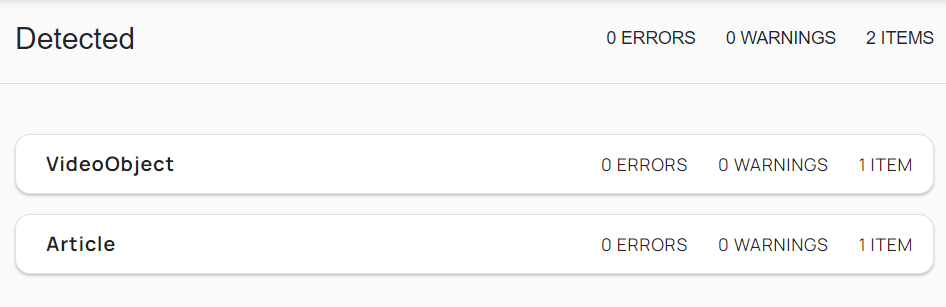
Use Structured Data
Structured data is instrumental in optimizing Google’s AI overviews. By incorporating structured data, one enables search engines to understand the content better.
Properly formatted structured data can significantly enhance its visibility in search results, as schema markup can highlight critical information.
Example of use of Structured Data
Comprehensive Coverage
Achieving comprehensive coverage ensures that all relevant aspects of a topic are thoroughly addressed and presented to the audience.
1. Identify Core Topics: Determine the primary themes and subtopics related to the main subject.
2. Conduct Deep Research: Utilize authoritative sources to gather detailed and accurate information.
3. Organize Content Logically: Present information in a coherent structure that flows naturally.
4. Provide Supporting Details: Include data, examples, and expert opinions to strengthen the content.
This holistic approach fosters credibility and improves the chances of appearing in Google’s AI overviews.
Stay Current
Updating content regularly enhances the chances of ranking in Google’s AI Overviews. Google’s AI prioritizes relevant and up-to-date content, signaling its value to users. Fresh content, including updated statistics and recent developments, aligns with current trends and user queries, boosting engagement.
Frequent updates also capture new keywords and search intents, keeping content competitive in search rankings. By consistently providing fresh, relevant content, websites can improve visibility and authority, increasing their chances of being featured in Google’s AI Overviews.
Use Conversational Language
Use a conversational tone to optimize for Google’s AI overviews. This style engages both AI and human readers, making complex information more digestible.
Friendly content enhances user experience and boosts metrics like clicks and on-page time, positively impacting search rankings. Simple, direct language, questions, and informal phrases align with AI preferences.
The aim is to create human-like dialogues, fostering connection and trust while maintaining professionalism.
Summary
Google’s AI Overviews, powered by the cutting-edge Gemini language model and Google’s Knowledge Graph, are revolutionizing the search landscape by delivering razor-sharp results synthesized from a multitude of sources. This groundbreaking feature targets top-tier, relevant content and selectively appears for the most intricate queries. While some may fear a decline in organic traffic, AI Overviews presents a game-changing opportunity to elevate user experience and drive visibility. To thrive in this new era, you need exceptional, meticulously structured content that AI Overviews favor. Position2 can help you transform your SEO strategy and safeguard your organic traffic. Ready to dominate AI Overviews and supercharge your traffic? Adapt now, and watch your website rise to the top!
FAQs
What are zero-click searches, and how do they impact website traffic?
Zero-click searches occur when users find answers directly on the search engine results page without clicking through to a website. These searches, driven by features like AI Overviews and featured snippets, reduce traditional website traffic while increasing competition for visibility on SERPs.
How do AI Overviews influence the rise of zero-click searches?
AI Overviews provide users with concise, accurate answers sourced from multiple websites, fulfilling their intent directly on the SERP. This feature significantly contributes to zero-click searches, reducing the need for users to visit individual websites for information.
How can businesses optimize their content for AI Overviews?
Businesses can optimize by creating high-quality, authoritative content with a clear structure, including headings, bullet points, and schema markup. Focusing on user intent, long-tail keywords, and comprehensive topic coverage ensures their content is trusted and featured in AI Overviews.
What metrics should marketers track to measure the impact of AI Overviews on organic performance?
Marketers should monitor impressions, click-through rates (CTR), and average position. Analyzing zero-click performance in Google Search Console and assessing branded search visibility is also key. Additionally, marketers can use tools like SEMrush to measure the number of keywords for which their website is ranking in AI Overviews.
How can AI Overviews be integrated into a broader content marketing strategy?
AI Overviews can position your brand as an authority by focusing on high-quality, user-focused content that aligns with search intent. Use insights from AI Overviews to refine your content topics, address gaps, and create supporting assets like blogs to reinforce your visibility across search and other platforms.
The customer journey has experienced a remarkable transformation in the era of artificial intelligence (AI). With personalized recommendations and automated chatbots, AI has redefined how businesses interact with customers. It enables companies to anticipate needs, resolve issues more quickly, and create seamless experiences at every touchpoint. As technology advances, AI’s role in shaping customer expectations and behaviors becomes increasingly significant. In this article, we’ll explore how AI is revolutionizing the customer journey and reshaping the future of customer engagement.
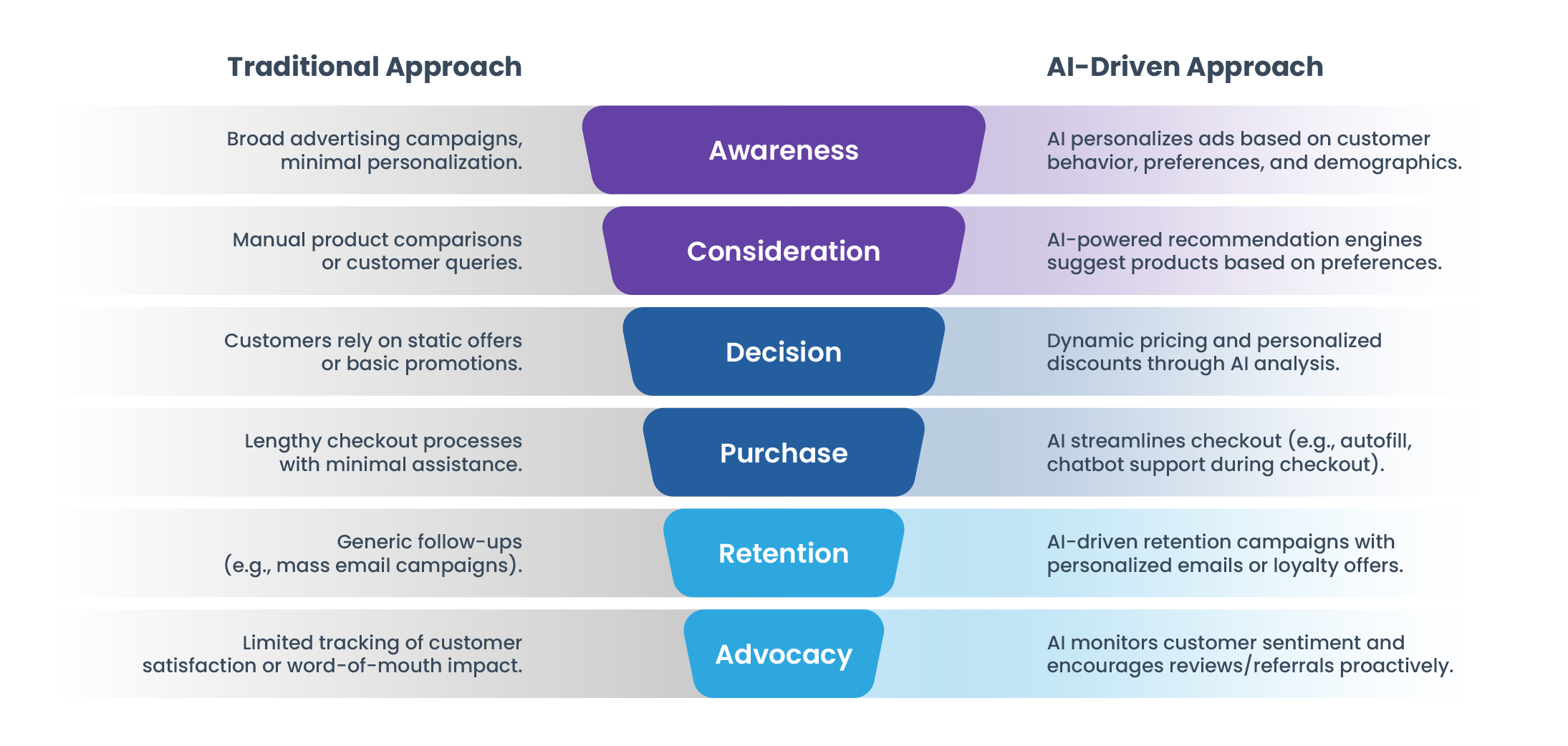
Customer Journey: AI vs traditional approach
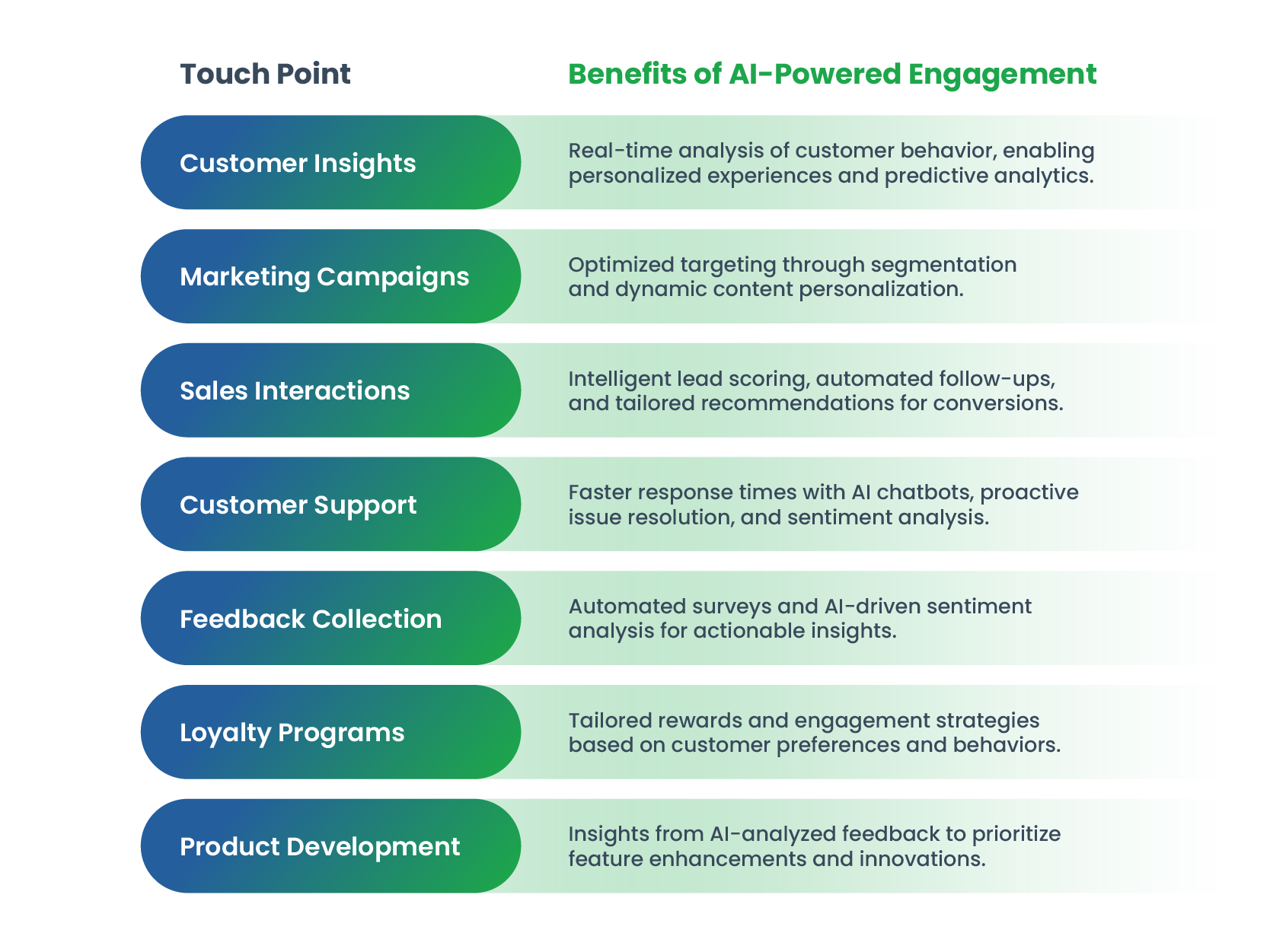
Mapping customer journey touchpoints with AI for better engagement
Mapping customer journey touchpoints with AI transforms engagement by providing data-driven insights and personalized interactions. AI analyzes customer behavior across various channels, identifying key touchpoints such as website visits, social media interactions, email responses, and in-store experiences. Machine learning algorithms predict customer needs by examining patterns, allowing for proactive engagement through tailored recommendations and offers.
AI-powered tools, like sentiment analysis and chatbots, enhance communication at each touchpoint, delivering timely and relevant support. Predictive analytics optimize the customer journey by identifying potential drop-off points and offering actionable solutions for customer retention. Integrating AI into CRM systems ensures a seamless flow of data, creating a comprehensive view of the customer journey.
By leveraging AI to map and refine touchpoints, businesses can build deeper connections, improve customer satisfaction, and drive loyalty, ultimately transforming the customer journey into a personalized and engaging experience.
Challenges in Implementing AI for Customer Journey Mapping
Implementing AI for customer journey mapping presents several challenges.
Firstly, data quality and availability are critical, as AI models require vast amounts of accurate, diverse, and real-time customer data. Fragmented data across multiple platforms can hinder effectiveness.
Secondly, interpreting complex customer behaviors and emotions is still challenging for AI, especially when dealing with unstructured data like text and voice. Privacy and compliance concerns add complexity, with evolving regulations like GDPR requiring robust data protection measures.
Additionally, there’s a risk of over-reliance on AI insights, potentially overlooking human intuition and creativity. Finally, integration with existing systems can be technically demanding, requiring substantial investment in infrastructure and skilled personnel. Addressing these challenges involves a strategic approach combining technology, human expertise, and ethical practices.
Future of AI in Customer Engagement
The future of AI in customer engagement promises to be transformative, focusing on delivering hyper-personalized and seamless experiences throughout the customer journey. AI will enhance predictive analytics, enabling businesses to anticipate customer needs and provide proactive solutions. Chatbots and virtual assistants will become more conversational and context-aware, ensuring real-time support and personalized interactions. Additionally, AI-driven sentiment analysis will allow brands to understand emotional cues and tailor their communications effectively.
Furthermore, AI will facilitate dynamic customer journey mapping by analyzing real-time data from various touchpoints and optimizing engagement strategies at the moment. Automation will streamline repetitive tasks, allowing human agents to concentrate on more complex problem-solving. As voice interfaces and augmented reality technology continue to evolve, AI will integrate these innovations to create immersive and intuitive experiences. However, deploying AI ethically, ensuring transparency, and maintaining trust will be crucial as businesses strive to balance innovation with a customer-centric approach.
Call to action for businesses to adopt AI-powered strategies.
Call to Action for Businesses:
Invest in AI Tools: Leverage AI for personalized customer interactions, predictive analytics, and real-time decision-making.
Data Strategy: Centralize and clean customer data for effective AI implementation.
Customer-Centric Design: Use AI to enhance touchpoints with personalized content and seamless omnichannel experiences.
Train Teams: Upskill teams to work with AI-driven insights and tools.
Focus on Ethics: Ensure transparency, privacy, and compliance in AI deployment.
Key Businesses Leveraging AI:
Retail (Amazon): AI-driven personalized recommendations and customer service chatbots enhance shopping experiences on Amazon.
Banking (JPMorgan Chase): AI chatbots like “COiN” handle customer inquiries, while predictive analytics offer tailored financial products.
Telecommunications (Verizon): AI-powered customer support agents and predictive maintenance help improve user experience and service reliability.
Healthcare (Mayo Clinic): AI supports diagnostic tools and personalized patient care plans, enhancing communication and service delivery.
Entertainment (Netflix): AI algorithms personalize content recommendations, increasing viewers’ engagement based on their watching patterns.
Automotive (Tesla): Tesla uses AI for in-car assistants and autonomous driving features, offering personalized experiences to their drivers.
Adopting AI ensures businesses stay competitive while enhancing customer satisfaction and loyalty.
As a society, we spend an enormous amount of time online—whether it’s on social media, websites, blogs, chat groups, or messaging services. The internet has, for all intents and purposes, taken over the world. It has connected people on an unprecedented level and given a voice to many who didn’t have one before. Even our news sources have moved online, making the dissemination of information faster than ever before. However, this rapid spread of information has also significantly increased the propagation of misinformation and disinformation.
Misinformation and disinformation can spread virally, becoming pervasive and persuasive. In the digital marketing landscape, their impact can have far-reaching consequences, affecting everything from public opinion to brand reputation. Understanding the nature of misinformation, how it spreads, and how it impacts marketing is crucial for anyone involved in the digital space.
Understanding Misinformation
Misinformation is defined as “false or inaccurate information that deceives or is mistaken for fact but is not deliberate.” Disinformation, on the other hand, is false information deliberately and maliciously designed to deceive. People may unintentionally spread misinformation due to cognitive biases, illusory truth effects (believing information after repeated exposure), or motivated reasoning (accepting information that aligns with pre-existing beliefs without verification). As a result, trustworthy content is becoming harder to identify and verify.
The COVID-19 pandemic, for example, saw a massive rise in misinformation and fake news that spread almost as virally as the disease itself, with nearly as damaging consequences. Similarly, global political events, such as the 2016 and 2020 U.S. presidential elections, have highlighted the challenges of managing misinformation across different media landscapes.
Brands have also found themselves caught in the crossfire. For instance, companies like Nike and Amazon faced backlash when their ads appeared on conspiracy sites and other pages peddling false information, hurting their credibility and reputation. On the flip side, other brands have successfully navigated these challenges by fostering transparent communication and emphasizing their commitment to truthfulness.
Types of Misinformation
Misinformation comes in many forms, ranging from deceptively simple errors to deliberate fabrications. Here’s a breakdown of how misinformation can be classified:
Fabricated Content: Completely false information created with minimal or no factual or evidentiary basis.
Manipulated Content: Factual information, images, or videos that have been altered to present a distorted, sensationalist, or opposing viewpoint.
Imposter Content: Content crafted to look like it comes from a genuine source but is actually fake.
Misleading Content: Information that appears factual but is based on false premises or misleading data.
False Context: Factual information presented out of context to mislead the audience.
Satire/Parody: Humorous or mocking content designed to imitate real news sources. While often intended as harmless, satire can sometimes fool readers if not clearly identified.
False Connections: Content represented by captions, headlines, or visuals that do not support the actual content.
Sponsored Content: Marketing or advertising content presented as editorial or genuine content.
Propaganda: Content used to influence or manipulate public knowledge, attitudes, or values.
Error: Mistakes made in reporting by established agencies, often due to oversight or miscommunication.
How and Why Misinformation Spreads
The internet is an incredibly efficient tool for spreading information, but that efficiency also applies to misinformation. By the time misinformation is recognized, it has often been copied, reproduced, shared, tweeted, and discussed millions of times globally. The scale and speed at which misinformation spreads have grown exponentially, with different media playing specific roles in this phenomenon.
On Social Media:
Social media platforms are powerful tools for serving information and connecting brands with their audiences. They play a crucial role in democratizing information and enabling grassroots movements. However, their content-tailoring algorithms can sometimes create echo chambers, where users are primarily exposed to information that aligns with their beliefs, leading to the rejection or hostility toward opposing viewpoints.
Messengers and Chat Groups:
Messaging and chat groups are notorious for spreading fake news and misinformation. Millions of messages are forwarded daily with little to no fact-checking, leading to the rapid dissemination of damaging falsehoods.
Fake Websites:
Fake news sites are a major source of misinformation. Whether politically motivated or driven by other agendas, these sites can cause significant harm by spreading fake healthcare information, false news, or even promoting illegal goods and services.
Marketing Tactics:
In some cases, marketing tactics themselves can be sources of misinformation. While going viral can benefit brands, inauthentic or fraudulent marketing tactics can also propagate misinformation. Brands must be cautious in their strategies to ensure that they do not unintentionally contribute to the spread of false information.
AI’s Role in Spreading Misinformation
The rise of artificial intelligence (AI) has made it easier than ever to create and spread misinformation. AI-driven tools can amplify false information faster and on a larger scale than ever before. However, AI also offers promising tools for combating misinformation, such as automated fact-checking and content moderation.
Deepfakes:
Deepfakes are realistic and believable photos, videos, or audio files that are completely fabricated or manipulated to send misleading messages. The potential for damage to a person or brand’s reputation is incredibly high, as deepfakes can be used to influence public opinion, damage credibility, and sow discord.
Social Media Algorithms:
Social media algorithms are designed to serve users content they are likely to be interested in. However, this can also result in users being exposed only to information that aligns with their pre-existing beliefs, leading to a biased outlook. On the positive side, these algorithms can be leveraged to promote accurate and verified content, helping to counter misinformation.
AI-driven Bots:
Bots have been used in disinformation campaigns, such as during the 2016 U.S. election. However, AI can also be harnessed for good, by developing systems that detect and flag bots, thereby reducing their influence on social media platforms.
Safe Marketing Amid Misinformation
Marketing faces unique challenges in the digital age. Misinformation on social media can significantly impact consumer perceptions, brand reputation, and marketing strategies. Companies need to prioritize accuracy, transparency, and ethical communication to navigate this complex landscape.
Fact-check: Ensuring Accuracy in Every Message
Brands must ensure that all claims made in their marketing materials are accurate and evidence-backed. Misleading information can quickly damage a brand’s reputation and lead to social, legal, or financial repercussions.
Thorough Verification: Implement a rigorous fact-checking process for all content before it is published, using credible sources and consulting experts.
Third-party Fact-checking: Collaborate with independent fact-checkers or third-party organizations to add credibility and demonstrate a commitment to truthfulness.
Regular Audits: Conduct regular audits of past content to ensure ongoing accuracy, issuing corrections or updates promptly if needed.
Be Transparent: Building Trust Through Openness
Transparency is crucial in building and maintaining consumer trust. Brands need to be open about their products, services, and business practices, including any limitations or drawbacks.
Open Communication: Clearly communicate product details and avoid overstating benefits or making unsubstantiated claims.
Honest Marketing: Ensure that marketing campaigns accurately reflect the true nature of the product or service.
Engagement and Dialogue: Encourage open dialogue with customers, using social media and other platforms to address concerns and answer questions.
Stay Vigilant: Monitoring and Responding to Threats
Brands must remain vigilant in the rapidly changing digital landscape, actively monitoring online platforms for misinformation that could harm their reputation or industry.
Social Listening: Use social listening tools to track mentions of your brand across social media, forums, and news sites, enabling quick responses to misinformation.
Crisis Management Plan: Develop a crisis management plan with protocols for responding to misinformation swiftly and effectively.
Partnerships with Media Platforms: Collaborate with social media platforms and online publishers to address misinformation involving your brand promptly.
Be Responsive: Addressing Negative Sentiment Effectively
How a brand responds to misinformation can make all the difference. Negative sentiment can grow quickly if left unaddressed, making it crucial to respond promptly and effectively.
Quick Corrections: Respond quickly with accurate information when misinformation is identified, issuing public statements, corrections, or sharing verified data.
Proactive Engagement: Engage directly with your audience to clarify misunderstandings and provide additional context, helping to maintain trust.
Apologies and Accountability: If the brand has made an error, a sincere apology can go a long way in rebuilding trust.
Educate Your Audience: Empowering Informed Decisions
Educating your audience is a powerful way to combat misinformation. It empowers consumers to make informed decisions based on facts rather than falsehoods.
Educational Content: Create and share content that explains complex topics related to your industry, using blogs, videos, infographics, or webinars to provide clear, evidence-based information.
Myth-busting Campaigns: Launch campaigns to debunk common misconceptions in your industry, using credible sources and straightforward language.
Community Involvement: Engage with your audience in forums, social media groups, and other online communities, offering expert insights and factual information.
Find Credible Partners: Collaborating with Integrity
Marketing is only as effective as the partners you collaborate with. Partnering with reputable organizations, experts, and influencers can reinforce your company’s messaging while working with the wrong partners can negatively impact your brand’s standing.
Vet Your Partners: Choose partners carefully, vetting their past work and public statements to ensure alignment with your brand’s values.
Collaborate with Fact-checked Influencers: Work with influencers who prioritize accuracy and transparency in their content, ensuring your brand is represented authentically.
Engage with Industry Groups: Join industry groups or organizations focused on combating misinformation, contributing to a larger effort to maintain the integrity of your industry.
The Bottom Line
Misinformation is a complex and pervasive challenge in the digital age. While it can damage reputations, it also presents an opportunity for brands to stand out through transparency, honesty, and accuracy. By being proactive and vigilant, marketers can effectively navigate the digital landscape, building trust and loyalty among consumers in an era where information is constantly questioned.
In this ever-evolving landscape, brands need to stay informed, adaptable and committed to truthfulness. By embracing these principles, they can safeguard their reputations and continue to thrive in the digital age.
The buzz over the last year and a half around AI has raised awareness of Generative AI systems (Gen AI) and large language models (LLMs) and shone a spotlight on the issues and gaps in these systems, specifically regarding bias and discriminatory practices.
Here are some definitions (courtesy of Google’s Gemini) so we’re all on the same page.
Gen AI: It is a system that uses machine learning, algorithms, and training data to generate content based on user inputs or prompts. Content can include text, images, music, video, code, and more. Gen AI models are bidirectional, taking cues from human inputs and prompts to shape their content production.
LLMs: Are programs that use deep learning to analyze large amounts of data to understand human language and perform natural language processing (NLP) tasks. LLMs can recognize, generate, summarize, translate, and predict text and other content. They can also understand how words, sentences, and characters work together and recognize distinctions between different pieces of content.
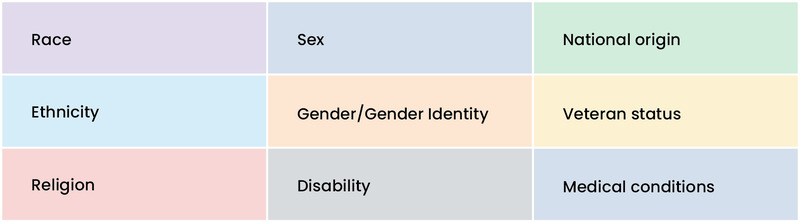
The list of potential biases is long, to say the least. They can include:
According to the CompTIA 2024 AI Outlook, 22% of companies are pursuing the integration of AI across a wide variety of products and workflows, and another 33% are engaging in limited implementation of AI.
With so many companies and government entities considering adoption or having already implemented AI and LLMs into their products, processes, and workflows concerns about potential bias and discriminatory practices grow.
The table above clearly illustrates that biases and discrimination have a direct impact on all people, whether they are part of a historically marginalized community or not.
Sources of bias
Where do biases in our AI systems come from? It’d be easy to declare this a technology issue, but it stems from human, systemic, and institutionalized biases resident in our digitized world. When systems use web data and information for training, they reflect the biases present in that training data and it becomes part of any output from that system.
As for systemic or institutional bias – that bias can come directly from that institution’s data and inadvertently exclude people. An example of this is a hiring tool that learned the features of a company’s employees (predominantly men) rejected women applicants for spurious and discriminatory reasons; resumes with the word “women’s,” such as “women’s chess club captain,” were penalized in the candidate ranking.1
The impact of bias
Real-world examples show that these ingrained biases can impact a person’s financial well-being, the ability to get hired, medical treatment, mental health, and an overall potential loss of opportunity.
What considerations can prevent unconscious AI bias?
To ensure fairer AI systems – it’s universally understood that data privacy, transparency, and accountability have to be at the forefront of all internal use policies.
These policies must be coupled with the ability to detect existing biases in those systems and accompanied by mitigation plans.
So what does implementation look like?
Data Privacy
Eliminating bias in AI begins with data anonymization. Data anonymization is nothing new; industries like Healthcare, Financial Services, and Telecommunications have been doing it effectively for years. Government organizations also use it to protect Personally Identifiable Information (PII).
One component of data anonymization that can preserve privacy while preserving data utility for AI applications is pseudonymization. Pseudonymization anonymizes data by replacing any identifying information with a pseudonymous identifier. Across industries, Pseudonymization protects personal information like first and last names, addresses, and Social Security Numbers.
Additional techniques that can help preserve privacy are federated learning and differential privacy, which enable data analysis without compromising privacy.
Data anonymization has pros and cons. Teams must decide how they utilize PII data to ensure they pursue the right approach.
Transparency
Transparency is key to reducing bias and discrimination in AI systems. It’s a pretty broad term – what it means in terms of AI systems is there is an openness and clarity of AI systems, this applies to their algorithms, decision-making processes, and data sources. Areas to focus on for data transparency include:
Data collection and processing – What data sources are you using? How is the data collected and processed?
Assessments – Conduct assessments of these systems for bias and discrimination, including any remediation efforts. Publicly publish any assessments of the system (and maintain records of these).
Privacy policy – Develop and publish your privacy policy for system users.
Evidence compliance with all applicable regulations in the regions you operate.
Transparency is a critical component of responsible AI, as it helps ensure that decisions are made fairly, ethically, and without bias—most importantly, that these efforts are shared with system users.
Accountability
Accountability involves establishing processes and frameworks to create an oversight and monitoring function over these systems to ensure that they operate as intended and do not cause unintended consequences.
Creating a governance framework supports both accountability and transparency. It establishes an oversight body that reviews the development, deployment, and day-to-day performance of AI systems.
Define ethical guidelines for staff who build and update these systems.
The common elements between transparency and accountability are that both of these functions require active monitoring and reporting on the adherence to stated policies, guidance, and compliance with all applicable regulations. As with most technology solutions, these need to be audited and tested to ensure the controls are working as intended, not causing new issues, and any subsequent bias is identified.
In closing
Bias and discrimination exist in these systems, and the solutions that can help reduce them in AI systems are nothing ‘new.’ They are tried-and-true approaches that multiple industries have used for years to protect sensitive data and create and maintain the confidence of consumers, regulators, and investors. As these systems are being developed, companies need to consider whether speed to market is more important than developing systems that have enshrined fairness and are not actively reinforcing societal bias.
Although LLMs have been around since the 1950s, let’s start by defining what they are. A Large Language Model is a type of AI program that uses deep learning and machine learning to perform natural language processing (NLP) tasks. LLMs are trained on large amounts of data to understand and generate human language.
LLMs are built on transformer models (because of the massive datasets they are trained on), which are neural networks that use self-attention to learn context and detect relationships between elements in a sequence.
What is a Marketing LLM?
Marketing-focused LLMs are specifically trained on your data. The data you use to train can be your marketing content, campaigns, analytics, and customer data. These LLMs can ingest and train on large amounts of data.
The clear advantage of leveraging AI in your Marketing Strategies
LLMs and Generative AI aren’t going anywhere, these tools have been around for a while, and they will continue to make an impact on multiple industries. Across those industries and companies, Gen AI is being utilized to create content (like social posts, ad copy, and blogs), creative assets, templates, product descriptions, and metadata to create efficiencies in their marketing and creative teams as well as improve speed to market for test iterations.
Over half of marketers (55%) in an eMarketer study use AI for content ideation, indicating the technology’s value in generating new creative concepts and strategies. Let’s look at some examples of how a Marketing LLM can impact your campaign creative:
Personalization at scale: Marketing LLMs can quickly tailor content to specific audiences, ensuring that the right message gets to the right target.
Scalable content: You can quickly develop and version existing content for use in omnichannel campaigns.
Optimizing existing content: With speed and efficiency you can quickly optimize content to improve your engagement and conversion rates on existing campaigns.
Data-Driven Insights and Analysis
In the same eMarketer study from earlier this year, almost half (45%) of the respondents use AI to gather consumer insights, showcasing AI’s role in understanding market trends and customer behaviors. Marketing LLMs can deliver value with:
Processing customer data with NLP: You can utilize an LLM to clean and correct customer data or personalize responses tied to customer interactions.
Analyzing customer sentiment: Review and analyze sentiment based on classifying inbound communication.
Identifying trends and opportunities: With so many touchpoints to process, it’s difficult for teams to identify trends. An LLM can process unstructured data like customer feedback, social media posts, and online reviews – identifying trends and opportunities your team might miss.
Chatbots and Conversational AI
There are clear differences between chatbots and conversational AI. Chatbots use predefined conversation flows that are limited. Think about the last chatbot you used—there are clear limits to what it can answer based on your input. Simply put, Conversational AI uses machine learning and NLP to provide a more robust, personalized experience. There are use cases for both – broadly they can be used for:
Enhancing customer experience
Being an always-on, 24/7 support function
Being a key component in Sales or Business Development flows
Optimization and Testing
Testing your marketing is critical to increasing its effectiveness, reducing waste on strategies that don’t work, and increasing the ROI of your campaigns – Marketing LLMs are a great tool to help you with all of that.
Creative copy and content optimization
A/B testing and experimentation strategies
Integration with Marketing Automation
Marketing LLMs can have an impact on Marketing automation – from identifying prospects that can convert to finding the best time to market to them to get that conversion. They can also assist in:
Streamlining workflows and processes
Personalized nurturing campaigns
Enhancing marketing efficiency
Challenges and Considerations
In 2017, The Economist declared that data was the most valuable resource. Although the article focused on US tech companies and their use and storage of massive amounts of data – it’s a very relevant topic for AI and Marketing LLMs.
Data quality and privacy concerns are top considerations when using a Marketing LLM – the data the system is trained has a direct impact on the results. Poor data quality can quickly cause issues with an LLM. These issues can be mitigated before they even start by:
Data cleaning: Identify, correct, and remove inconsistencies, errors, and missing values from your data set.
Data collection: Establishing strong controls (process and procedures) on the collection of data.
In addition to the above, creating rules and procedures for data validation, integration, and monitoring.
Privacy concerns: You need to ensure that training data does not contain personally identifiable information (PII)—if it does, it increases the risk of being exposed by hackers and is subject to multiple laws worldwide. The best policy regarding privacy concerns with PII is to ensure that data is anonymized and that consent is obtained where necessary.
Ethical and responsible AI implementation: We’ve all seen the news stories about bias and discrimination in LLMs, and it’s clear that improved data quality and human oversight are critical to preventing bias, discrimination, and misleading information that can hurt historically marginalized communities.
Future Outlook
As LLMs continue to evolve, we can count on a future with them making an impact on both consumers and businesses. Advancements in LLMs will include a deeper level of personalization, advanced conversational capability, and an industry-level focus on specific industries.
Today, LLMs can provide businesses with a clear advantage by enhancing productivity by optimizing operations, reducing costs, and improving delivery. LLMs can process and analyze vast amounts of data faster and more efficiently than people, driving quicker, more accurate decision-making.
Conclusion
When it comes to Marketing LLMs, there are so many practical applications that can uplevel your marketing and customer experience for your customers—and these capabilities will only grow as new LLMs enter the marketplace.
Although there are some clear concerns about data quality, potential biases, and privacy, these can all be mitigated by strong controls (process and procedure) combined with actual human oversight.
We believe there’s a clear competitive advantage to using Marketing LLMs and that the benefits clearly outweigh the concerns.