Author: Sudheer Dayanand

  • How to use ChatGPT for Digital marketing?

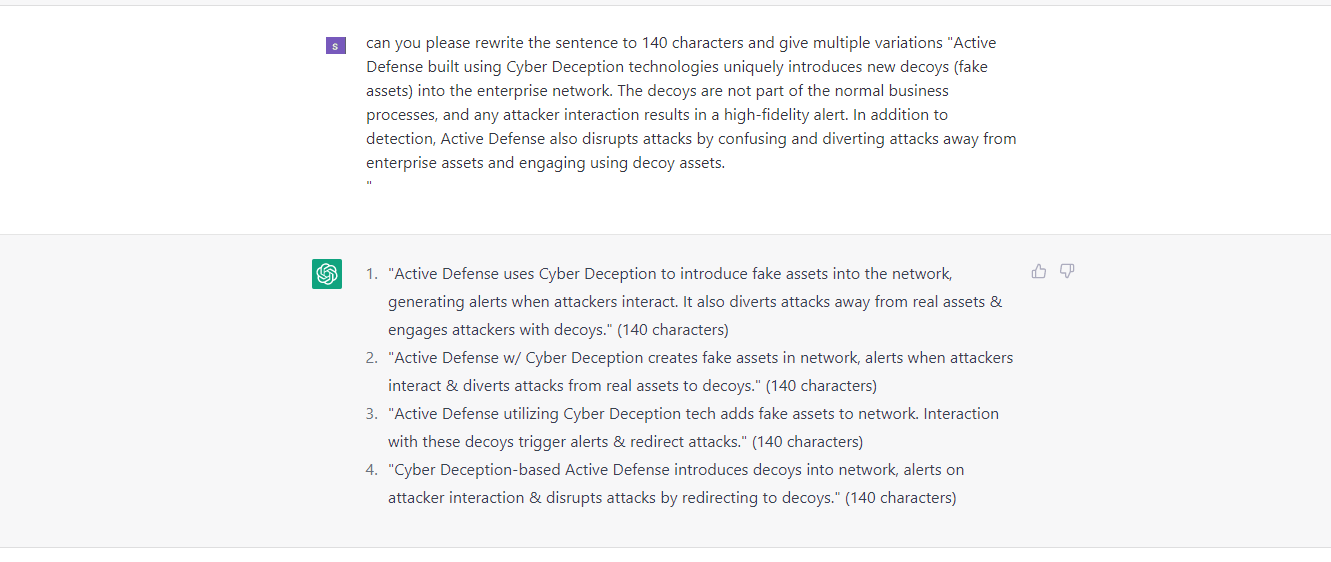
    One of the latest entries in AI-powered tech is ChatGPT (Chat Generative Pre-trained Transformer), a prototype released late last year. As you can imagine, the reaction to it was both positive and negative – as more and more AI-driven tech is being released, there will be a conversation on how to utilize these tools to enhance our daily lives while reducing a negative impact on humans.

    We feel that ChatGPT has great potential to impact our homes and workplaces positively. It has become widely popular barely a month into its release – so you’re probably thinking ‘ok, so what does it do?’

    What is ChatGPT?

    Before you start, it can help you research an industry silo before you build out your first marketing campaign.

    Use it to quickly understand your client’s business without getting bogged down in online research. It has the potential to be a huge timesaver as you ramp up for new clients/customers.

    Let’s say we are looking to build new creative for a CyberSec client on threat deception, but your team has questions. If we use ChatGPT and type in threat deception, we get information as shown in the screenshot below.
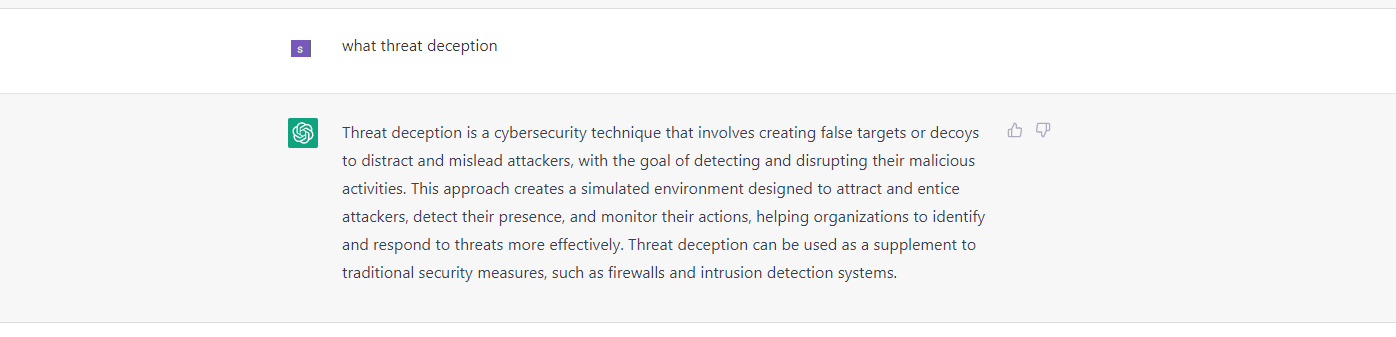
    Threat Deception Chatgpt

    Let us see what we get from a Google search. Hint, many links may or may not have the information we need.
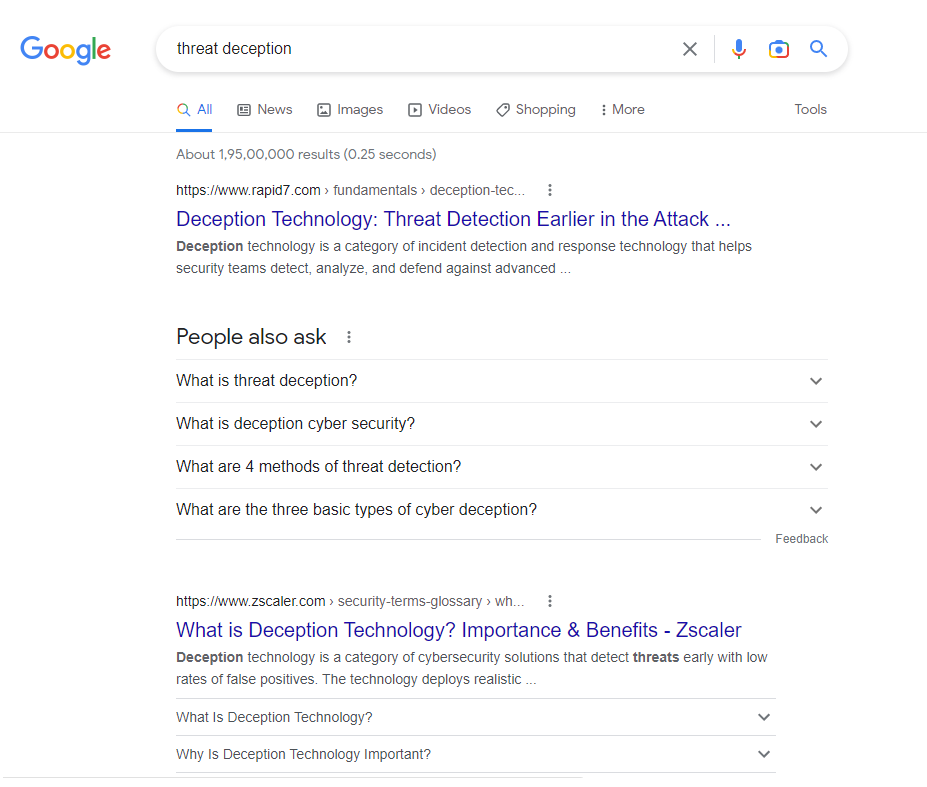
    Threat Deception Question Chatgpt

    When we needed to understand different methods of threat deception, we edited the query for ChatGPT and got much more detailed results.
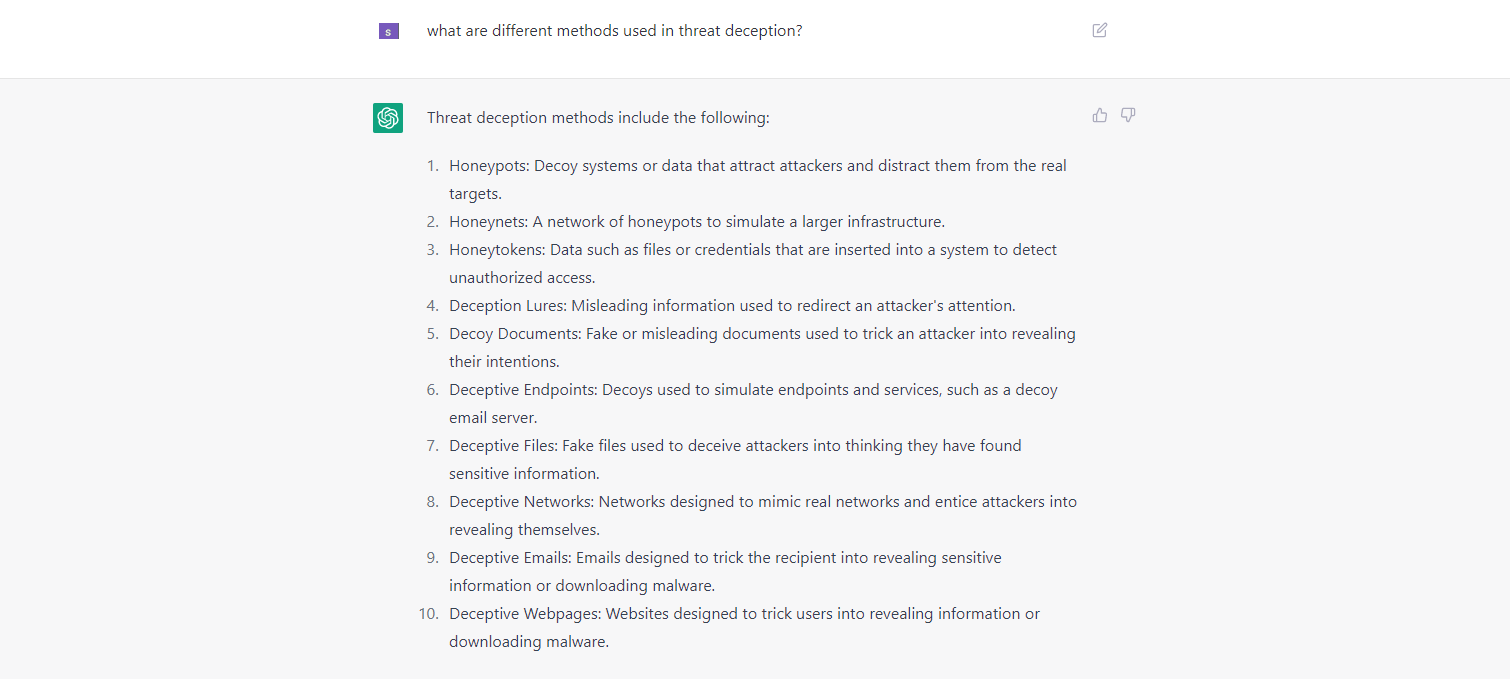
    Different Methods of Threat Deception Chatgpt

    Google provides more options for keywords, but ChatGPT helps us find the root keywords.
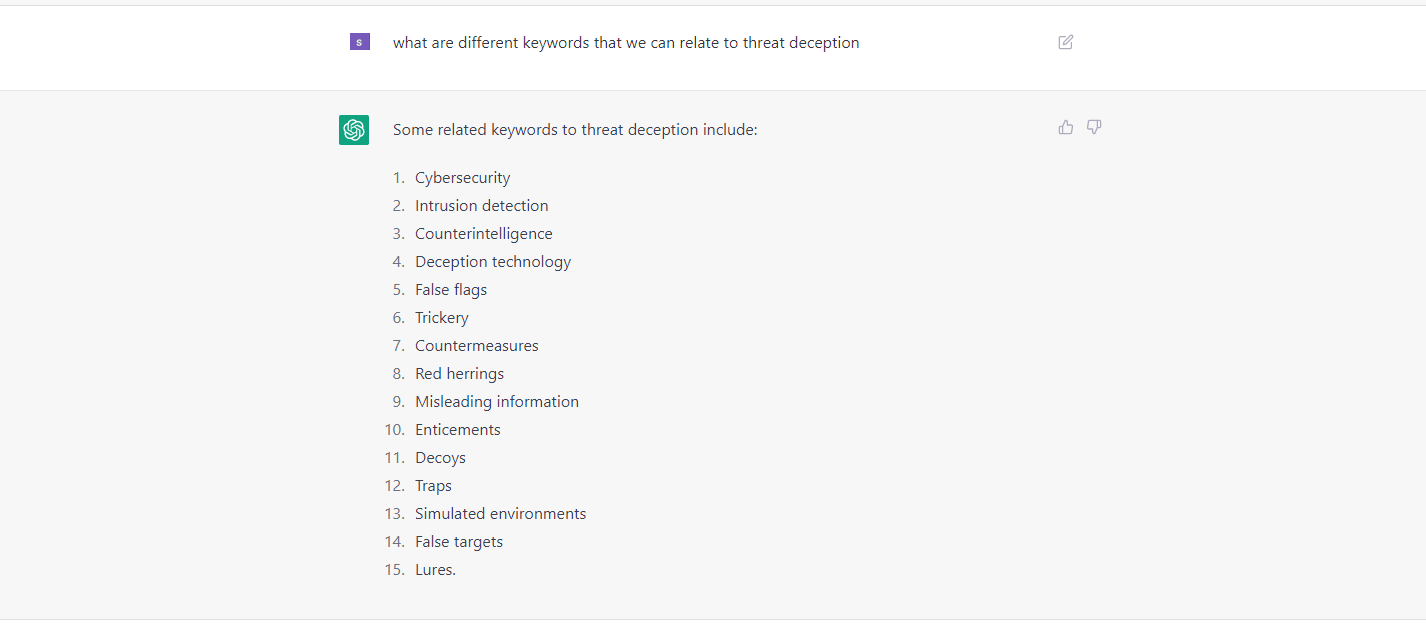
    Chatgpt Takes Root Keywords

    Chatgpt To Write SEO Descriptions

    Limitations of ChatGPT

    GTP is a language model trained to produce text. It is prepared on vast amounts of data on the internet, created by humans. So it has many limitations you must be aware of before using it. Many have criticized it for the lack of accuracy of the answers. ChatGPT is restricted in specific parameters, and we have listed them here for your leisurely reading.

    Lack of common sense

    ChatGPT is incapable of understanding the world as humans do, and as a result, it may make mistakes or produce meaningless responses.

    Difficulty handling long-term dependencies

    Difficulty handling long-term dependencies

    ChatGPT is trained to generate text based on the input it receives, but it may struggle with tasks that require a deeper understanding of the context or long-term dependencies.

    Data bias

    ChatGPT is only as good as the data it was trained on, which means it may be impacted by the biases present in that data.

    Limited flexibility:

    ChatGPT is trained to generate text based on a specific task or objective, and it may struggle with tasks that are outside of its scope or that require a high degree of flexibility.

    AI Training Cutoff in 2021

    Since it’s not connected to the internet, it can occasionally produce incorrect answers. The learning model has limited knowledge of the world and events after 2021 – which can result in incorrect instructions or biased content.

    Facts about ChatGPT

    As per Exxactcorp, ChatGPT has released several versions of GPT, such as GPT-2 and GPT-3. While GPT-2 is a smaller version of the model with 1.5 billion parameters, the GPT-3 is a much larger version with 175 billion parameters. GPT-3 is a powerful language processing tool that can perform various language tasks, such as translation, summarization, and answering questions. A recent article published in the New York Times states that GPT-4 will be launched in 2023.

    Is ChatGPT better than Google?

    It is not a search engine like Google, so it is not intended to be used for the same purposes. Google is a powerful search engine that can find information online by searching keywords or phrases. It is designed to help users find the most relevant and valuable results for their search queries based on a wide range of factors.

    What are the uses of GPT?

    Chat GPT can be used to build chatbots that can hold natural conversations with humans. It can be used in various applications, including customer service, e-commerce, and entertainment.

    Is ChatGPT for content and SEO?

    In SEO, GPT can be used to generate meta titles and descriptions for web pages. It can also suggest keywords and other tags that may help a website rank higher in search engine results. However, it’s important to note that using GPT or other AI tools to generate content or optimize a website is not a guarantee of success.

    Is ChatGPT Free To Use?

    It is a language model developed by OpenAI that is freely available for use.

    Wrapping up

    GPT can be used in chatbots and other applications where it is important to generate human-like text. It can be fine-tuned for specific tasks and has been used to generate news articles, write stories, and even create code.

    As a digital marketer, imagine ChatGPT connected to google ads, generating automatic titles and descriptions based on predefined instructions for those ads – optimizing those that aren’t performing well.

    ChatGPT is a powerful tool – if and when it becomes connected to the internet (for real-time results), it will significantly impact multiple disciplines.

    We’ll keep an eye on this space, and so should you.
  • What You Need to Know About Google’s Changes to Match Types

    Google is constantly making improvements to the way they display and disseminate info on their platform. Their changes are done largely to improve the experience of everyday users. The latest updates place an important focus on the “meaning and intent” of a search more than the absolute words themselves. In combination with Smart Bidding, Google believes these changes will drive performance, making it possible for companies to better reach prospective customers.

    What’s Changing?

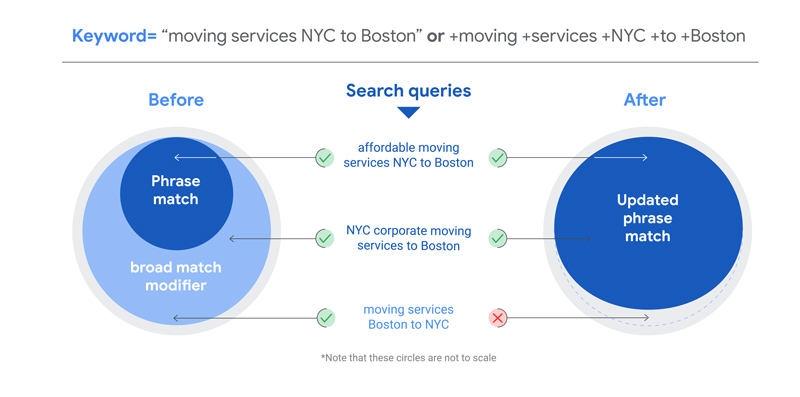
    Google is updating its phrase matching to cover new queries, essentially making broad match modifiers redundant. This new standard of phrase matching will look at the context and meaning of the search query, and the phrase match keyword will qualify relevant search queries as it sees fit.

    When Will This Happen?

    The new phrase matching will go live on Feb 18, 2021.

    So What Happens to Broad Match Modifiers (BMMs)?

    While ads will continue to run for BMM keywords, BMM keywords will simply function as a new phrase match. You won’t be able to add new BMM keywords beginning in July 2021.
    Broad Match Modifiers

    How Will This Impact Your Campaigns?

    This change shouldn’t impact your campaign performance. However, if you use two match types, there will be a shift in traffic from BMM to phrase. If you use only BMM, then BMM will continue to drive the traffic, of course minus irrelevant traffic.

    Position2 Outlook:

    To take full advantage of the new phrase approach:

    • Ensure phrase campaigns have enough in their budget to accommodate this change.
    • Don’t add BMM keywords to new campaigns. Use only exact and phrase match keywords going forward.
    • Monitor search queries at regular intervals and review the quality of traffic from phrase match keywords.

    Anything else you need to know?

    Over the last year, Google says it has been making more small improvements and updates to keyword and match types to help improve performance of campaigns.

    For example, BMM also looks at additional signals, making searches more relevant. They say when paired with Smart Bidding, BMM signals can mean never-before realized opportunities are now within reach.

    While keywords that are an exact match to search queries are preferred, they need to fall within certain eligibility criteria.* More control is handed to you with regards to which keywords match searches as well, simplifying keyword selection.

    To learn more about the impact of Google’s changes on your campaigns, please read Google’s release.

    *Identical queries account for spelling corrections. Reasons a keyword may not be eligible include being budget constrained, being marked “low search volume”, disapproved creatives, or other criteria are not satisfied (such as device or location). From Google release, ”Making it easier to reach the right customers on Search”

  • Automation of Google Ad Campaigns: What It Means to Agencies

    Google is bringing their ‘Ads Experts’ to manage campaigns. “We’ll focus on your campaigns, so you can focus on your business,” says the email Google sent to some advertisers in the last week of January.

    Before we start getting paranoid about AI and machine learning taking over the advertising agencies, let’s understand more about this new feature and how it may change the advertising ecosystem.

    1. The Opt-out Option
      Although advertisers are auto opted-in to the program, Google will give them the option to opt-out and be in full control of their ads. This feature is useful as agencies are better integrated with their clients and therefore more in tune with their needs.
    2. The Multi-channel and Cross-channel Marketing
      Apart from Google Ads Campaigns, agencies manage multiple other channels for their clients like Facebook, LinkedIn and programmatic ads, to name a few. So, agencies need a broader view of how their clients’ ads are performing across channels. The integrated reports from multiple channels allow advertisers to gauge the overall performance and decide whether to pause, activate or increase the exposure of these ads.
    3. Siloed Approach
      Companies relying solely on Google’s recommendations will have a siloed approach to digital marketing. And as Google has carefully mentioned, “advertisers are still responsible for the results of their campaigns.” Agencies are far better equipped to control the performance of the ads as they work closely with their clients and have access to their entire marketing portfolio.
    4. Less Grunt Work, More Strategic Thinking
      Google indicated that their experts will help identify the structural changes to ad groups and modify the keywords to adjust bids and ad text for greater impact, without touching the budgets. This means the agency’s roles will evolve into focusing more on strategy and less on time spent on day-to-day repetitive tasks.
      If Google’s words are anything to go by, they have clearly stated that they do not “guarantee or promise any particular results from implementing these changes”, so agencies still have complete ownership of the campaign and its results and while the recommendations from Google will be helpful, they should not place complete faith in the optimization efforts.
    5. The announcement might have given a bit of a shock to agencies initially, and the changes could potentially lead to some organizational restructuring at their end, but the future is clearly a lot more worry-free, strategic, and impact-oriented for them.